
Summary
About Bucerias
- 11 miles from Puerto Vallarta’s Airport.
- 4 miles from Nuevo Vallarta.
- 90 miles from the capital of Nayarit: Tepic.
- Population (2020 census): 16,161 inhabitants.
More details
- Part of the Bahía de Banderas Municipality in the state of Nayarit, part of the Riviera Nayarit and Nuevo Vallarta.
- North of Nuevo Vallarta, southeast of La Cruz de Huanacaxtle.
- Longitude: -105.334722; Latitude: 20.755278


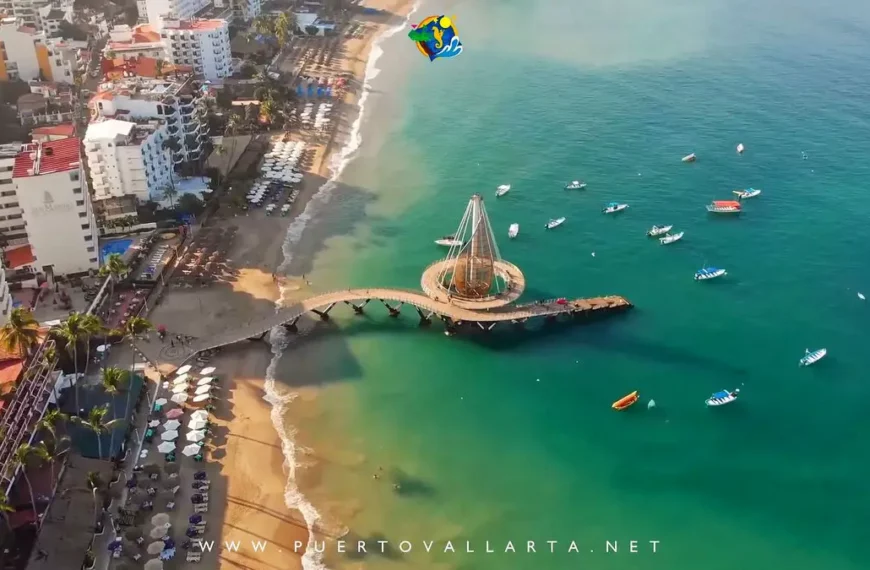
Introduction
Bucerias is a small attractive town located in the Banderas Bay in the state of Nayarit between La Cruz de Huanacaxtle to the north and Nuevo Vallarta to the south and is part of what is now called Riviera Nayarit.
The locals are simple, sincere and kind people, they are proud of their town and their clean beautiful beach.
The 5-mile long beach itself offers soft sand and calm waves. Though many state that the name derives from “place of divers”, the word itself doesn’t make much sense in Spanish, so I dispute this interpretation, sounds more like a “smart” gringo trying to unravel the meaning and doing it wrong :-).
How to get to Bucerías
If you are already in Puerto Vallarta, Bucerias is located north of the bay, past the airport and Nuevo Vallarta, 17 miles from PV’s main square.
You’ll drive along Federal Highway 200 and about 40-60 minutes (depending on traffic and time of day) northward you’ll find the town to your left.
What to do in Bucerias, Nayarit
Among the various attractions and sightseeing landmarks in Bucerias, we could mention the Iglesia a la Señora de la Paz (Our Lady of Peace Church) and the remodeled main plaza.
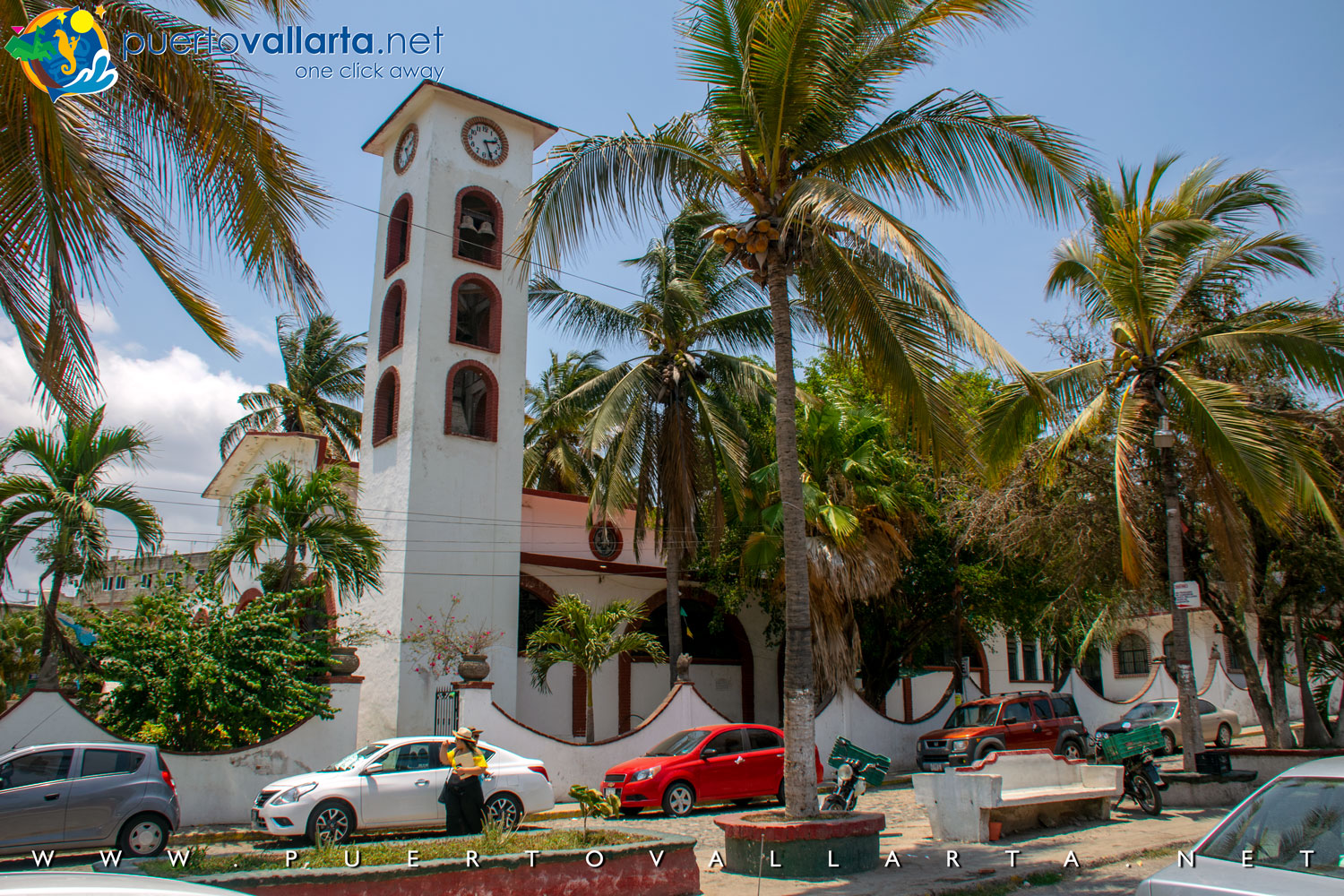
Señora de la Paz Church
The local beach, is a great place to relax, take walks, take a trip on horseback or an ATV, especially when you do so in the afternoon and can enjoy the impressive sunsets that are a part of the bay panorama, during the summer afternoons the sun sets behind the hills that surround the western edge of the bay and not the sea.
There is an entertaining water park with rafts and inflated games, ideal for families and active children who want to have a blast in the warm sea. It’s called Wibit Adventures Water Park, a circuit of trampolines, climbing towers, slides, pyramids, tunnels, and more, all floating in the waters off the beach.

Bucerias beach looking north
This beach is a great place for surfing, windsurfing, boogie boarding, and collecting shells. The area is now very popular among kitesurfers and various competitions are held here too

Thursday evenings are art walk night, where art lovers are invited to visit galleries that are open during the evening and serve cocktails and refreshments along Lazaro Cardenas street.
Bucerias’ beach is also used for sand figure competitions, you can also enjoy the local delicacies, such as “pescado zarandeado” (grilled fish), ceviches, shellfish, lobster, and so on.

Beachside Restaurants
Take a stroll along the cobblestone streets in Bucerias, it’ll be like a stroll back in time, enjoy the colorful houses, where people will greet you while they talk to their neighbors, small stores, some restaurants, government and real estate offices, art galleries, a local market with many Huichol works of art and even small eateries where you’ll be offered fresh oysters off their shell, you might just end up tempted to stay more than a day.
In the 1940’s Bucerias only had seven palapa huts, and the locals cultivated corn, sorgo, sesame, peanuts, and fruit, other activities included fishing. Access to the small village was quite complicated, especially during the rainy season, but after 1955 a better road helped the locals giving them an easier way out and easier access for visitors.

Bucerías Flea Market
The most popular local fiestas are the traditional religious festivities for the Peace Virgin (Virgen de la Paz), these are held on January 24 each year, that include peregrinations by the sea on colourfully decorated boats with various religious motives, fireworks, dance, local Mexican delicacies, and many more activities.
Bucerías is also home to a unique artistic attraction, the “El Buzo” (The Diver) sculpture. It was unveiled June 2014 and is an imposing stainless steel piece finished in bronze. It stands right by the edge of the beach between the sea and Plaza del Viento (the town’s main square) and is a tribute to the town’s fishing and maritime history and the brave divers that harvested its bounty.

“El Buzo” (the diver) statue
Though, as I mentioned before, many state that Bucerías means place or town of divers. Though I don’t really think it is the right name, grammatically, it’s so widely stated that we’ll just have to go with it. The town had a reputation for its pearl divers, who explored the deep waters off the beach, harvesting pearls from the rocks in the depths with metal crowbars, often without any scuba diving equipment. The sculpture itself, a collaboration between renowned sculptor Octavio González Gutiérrez (Vallarta Whale) and local artist Gustavo López Gulooch, depicts one of these divers extracting an oyster, a visual caption of the town’s essence and origins.
Adding a personal touch to the piece, the face of the diver is modeled after a local fisherman called Ramón Barraza, who has passionately supplied the local restaurants with fresh seafood for more than 40 years.
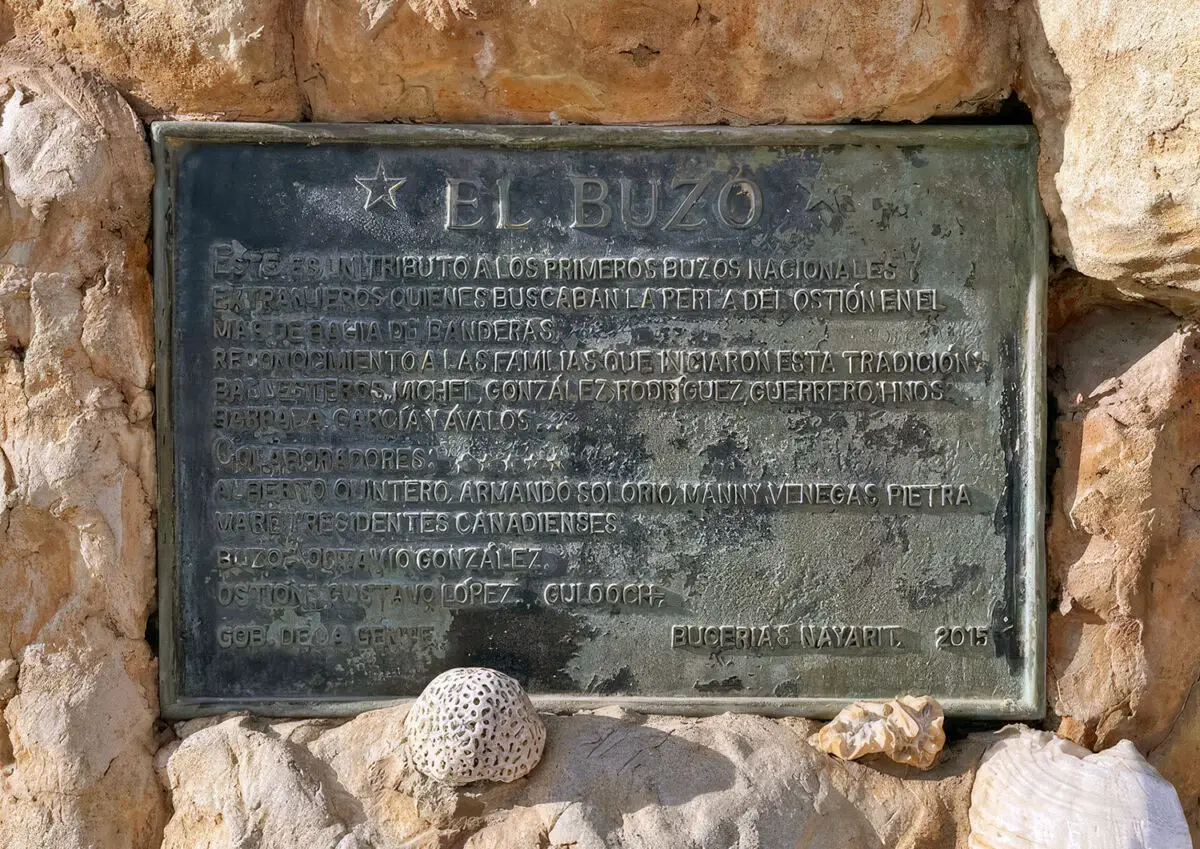
The Diver, plaque
The Diver
This is a tribute to the first national and foreign divers who searched for the pearl of the oyster in the sea of Banderas Bay.
Recognition to the families that started this tradition: Ballesteros Michel, González Guerrero, Barraza, García y Ávalos brothers…
Contributors:
Alberto Quintero, Armando Solorio, Manny Venegas, Pietra Mare and Canadian residents.Diver: Octavio González
Government of the People
Oyster: Gustavo López Gulooch
Bucerías Nayarit 2015

The streets of Bucerias, Nayarit, Mexico
On October 14th Bucerías celebrates its anniversary and on November 22, Saint Cecilia’s day, musicians from the state of Michoacan visit and celebrate with the locals.
Bucerias is a key component of what is now being developed and promoted as “Riviera Nayarit”, so now suddenly the town is attractive as a real estate investment option and new businesses are establishing themselves in the area, offering different tourist-oriented services, entertainment, and ecotourism.
The town despite all this activity is calm and relaxed, making it a very attractive place to retire from the bustle of it all. Many say Bucerias is very much as Puerto Vallarta was 50 years ago, maybe it’s time to find out if that’s true.
Climate
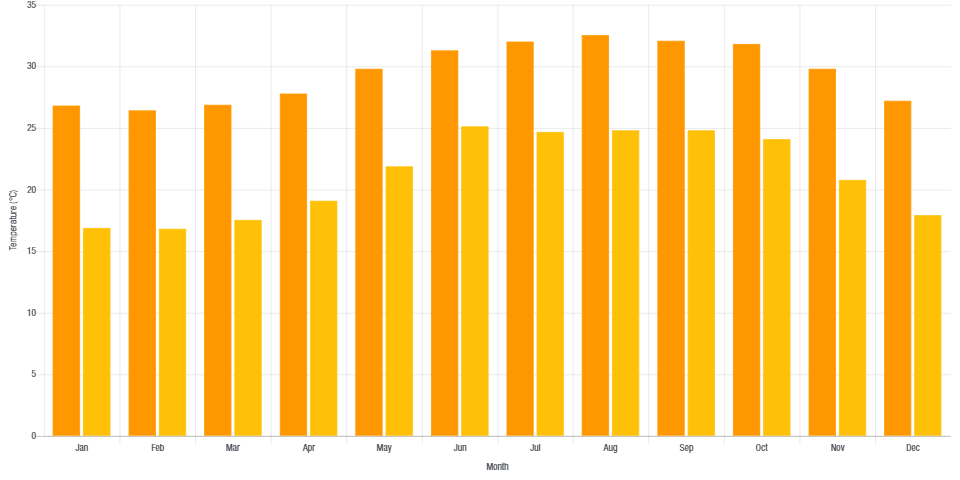
The average temperature in Bucerias varies a little. Considering humidity, the hot season lasts about half of a year and is otherwise nice with a low chance for rain throughout most parts at any given moment during this period – making it feel more temperate than tourist destinations worldwide on account of its 55th percentile ranking as pleasant weather conditions overall (compared to other locations).
July is a great time to visit Bucerias. The city’s warmest months are August and July, with an average temperature of around 91°F (32 Celsius). That means you can enjoy days where it only rains in the afternoons or evenings!
Temperatures in Bucerías
High °C
Low °C
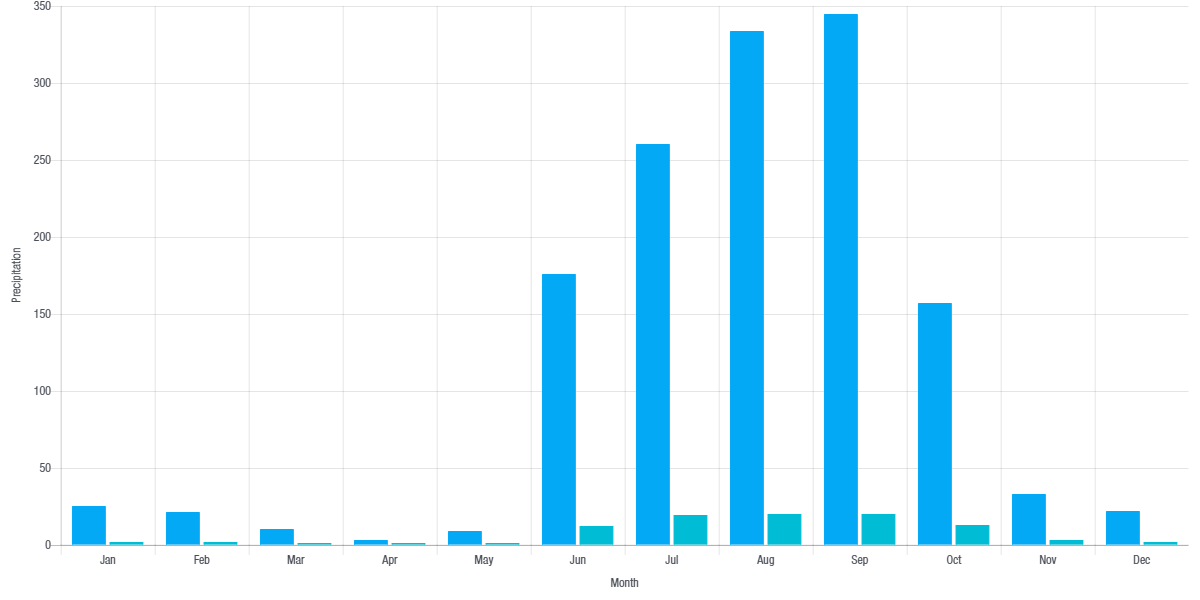
Precipitation in Bucerias
Precipitation mm
Days w. rain
Location Map
More:
- More on Bucerías (Wikipedia)
FAQ
- What is the safest part of Puerto Vallarta to stay in?
The Marina and the Romantic Zone are considered some of the safest areas to stay in Puerto Vallarta. Both areas are popular among tourists and offer a variety of accommodations, restaurants, and attractions. The Marina is known for its upscale atmosphere, luxury resorts, and high-end shops and restaurants. It has a very secure, controlled environment with 24/7 security personnel. The Romantic Zone offers a more authentic Mexican experience with cobblestone streets, colorful colonial buildings, and a vibrant mix of galleries, cafes, and bars. As a central tourist area, it also has a strong police presence and is considered very safe.
- Where do locals go in Puerto Vallarta?
Locals in Puerto Vallarta enjoy spending time at the city’s beautiful beaches, scenic parks, and lively local markets. Popular beach spots include Playa de Oro, Playa Las Animas, and Playa Camarones for their soft sand and calm waters. Many locals visit the Vallarta Botanical Gardens to enjoy the lush vegetation and hiking trails. They also frequent authentic local food venues like Birrieria las 3 Regiones taco stand, cafes like Cafecito Vallarta, and neighborhood bars like La Cerveceria Union. The downtown Lazaro Cardenas market is a favorite for produce, spices, crafts.
- Is Downtown Puerto Vallarta nice?
Yes, downtown Puerto Vallarta is an exceptionally nice and popular area, celebrated for its vibrant mix of historic Mexican charm and a lively beach town atmosphere. It features a picturesque historic center with cobblestone streets, colorful buildings, and the iconic Parish of Our Lady of Guadalupe church. The downtown seamlessly blends into the scenic Malecón, a beautiful oceanfront boardwalk lined with fascinating sculptures, shops, and restaurants, making it perfect for strolling and enjoying the stunning ocean views.
The area offers an excellent variety of dining, from upscale restaurants to authentic street food, along with fantastic shopping in boutiques and art galleries. Adjacent to the main center is the popular Zona Romántica (Romantic Zone), known for its trendy vibe and energetic nightlife. The entire downtown is considered safe and is very walkable, allowing visitors to easily explore its captivating blend of culture, cuisine, and coastal beauty on foot.
Tip: For an unforgettable experience, head down to the Malecón or any beachfront spot about 30 minutes before the scheduled sundown to watch the spectacular sunset over the bay.
- What is considered old town in Puerto Vallarta?
Old Town, also known as the Romantic Zone or Zona Romántica, is considered the historic heart of Puerto Vallarta. It is characterized by its picturesque cobblestone streets, classic whitewashed buildings, red-tiled roofs, and a lively mix of shops, galleries, restaurants and bars. Nestled between the Sierra Madre mountains and Banderas Bay, Old Town has a traditional Mexican village charm with its colonial architecture and slower pace compared to the rest of Puerto Vallarta. Its romantic ambience comes from the area’s natural beauty, outdoor cafes, and charming boutique hotels. Old Town offers visitors a taste of an authentic Mexican neighborhood.

Book tours & support us
- Best prices
- 100% Local Support
- 2 decades+ of experience in Puerto Vallarta

Puerto Vallarta news, tips & content
- New info every two weeks
- Free content, news, videos
- Unsubscribe at any time

Contact us via WhatsApp
- Talk with our reservations expert
- Real local and human support
- Book tours, hotels, transfers, and more.
Share this article, choose your favorite option!


