
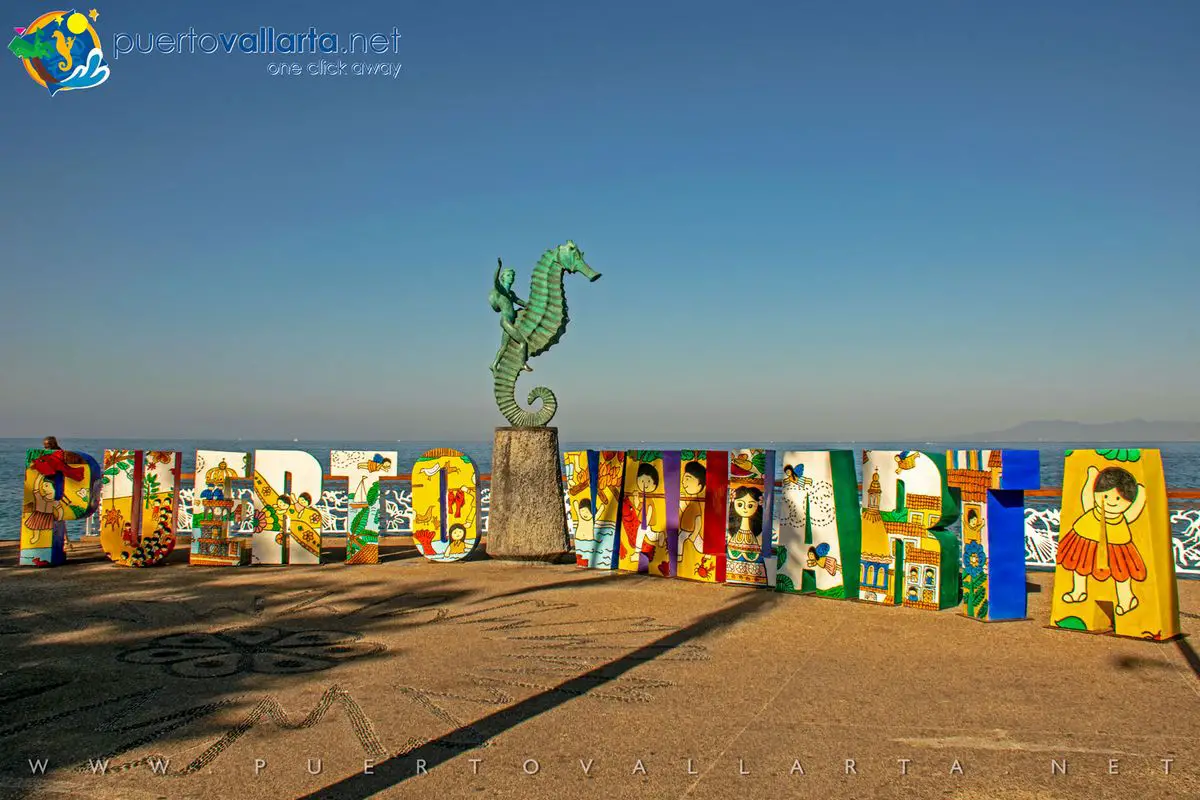
The Boy on the Seahorse (1976) Rafael Zamarripa Castañeda, Puerto Vallarta Malecon
Summary
- The Boy on the Seahorse statue in Puerto Vallarta was one of the first sculptures to be placed on the Malecon.
- The sculpture shows a small naked boy riding a seahorse and has become an iconic symbol of Puerto Vallarta.
- The statue is well done and impressive, and it’s one of the most recognizable sculptures on the Malecon.
- The original statue in Las Pilitas was damaged by a hurricane, and a replica was created and placed in the malecon.


About the Seahorse statue
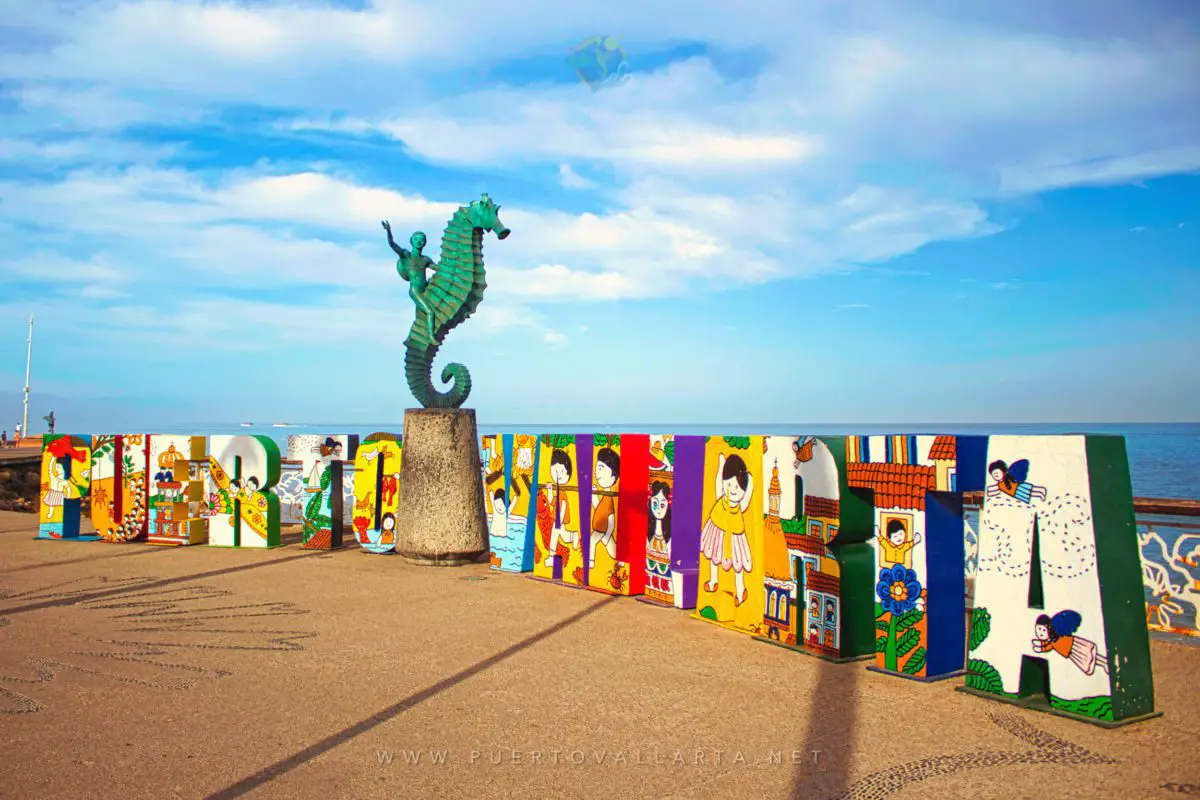
The Boy on the Seahorse, Rafael Zamarripa Castañeda (Photo: Saúl Manzo, 10/03/2022)
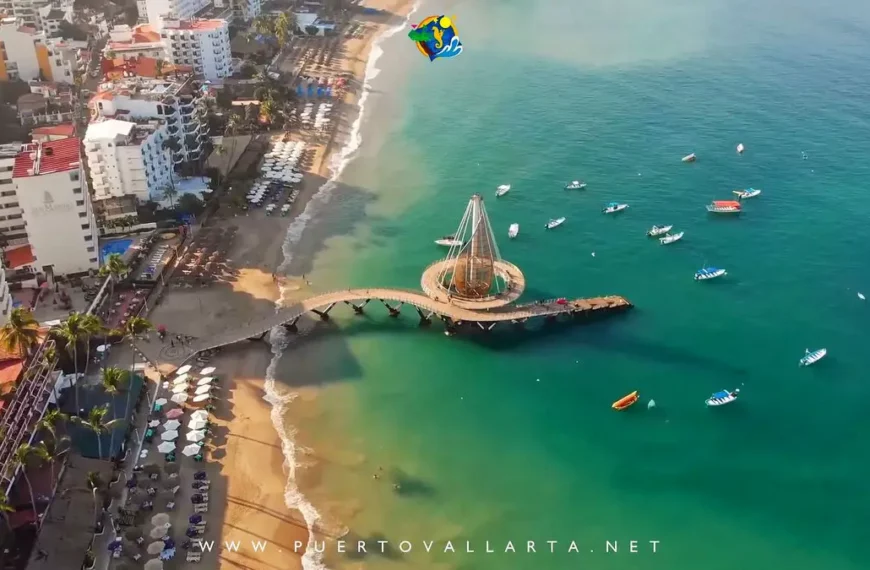
The Boy on the Seahorse was the first sculpture placed on the Malecon (boardwalk) in downtown Puerto Vallarta. It is a 3-meter (9 ft) high replica of the original seahorse statue that is at Las Pilitas, Los Muertos Beach in the Romantic Zone.
Puerto Vallarta has two icons, which are considered symbols of the city, the Our Lady of Guadalupe Parish and the seahorse sculpture, whose official name is “The Boy on the Sea Horse”. It was a piece that was originally requested in 1960 and there is a larger replica in the city’s downtown area that was unveiled in 1976.
The artist commissioned to design and sculpt it was Francisco Rafael Zamarripa Castañeda, who at the time, 1960, was just 18 years old and had just won the National Sculpture Prize.
The original sculpture of the horse was inaugurated in 1960 at Las Pilitas, a rocky outcrop at the southern end of Los Muertos Beach (Playa de Los Muertos), this sculpture was washed out to sea after a particularly strong storm and couldn’t be found again.
That’s why, in 1976, a larger replica was sculpted at the request of the local government and is the one that can currently be seen on the Malecon.

The Boy on the Seahorse (1976) Rafael Zamarripa Castañeda, Puerto Vallarta Malecon
Subsequently, the lost original sculpture was recovered and returned to its initial location. After Hurricane Kenna, which almost hit the city directly, once again the sea hid it under its waters, but as you can imagine, as the sculpture is there again at Pilitas, it was once again recovered :-).
Hopefully, its anchors are solid enough to protect it from the storms of the future, it looks pretty strong to me and the rocks at Las Pilitas are not moving any time soon…

The Boy on the Seahorse (1976) Rafael Zamarripa Castañeda, Puerto Vallarta Malecon
So there is a silver lining to all these storms and losses. One seahorse sculpture is excellent, now, two are just wonderful! That’s the long explanation of why Puerto Vallarta has two seahorse statues by this well-known and beloved artist.
Where is the sculpture?
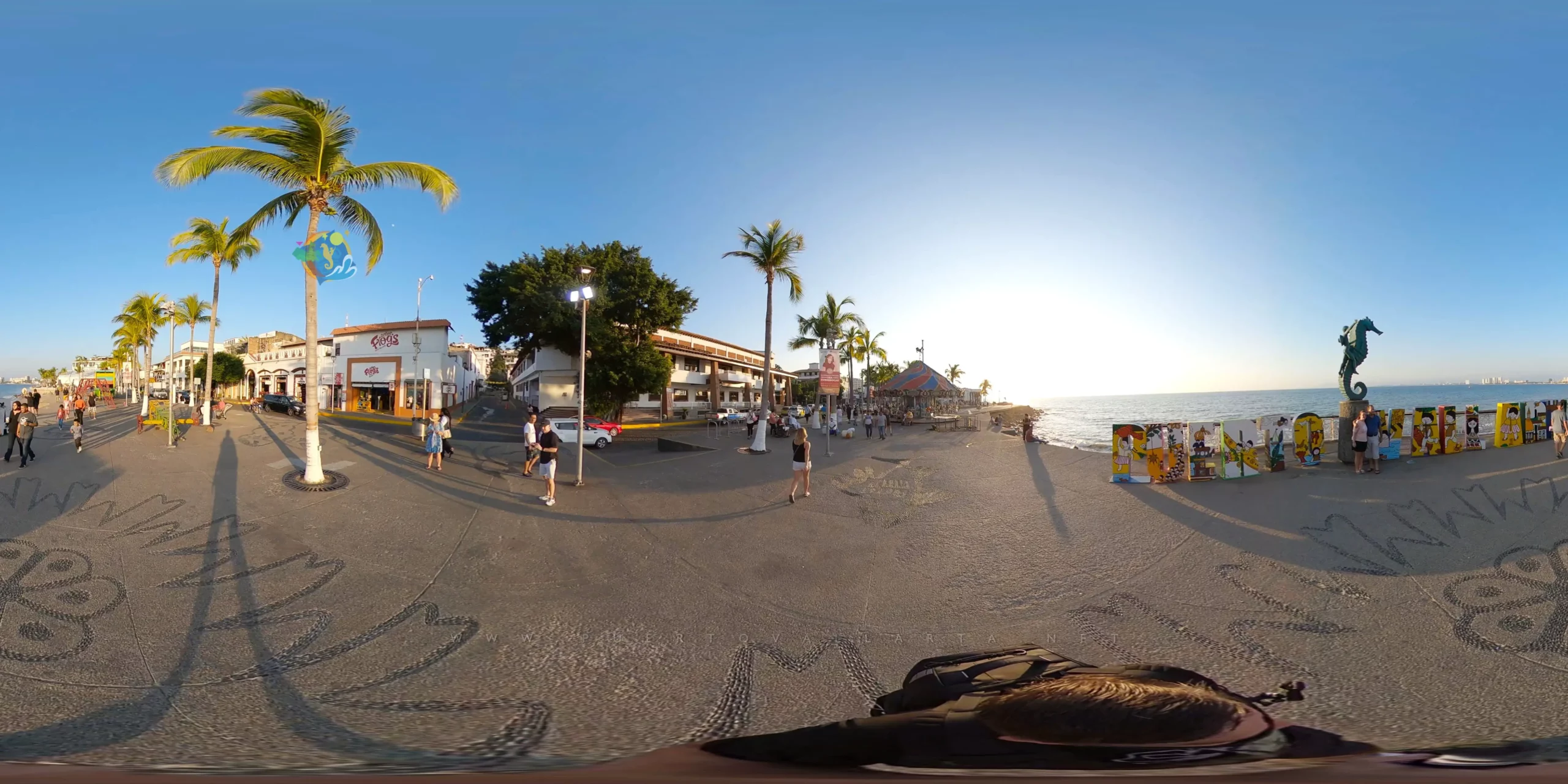
Malecon Seahorse Statue Panorama, Puerto Vallarta
The Seahorse sculpture is located in the downtown area of Puerto Vallarta in a prominent position on the Malecón, it’s found where Iturbide street ends on Morelos street. Previously, it was on the corner of Paseo Díaz Ordaz and Galeana Street.
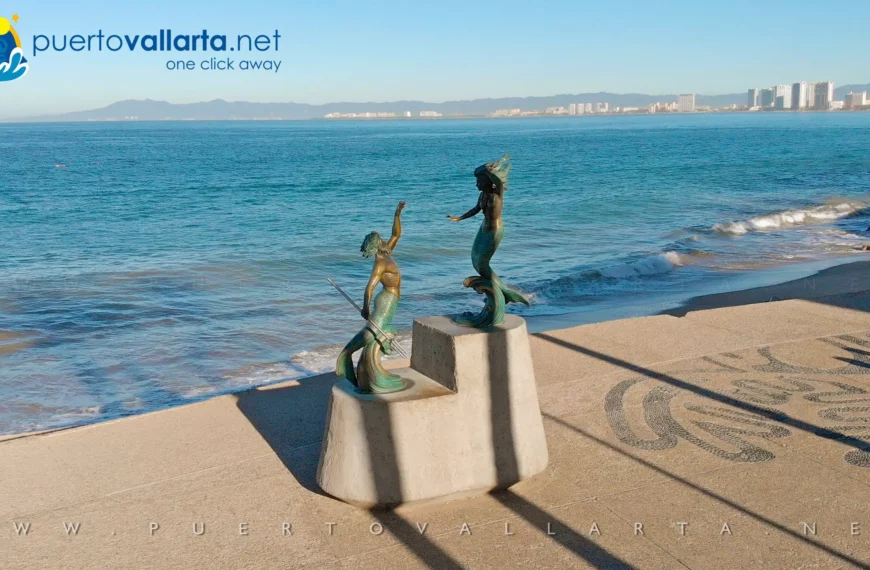
Since 2018, the seahorse is flanked by the Puerto Vallarta sign. The sculpture to the south is The Friendship Fountain and to the north of it, Triton and Siren.

About the artist, Francisco Rafael Zamarripa Castañeda

Francisco Rafael Zamarripa Castañeda
Francisco Rafael Zamarripa Castañeda is a painter, sculptor, designer, dancer, and choreographer. He was born in Guadalajara, Jalisco, Mexico, on February 8, 1942.
His parents were the pianist Luz María Castañeda Torres and Francisco ‘Don Panchito’ Zamarripa López, a shoemaker and painter. He comments that his family, which included 6 other brothers and sisters, was poor, but they never lacked shelter, food or clothing.
He personally comments that from an early age he was already making figurines with breadcrumb, a “collection of little figures.” He discovered his talent at an early age and it was mainly puppets that initially fascinated him. He began to make them himself with wood, paper and cardboard, and he would dress them with cloths. When he was 8 years old, his parents sent him to work with a “santero” (sculptor of religious figures) where he acquired the beginnings of his sculptural ability.

The Boy on the Seahorse, 1976, Francisco R. Zamarripa C. – Puerto Vallarta Boardwalk
- He completed his primary education at the Basilio Badillo School from 1948 to 1953.
- In 1956 he graduated as a school teacher at the Normal School of Jalisco.
- From 1959 to 1963 he studied Painting and Sculpture at the University of Guadalajara Art School. During his third year of the degree, he sent one of his works to the National Sculpture Contest of León, Guanajuato, and obtained first place on January 20, 1960.
- He continued his studies in Sculpture with the teacher Sandro Taglioni in Rome, Italy. He took courses in Sculptural Techniques at the New Zealand Polytechnic School and the Fine Arts School in Melbourne, Australia, and Anatomical Drawing at the University of Los Angeles, California, USA.
- In 1961 he obtained first place at the Festival of Nations in Paris, France.
- After a stay at the Amalia Hernández Folkloric Ballet in Mexico City, he became part of a folk ballet group at the Escuela de Artes Plásticas. He assumed the direction and preparation of the group and they participated in a state contest and in the National Dance Contest, which they won. They become the best folk dance group in Mexico, and the rector Ignacio Maciel Salcedo made it official as the “University of Guadalajara Folkloric Group”.
- In 1964, he was the general director, choreographer, set designer and costume designer for the (Mexican Folkloric Ballet) Ballet Folclórico de México.
- In 1968 the Folkloric Group of the University of Guadalajara took part in the International Folklore Festival of the XIX Olympics where they received a medal of honor and two honorable mentions.
- In 1969 they took part in the International Festival of Viña del Mar, Chile, where they were awarded a bronze medal.
- In 1969 he received the Jalisco Award from the Department of Tourism of the Government of the State of Jalisco.
- In 1966 he founded the School of Dance at the University of Guadalajara.
- In 1972 he established the Second Dance Group and the Children’s Dance Group at the University of Guadalajara. The teacher comments: “The only way to continue with a tradition and that it lasts over time for the benefit of others is by paying attention to the children.”
- In 1980 he founded the Folkloric Ballet of the University of Colima, a company that – with more than one hundred performances a year in Mexico, the United States, Central America and Europe – has been the winner of relevant awards and distinctions at many festivals.
- On a tour of Italy, he made a presentation in St. Peter’s Square in the Vatican, in front of more than 30 thousand pilgrims, the members of the Folkloric Ballet of the University of Colima were also received by Pope John Paul II.
- In 1994 he planned, promoted and artistically directed the First International Mariachi Encounter, in Guadalajara, Jalisco, Mexico.
- In 1996 he founded the University Dance Center at the University of Colima.
- In 1997 he designed and established a degree in Scenic Dance.
- In 2005 he was appointed president and delegate of the International Council of Organizers of Folklore Festivals.
- He is currently the director of the Folkloric Ballet of the University of Colima and continues to practice his various passions which include teaching, choreography, painting and sculpture. He is an icon of dance and sculpture in Mexico.
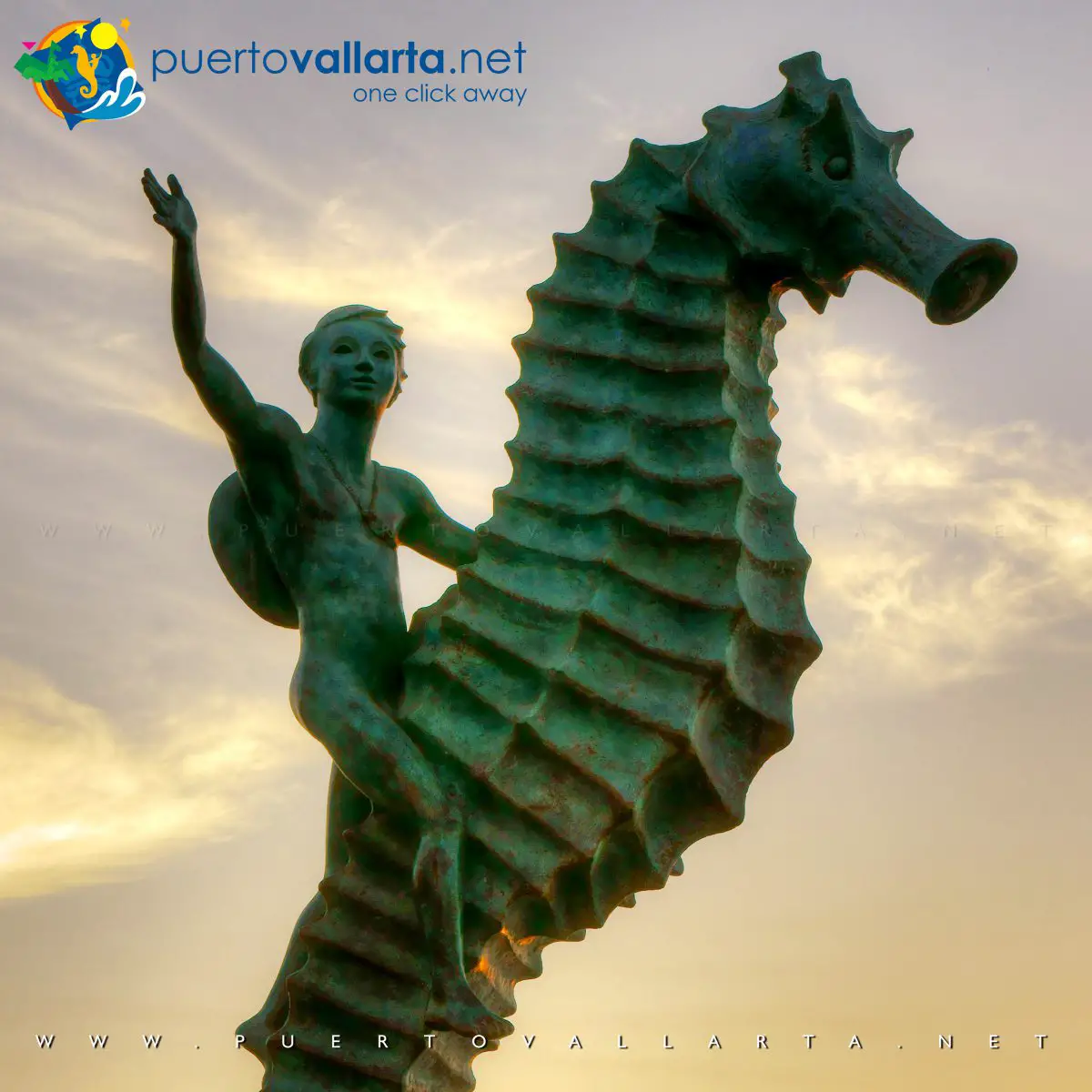
Closeup of The Boy on the Seahorse (1976) Rafael Zamarripa Castañeda, Puerto Vallarta Malecon
Closeup of The Boy on the Seahorse (1976) Rafael Zamarripa Castañeda, Puerto Vallarta Malecon
Some of his sculptures/statues
- “Children playing” at the Guadalajara Public Library
- “Monument to the Worker and Prisciliano Sánchez”, in the Prisciliano Sánchez Unit in Guadalajara
- José López Portillo Weber, in the House of Culture of San Pedro Tlaquepaque, Jalisco
- “The boy on the seahorse” official symbol of Puerto Vallarta, Jalisco
- Valentín Gómez Farías, in the administrative building of the University of Guadalajara
- Valentín Gómez Farías in Gómez Farías, Jalisco
- Marqués de Santillana, in Plaza España, Guadalajara
- Beatriz Hernández, in Guadalajara
- Three-Dimensional Shield of Guadalajara, in Plaza Tapatia, Guadalajara
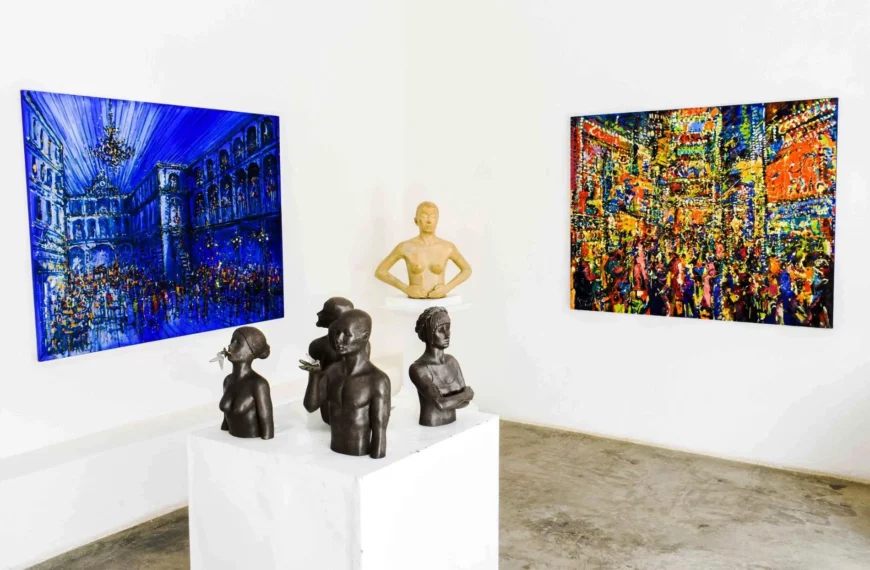
- He’s held over 58 group exhibitions and 23 individual exhibitions, both in his native country and abroad, including the exhibition of 50 large-format wooden sculptures “Ensamblajes”.
References
- About Rafael Zamarripa https://en.wikipedia.org/wiki/Rafael_Zamarripa
- Life Story: Rafael Zamarripa: https://youtu.be/dZLytba0D48
FAQ
- What is the safest part of Puerto Vallarta to stay in?
The Marina and the Romantic Zone are considered some of the safest areas to stay in Puerto Vallarta. Both areas are popular among tourists and offer a variety of accommodations, restaurants, and attractions. The Marina is known for its upscale atmosphere, luxury resorts, and high-end shops and restaurants. It has a very secure, controlled environment with 24/7 security personnel. The Romantic Zone offers a more authentic Mexican experience with cobblestone streets, colorful colonial buildings, and a vibrant mix of galleries, cafes, and bars. As a central tourist area, it also has a strong police presence and is considered very safe.
- Where do locals go in Puerto Vallarta?
Locals in Puerto Vallarta enjoy spending time at the city’s beautiful beaches, scenic parks, and lively local markets. Popular beach spots include Playa de Oro, Playa Las Animas, and Playa Camarones for their soft sand and calm waters. Many locals visit the Vallarta Botanical Gardens to enjoy the lush vegetation and hiking trails. They also frequent authentic local food venues like Birrieria las 3 Regiones taco stand, cafes like Cafecito Vallarta, and neighborhood bars like La Cerveceria Union. The downtown Lazaro Cardenas market is a favorite for produce, spices, crafts.
- Is Downtown Puerto Vallarta nice?
Yes, downtown Puerto Vallarta is an exceptionally nice and popular area, celebrated for its vibrant mix of historic Mexican charm and a lively beach town atmosphere. It features a picturesque historic center with cobblestone streets, colorful buildings, and the iconic Parish of Our Lady of Guadalupe church. The downtown seamlessly blends into the scenic Malecón, a beautiful oceanfront boardwalk lined with fascinating sculptures, shops, and restaurants, making it perfect for strolling and enjoying the stunning ocean views.
The area offers an excellent variety of dining, from upscale restaurants to authentic street food, along with fantastic shopping in boutiques and art galleries. Adjacent to the main center is the popular Zona Romántica (Romantic Zone), known for its trendy vibe and energetic nightlife. The entire downtown is considered safe and is very walkable, allowing visitors to easily explore its captivating blend of culture, cuisine, and coastal beauty on foot.
Tip: For an unforgettable experience, head down to the Malecón or any beachfront spot about 30 minutes before the scheduled sundown to watch the spectacular sunset over the bay.
- What is considered old town in Puerto Vallarta?
Old Town, also known as the Romantic Zone or Zona Romántica, is considered the historic heart of Puerto Vallarta. It is characterized by its picturesque cobblestone streets, classic whitewashed buildings, red-tiled roofs, and a lively mix of shops, galleries, restaurants and bars. Nestled between the Sierra Madre mountains and Banderas Bay, Old Town has a traditional Mexican village charm with its colonial architecture and slower pace compared to the rest of Puerto Vallarta. Its romantic ambience comes from the area’s natural beauty, outdoor cafes, and charming boutique hotels. Old Town offers visitors a taste of an authentic Mexican neighborhood.

Book tours & support us
- Best prices
- 100% Local Support
- 2 decades+ of experience in Puerto Vallarta

Puerto Vallarta news, tips & content
- New info every two weeks
- Free content, news, videos
- Unsubscribe at any time

Contact us via WhatsApp
- Talk with our reservations expert
- Real local and human support
- Book tours, hotels, transfers, and more.
Share this article, choose your favorite option!


