
Summary
- The Rotunda of the Sea is an art installation by Alejandro Colunga located along Puerto Vallarta’s Malecón in the Mexican state of Jalisco.
- Unveiled in 1996, the work consists of eight bronze thrones arranged in a circle, adorned with stylized sea creatures and marine elements.
- The sculpture is a surrealistic representation of anthropomorphic statues with human arms and feet, and is a popular attraction for tourists and locals alike.
- The Rotunda of the Sea adds to the rich artistic culture of Puerto Vallarta and is a must-see for art enthusiasts visiting the area.


Introduction

Puerto Vallarta Malecon/Boardwalk, sculpture by Alejandro Colunga (The Rotunda of the Sea)
Another interactive sculpture, strange surreal chairs are awaiting you on the Malecon, full of weirdness and magic, you’ll love them if you don’t find them creepy.
Alejandro Colunga is a well-known artist in Puerto Vallarta, having traveled to Vallarta on his own more than 40 years ago. His sculptures are now very well known all over the world and they grace his adoptive town too at “The Rotunda of the Sea” (La Rotonda del Mar) on the Malecon.
About this group of sculptures

The Rotunda of the Sea (1996) Alejandro Colunga
The collection of surrealistic anthropomorphic statues with human arms and feet adorned with stylized sea creatures and marine elements was unveiled on December 30th, 1996 and has been a favorite for visitors and locals ever since. The foundry was done in the workshops of master Salvador Andrade Valdivia, in Guadalajara, Jalisco. The pieces were donated by the artist and the installation was financed by Puerto Vallarta City Hall.
Take a seat, these strange creations invite you to enjoy them, touch them and get your photo taken for posterity.
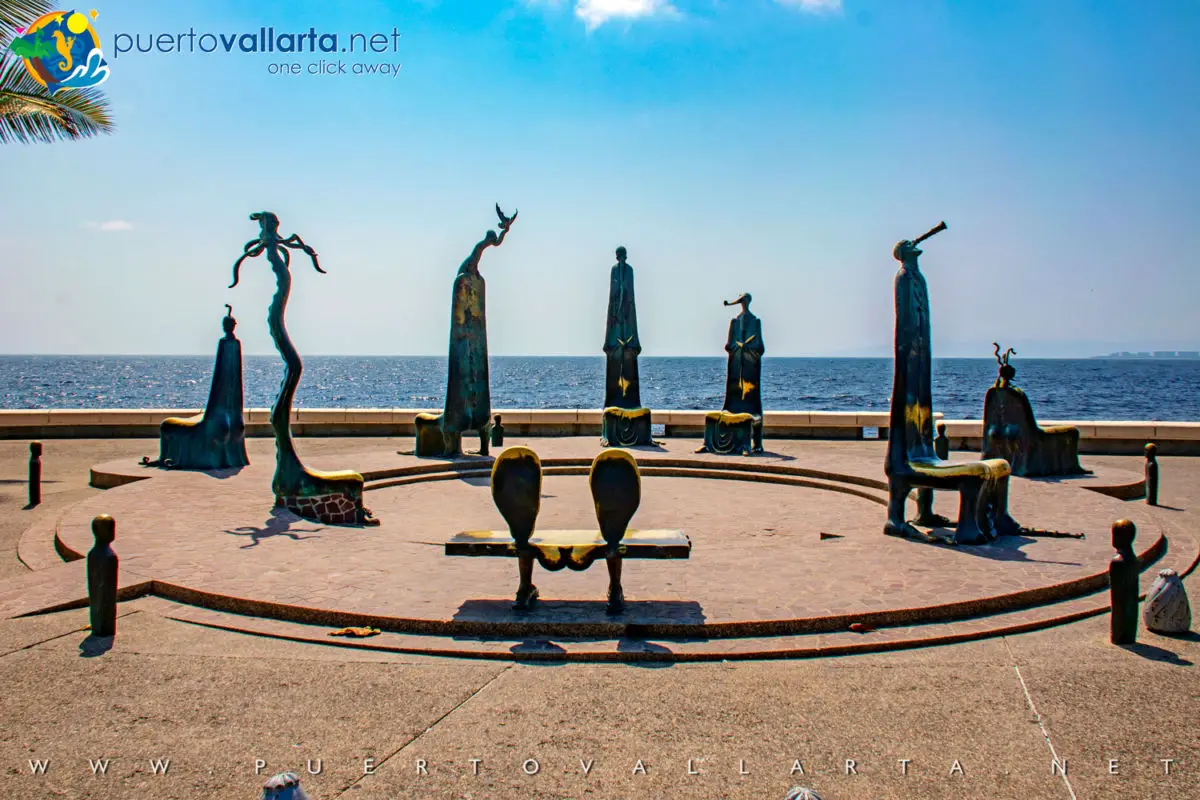
The Rotunda of the Sea, Alejandro Colunga (1996) Puerto Vallarta Malecon
Alejandro loves this and makes it clear he actually created the works with this in mind, he is convinced that human touch and the interaction gives the statues a patina and color that they wouldn’t have if they were protected, a 3D coloring, in his words:
“The chairs are for you, I made them with a lot of love so they could be used and abused, so people could climb up on them and so your children could pee on them, something that might even make them prettier.”
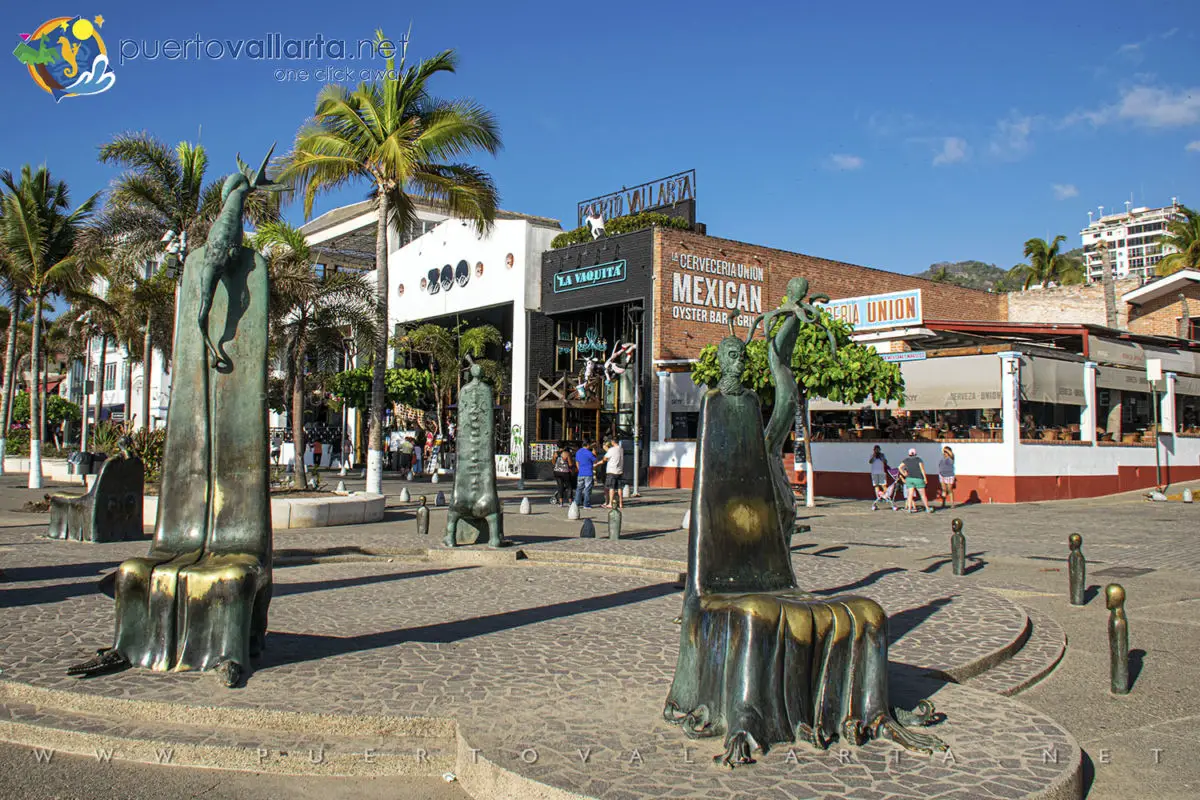
The Rotunda of the Sea (1996) Alejandro Colunga, Malecon, Downtown Puerto Vallarta
Certainly, you can see that the artist is a funny and lighthearted guy, all the better, ’cause those seats are never free from the human “plague”. 😉
This sculptural unit was unveiled on December 30, 1996, by the Public Accountant Humberto Muñoz Vargas, at that time, the PV Municipal President.

The Rotunda of the Sea by Alejandro Colunga (1996)
The promotion of the project before the City Council was in charge of Lic. María Inés Francia Romo, then a Council member, and also donated the foundry expenses, done at the workshops of Salvador Andrade Valdivia, in the city of Guadalajara.
The author donated his creation and the City Council of Puerto Vallarta financed the installation on the boardwalk.
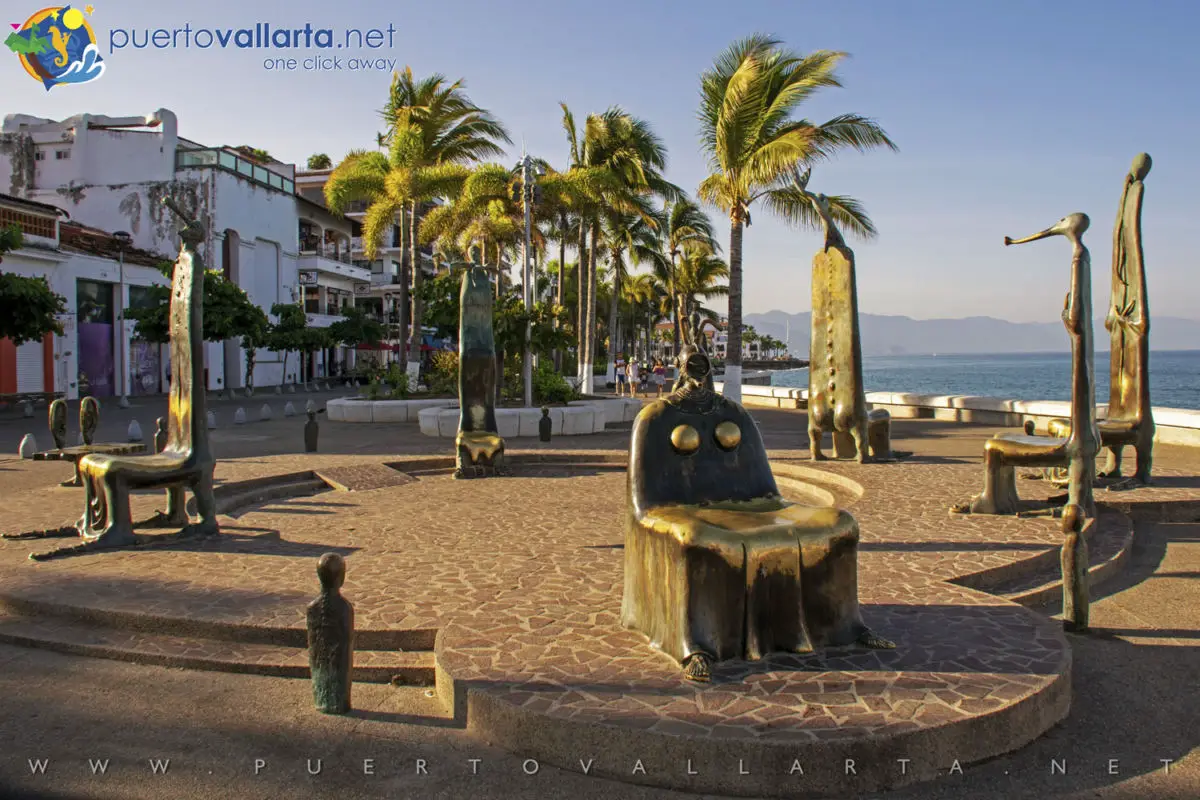
The Rotunda of the Sea by Alejandro Colunga (1996) – PV Malecon/boardwalk
Where is The Rotunda?
This sculpture is one of the many you’ll find all along the Malecon and the Malecon II (what they call the extension of the boardwalk past the Naval Museum) in downtown Puerto Vallarta.
It’s located right where Aldama street ends and intersects with the Malecon (boardwalk), a few steps from the ex-Las Palomas, now Cervecería Unión and the very well-known nightclubs, La Vaquita, Zoo and Mandala.
About the artist (Alejandro Colunga)
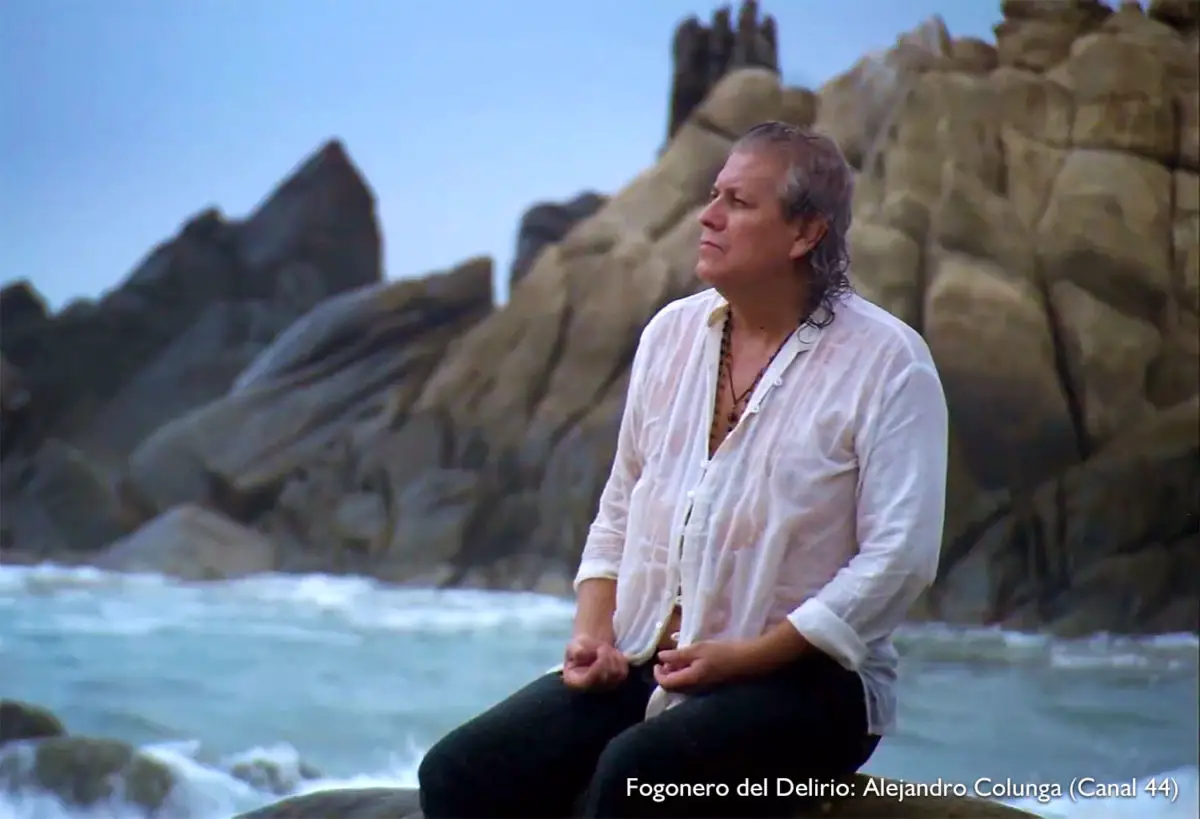
Alejandro Colunga Marín (From the documentary “Fogonero del Delirio”)
Alejandro Colunga Marín (born in Guadalajara Dec. 11, 1948) is a very well-known citizen of Puerto Vallarta, to be found in all the “in” places, like the City Dump & Co. with all the members of the Puerto Vallarta Jetset.
He was first a rock musician, then a painter and finally a sculptor.
He gets his inspiration from popular Mexican storytelling, stories like “La Llorona” or “el Chamuco” appear in his work and also the Latinamerican tradition of surrealism and fantasy.
Colunga’s works can be found throughout Mexico, USA, Europe, and South America.
Map with the main sculptures in town
FAQ
- What is the safest part of Puerto Vallarta to stay in?
The Marina and the Romantic Zone are considered some of the safest areas to stay in Puerto Vallarta. Both areas are popular among tourists and offer a variety of accommodations, restaurants, and attractions. The Marina is known for its upscale atmosphere, luxury resorts, and high-end shops and restaurants. It has a very secure, controlled environment with 24/7 security personnel. The Romantic Zone offers a more authentic Mexican experience with cobblestone streets, colorful colonial buildings, and a vibrant mix of galleries, cafes, and bars. As a central tourist area, it also has a strong police presence and is considered very safe.
- Where do locals go in Puerto Vallarta?
Locals in Puerto Vallarta enjoy spending time at the city’s beautiful beaches, scenic parks, and lively local markets. Popular beach spots include Playa de Oro, Playa Las Animas, and Playa Camarones for their soft sand and calm waters. Many locals visit the Vallarta Botanical Gardens to enjoy the lush vegetation and hiking trails. They also frequent authentic local food venues like Birrieria las 3 Regiones taco stand, cafes like Cafecito Vallarta, and neighborhood bars like La Cerveceria Union. The downtown Lazaro Cardenas market is a favorite for produce, spices, crafts.
- Is Downtown Puerto Vallarta nice?
Yes, downtown Puerto Vallarta is an exceptionally nice and popular area, celebrated for its vibrant mix of historic Mexican charm and a lively beach town atmosphere. It features a picturesque historic center with cobblestone streets, colorful buildings, and the iconic Parish of Our Lady of Guadalupe church. The downtown seamlessly blends into the scenic Malecón, a beautiful oceanfront boardwalk lined with fascinating sculptures, shops, and restaurants, making it perfect for strolling and enjoying the stunning ocean views.
The area offers an excellent variety of dining, from upscale restaurants to authentic street food, along with fantastic shopping in boutiques and art galleries. Adjacent to the main center is the popular Zona Romántica (Romantic Zone), known for its trendy vibe and energetic nightlife. The entire downtown is considered safe and is very walkable, allowing visitors to easily explore its captivating blend of culture, cuisine, and coastal beauty on foot.
Tip: For an unforgettable experience, head down to the Malecón or any beachfront spot about 30 minutes before the scheduled sundown to watch the spectacular sunset over the bay.
- What is considered old town in Puerto Vallarta?
Old Town, also known as the Romantic Zone or Zona Romántica, is considered the historic heart of Puerto Vallarta. It is characterized by its picturesque cobblestone streets, classic whitewashed buildings, red-tiled roofs, and a lively mix of shops, galleries, restaurants and bars. Nestled between the Sierra Madre mountains and Banderas Bay, Old Town has a traditional Mexican village charm with its colonial architecture and slower pace compared to the rest of Puerto Vallarta. Its romantic ambience comes from the area’s natural beauty, outdoor cafes, and charming boutique hotels. Old Town offers visitors a taste of an authentic Mexican neighborhood.

Book tours & support us
- Best prices
- 100% Local Support
- 2 decades+ of experience in Puerto Vallarta

Puerto Vallarta news, tips & content
- New info every two weeks
- Free content, news, videos
- Unsubscribe at any time

Contact us via WhatsApp
- Talk with our reservations expert
- Real local and human support
- Book tours, hotels, transfers, and more.
Share this article, choose your favorite option!


