
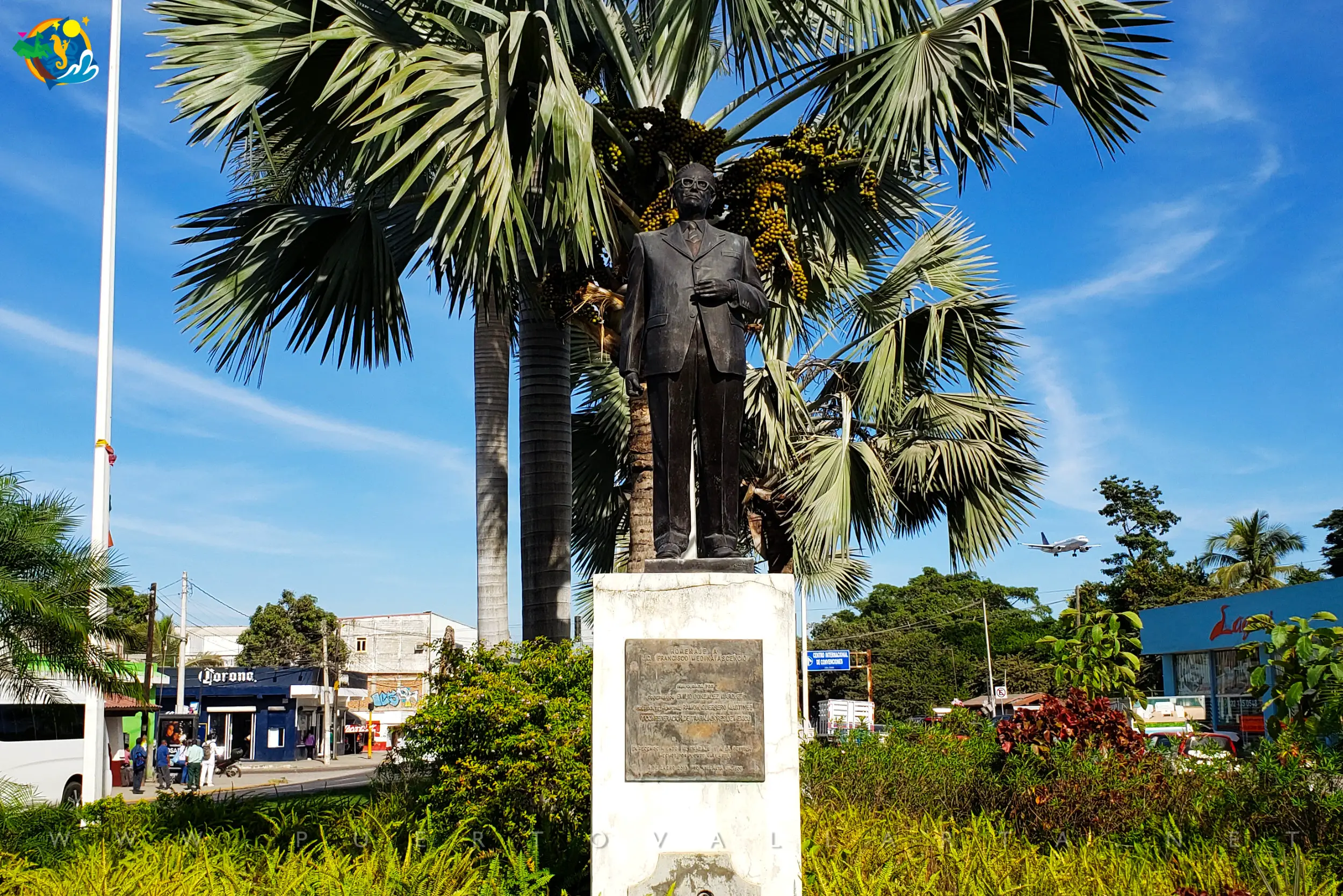
Francisco Medina Ascencio
Summary
- Francisco Medina Ascencio is a sculpture in Puerto Vallarta, Mexico, created by artist Rubén Orozco Loza in 2013.
- The sculpture is a tribute to Francisco Medina Ascencio, the governor who elevated Puerto Vallarta to a city in 1968.
- The sculpture is located at the entrance to Marina Vallarta, at the corner of Paseo de la Marina and Francisco Medina Ascencio avenue.


Some like to say John Huston and his gang of decadent Hollywood actors brought Puerto Vallarta out into the limelight and transformed it into the tourist destination it is today, others, based more on facts and reality would point to Francisco Medina Ascencio as the main cause.
One of the newest sculptures in town is the one honoring the man who really made Puerto Vallarta what it is today, Francisco Medina Ascencio (1910-1993). The sculptor is Rubén Orozco Loza, an artist from Guadalajara, Jalisco.
Yes, yes, Huston, Burton and Taylor, did their part, but nothing would have really changed if Puerto Vallarta hadn’t been ready to grow, that meant bridges, roads, an airport, funds, and infrastructure in general.

Francisco Medina Ascencio
That’s why on Jan 4th, 2013, with the presence of his son and various important local and state authorities, in recognition of his unfailing efforts for Puerto Vallarta during his term as Governor of Jalisco (from March 1, 1965, to February 28, 1971), a sculpture of Francisco Medina Ascencio was unveiled in the way into town when driving in from Nayarit.
As one of the final initiatives of the prior Governor of Jalisco, Emilio González Marquez, the ceremony emphasized the legacy of Francisco Medina Ascencio. As governor Francisco Medina Ascencio elevated Puerto Vallarta to “city” in 1968, something that made it suddenly target of Federal and State funds for the development of its infrastructure, plus, this made private investment in Vallarta a better bet and many started building hotels, restaurants, and stores in town. A clearer idea of this incredible development is obtained by comparing 1968 stats with those of 1970.
| Population | Hotel rooms | Tourists | |
| 1968 | 17,740 | 749 | 55,451 |
| 1970 | 35,911 | 1,310 | 157,541 |

Francisco Medina Ascencio by Ruben Orozco Loza
He is considered by many as the man behind the modern era of this city, his contributions are, among others:
- Improvements to Puerto Vallarta’s International Airport that had been built in 1962.
- The road from Barra de Navidad to Puerto Vallarta (connecting with the future Costa Alegre).
- The highway between Puerto Vallarta and Compostela (going to Tepic).
- A 1,600 ft bridge over the Ameca River.
- Adding an electrical substation connected to the Western electrical grid, with capacity for growth.
- The first harbor in Jalisco, at El Salado.
- Adding telephone and international lines (even before Guadalajara, the state capital).
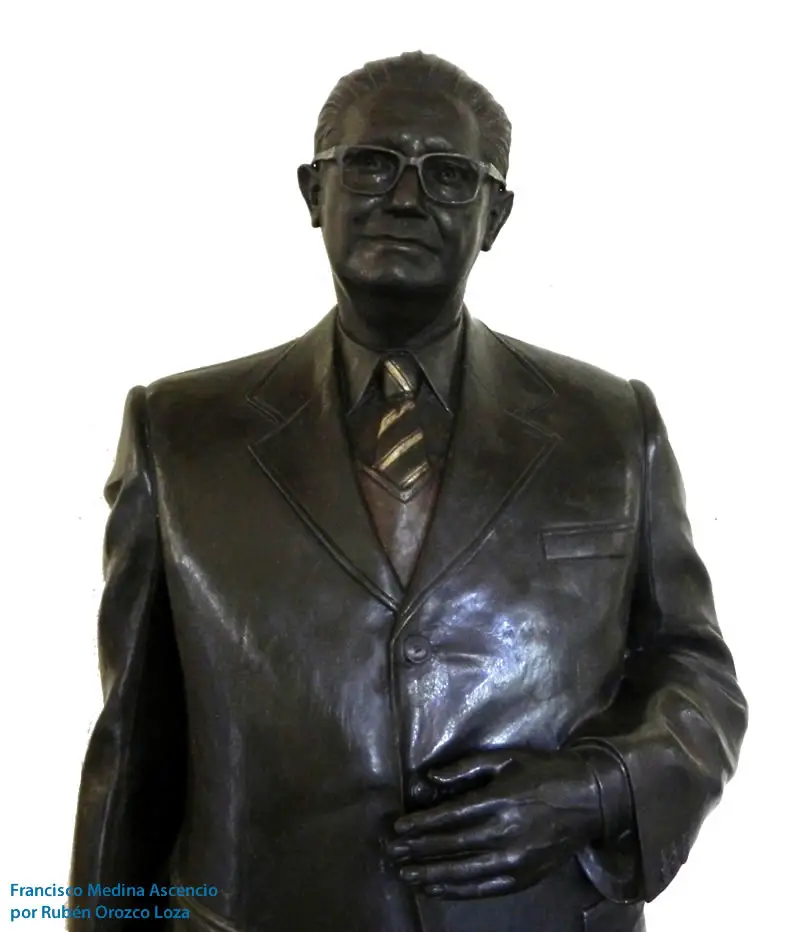
Francisco Medina Ascencio
He was also a tireless advocate for the coast of Jalisco, where he promoted the arrival of the big chains, made a deepwater port and promoted the city internationally with a summit meeting between the President of Mexico, Gustavo Diaz Ordaz and the President United States, Richard Nixon in Puerto Vallarta on August 20, 1970. (Ref. VisitPuertoVallarta.com).
The sculpture is located on the way into town, close to the big colorful Puerto Vallarta sign when driving in from the neighboring state of Nayarit.
Some videos from the unveiling event:
FAQ
- What is the safest part of Puerto Vallarta to stay in?
The Marina and the Romantic Zone are considered some of the safest areas to stay in Puerto Vallarta. Both areas are popular among tourists and offer a variety of accommodations, restaurants, and attractions. The Marina is known for its upscale atmosphere, luxury resorts, and high-end shops and restaurants. It has a very secure, controlled environment with 24/7 security personnel. The Romantic Zone offers a more authentic Mexican experience with cobblestone streets, colorful colonial buildings, and a vibrant mix of galleries, cafes, and bars. As a central tourist area, it also has a strong police presence and is considered very safe.
- Where do locals go in Puerto Vallarta?
Locals in Puerto Vallarta enjoy spending time at the city’s beautiful beaches, scenic parks, and lively local markets. Popular beach spots include Playa de Oro, Playa Las Animas, and Playa Camarones for their soft sand and calm waters. Many locals visit the Vallarta Botanical Gardens to enjoy the lush vegetation and hiking trails. They also frequent authentic local food venues like Birrieria las 3 Regiones taco stand, cafes like Cafecito Vallarta, and neighborhood bars like La Cerveceria Union. The downtown Lazaro Cardenas market is a favorite for produce, spices, crafts.
- Is Downtown Puerto Vallarta nice?
Yes, downtown Puerto Vallarta is an exceptionally nice and popular area, celebrated for its vibrant mix of historic Mexican charm and a lively beach town atmosphere. It features a picturesque historic center with cobblestone streets, colorful buildings, and the iconic Parish of Our Lady of Guadalupe church. The downtown seamlessly blends into the scenic Malecón, a beautiful oceanfront boardwalk lined with fascinating sculptures, shops, and restaurants, making it perfect for strolling and enjoying the stunning ocean views.
The area offers an excellent variety of dining, from upscale restaurants to authentic street food, along with fantastic shopping in boutiques and art galleries. Adjacent to the main center is the popular Zona Romántica (Romantic Zone), known for its trendy vibe and energetic nightlife. The entire downtown is considered safe and is very walkable, allowing visitors to easily explore its captivating blend of culture, cuisine, and coastal beauty on foot.
Tip: For an unforgettable experience, head down to the Malecón or any beachfront spot about 30 minutes before the scheduled sundown to watch the spectacular sunset over the bay.
- What is considered old town in Puerto Vallarta?
Old Town, also known as the Romantic Zone or Zona Romántica, is considered the historic heart of Puerto Vallarta. It is characterized by its picturesque cobblestone streets, classic whitewashed buildings, red-tiled roofs, and a lively mix of shops, galleries, restaurants and bars. Nestled between the Sierra Madre mountains and Banderas Bay, Old Town has a traditional Mexican village charm with its colonial architecture and slower pace compared to the rest of Puerto Vallarta. Its romantic ambience comes from the area’s natural beauty, outdoor cafes, and charming boutique hotels. Old Town offers visitors a taste of an authentic Mexican neighborhood.

Book tours & support us
- Best prices
- 100% Local Support
- 2 decades+ of experience in Puerto Vallarta

Puerto Vallarta news, tips & content
- New info every two weeks
- Free content, news, videos
- Unsubscribe at any time

Contact us via WhatsApp
- Talk with our reservations expert
- Real local and human support
- Book tours, hotels, transfers, and more.
Share this article, choose your favorite option!


