


Do you know what we are talking about if we mention the amazing Huichol Indians or Wixárika art? Do you know the history and origin of this wonderful culture that has struggled to keep their customs, language, and beliefs intact?
Take the opportunity while you visit Puerto Vallarta to learn more about the amazing Huichol or Wixárika, their culture, their heritage and their beautiful and world-renowned art.
Actually, the name “Huichol” when talking about the Wixárika ethnic group is a derogatory ethnonym the Mexica people used when talking about them, long before the Spanish arrived, but through the years it has been adopted as their real name.
The Wixárika, term which actually means “seer”, have remained totally faithful to their beliefs even in the midst of this modern technological era in which they are immersed. They struggle every day against adversities, trying to preserve their clothing, their rituals, history, language, and art.
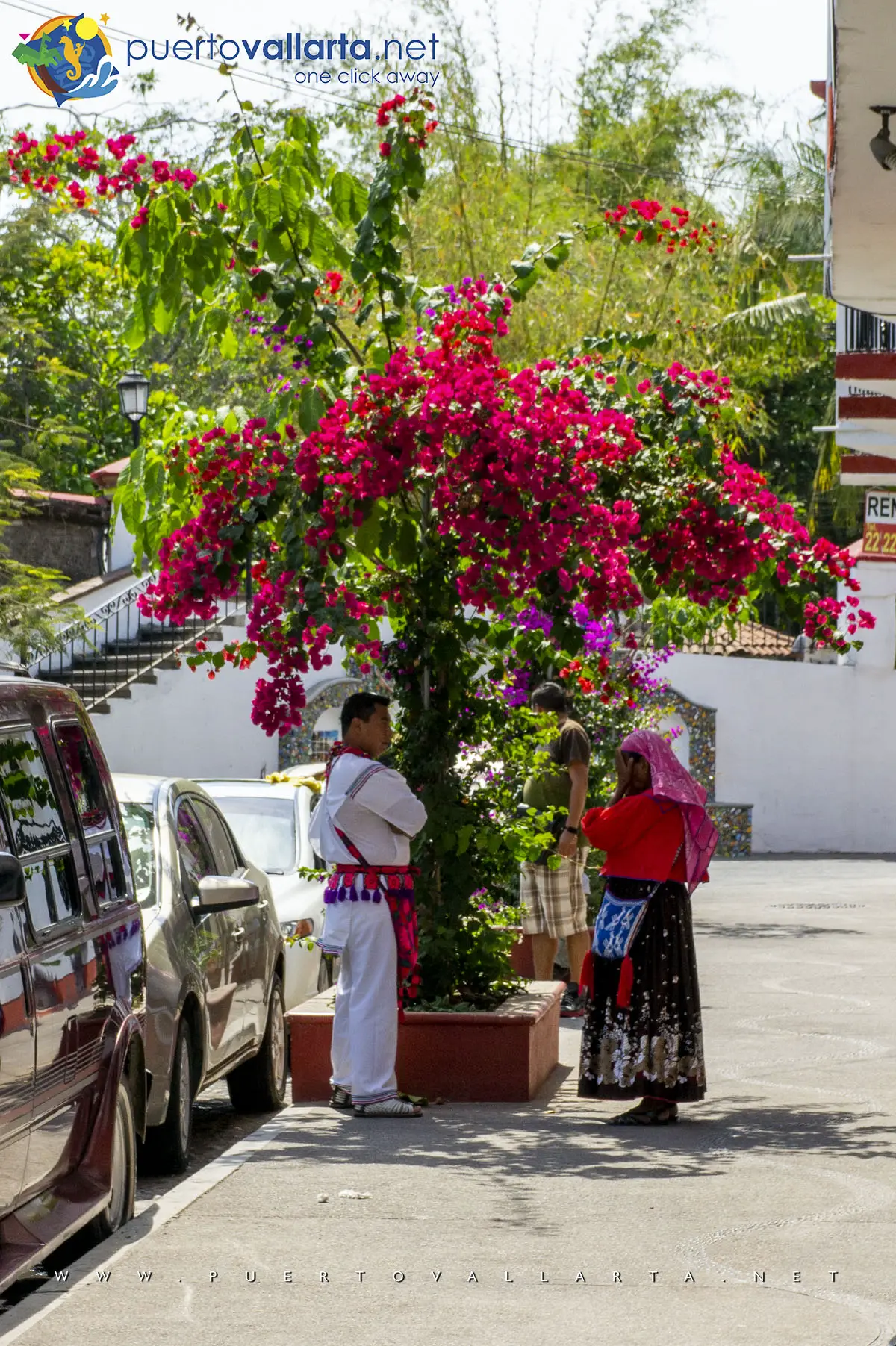
The Wixárika (they call themselves Wixáritari “The People”) inhabit western-central Mexico, in the northern part of the state of Jalisco, on the backbone of the Sierra Madre Occidental, after a long ride on rough dirt roads you can arrive at the villages of Mezquitic and Bolaños. They also inhabit parts of the states of Nayarit, Durango, and Zacatecas.
The Huichol religion includes 4 main deities, the trinity of Corn, Blue Deer and Peyote and the Eagle that have all descended from their Sun God Tao Jreeku who created all the beings on Earth with his saliva..
The Wixárika believe that two opposing forces exist in the world, one one side the Igneous forces that are represented by “Our Father” Tayaupá, The Sun and the Aquatic forces, in the form of Nacawé, the Rain Goddess.
Other deities include Kacíwali, the maize Goddess, Komatéame, the goddess of Midwives, Stuluwiákame is responsible of giving children to humans and Na’alewáemi gives animals their young. Tatéi Wérika that is related to the Sun is a two headed eagle. Ref: Wikipedia
It is this distance from the modern urban areas, the isolation from mass culture and the modern consumer society, that has helped them preserve the purity of their race, their customs, and festivals, their own social organization and their characteristic and peculiar art.
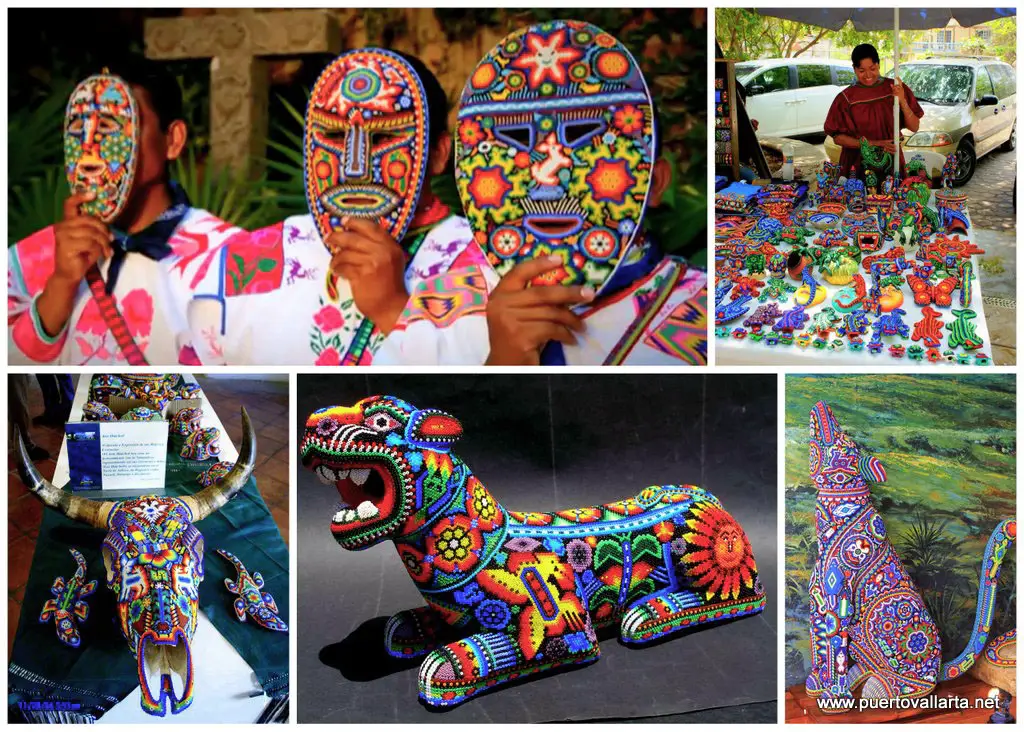
The Wixárika art uses decorative elements that are already very representative and recognized around the world, as much as the art itself. We are talking about the tiny glass beads called “chakira”. No one really knows when these decorative beads appeared in Mexico. They are used in Huichol art, such as jewelry, apparel decoration, and some ceremonial objects and by other indigenous Mexican cultures such as the Tarahumara, Cucapás, Nahua, Otomi, Purepecha, Kicapus and others.
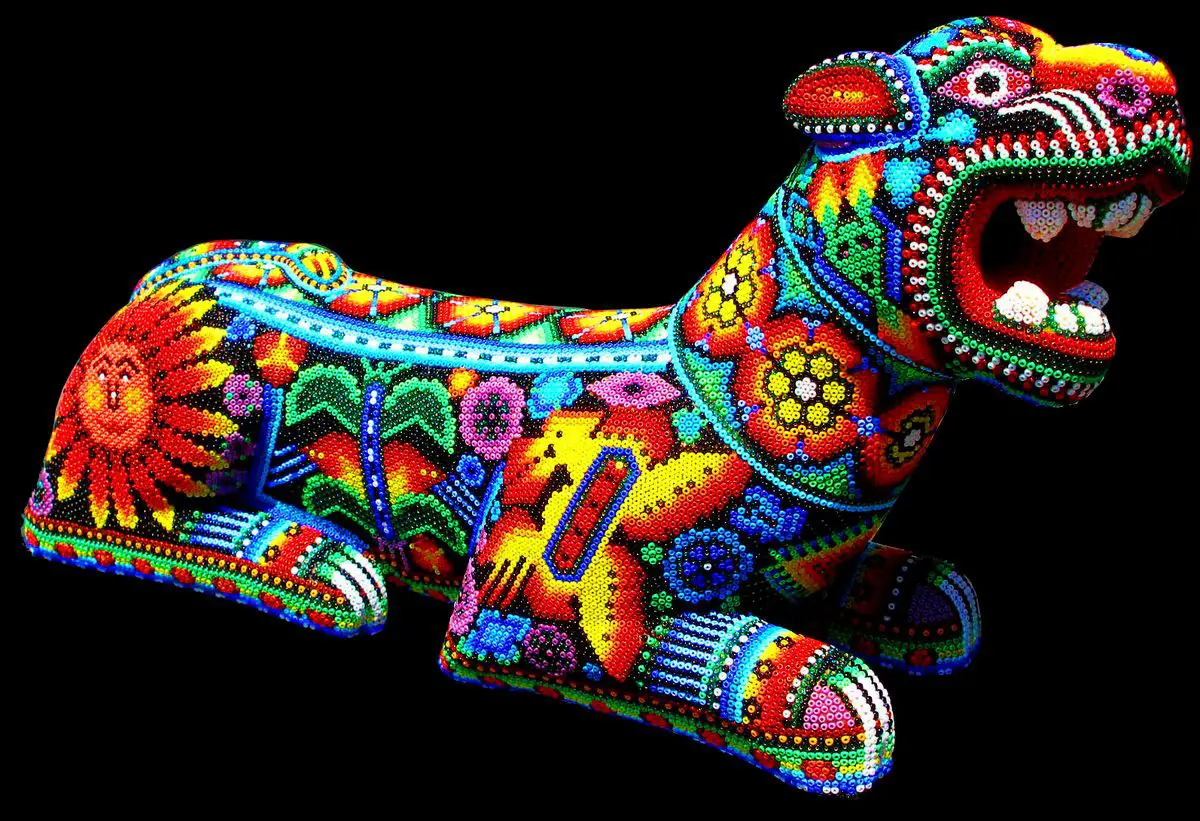
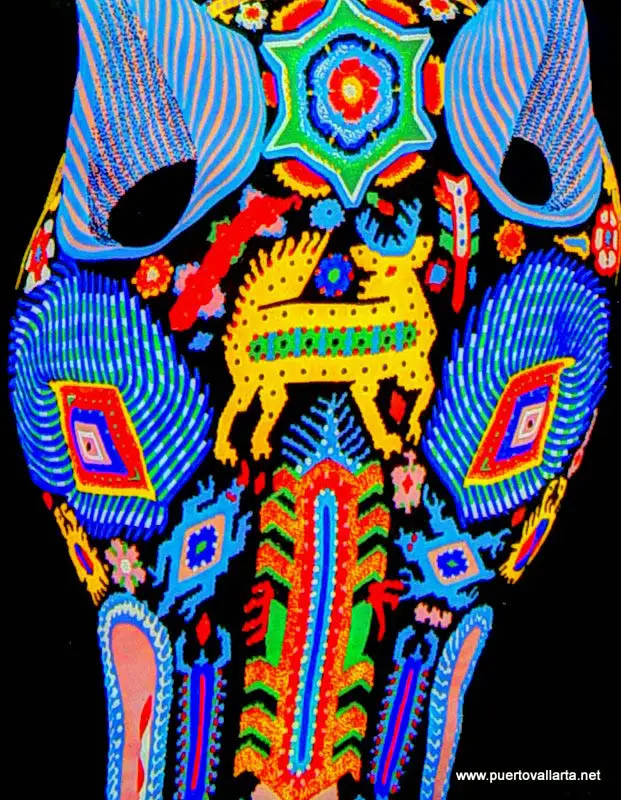
These tiny beads are stuck to a pre-carved wooden figure, using Campeche wax as “glue.” This wax is mixed and spread on the carved piece of the wood surface and then they stick by hand, one by one, all the beads that will give form and color to the final design. With these same beads, they also create colorful and unique jewelry, including bracelets, necklaces, and earrings.
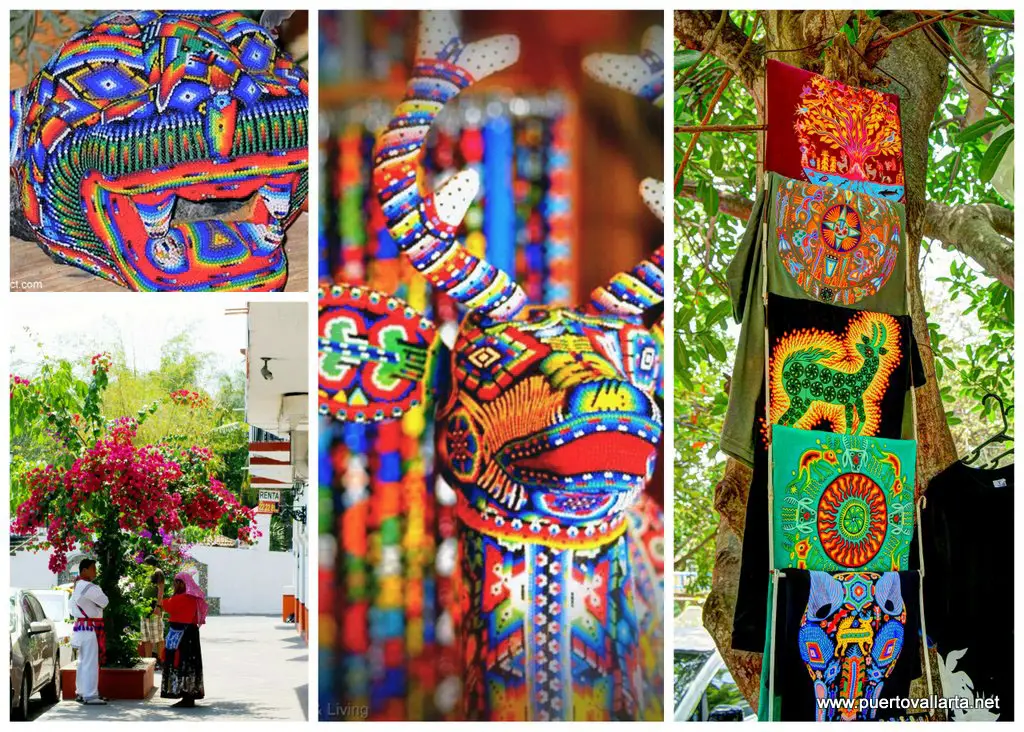
In general, the Huichol wood figures include deer, coyotes, flowers, lizards and many others, combined to recreate the sacred symbols of their world-view, covered with chakira designs of peyote, scorpions, corn, suns, geometric figures and many others.
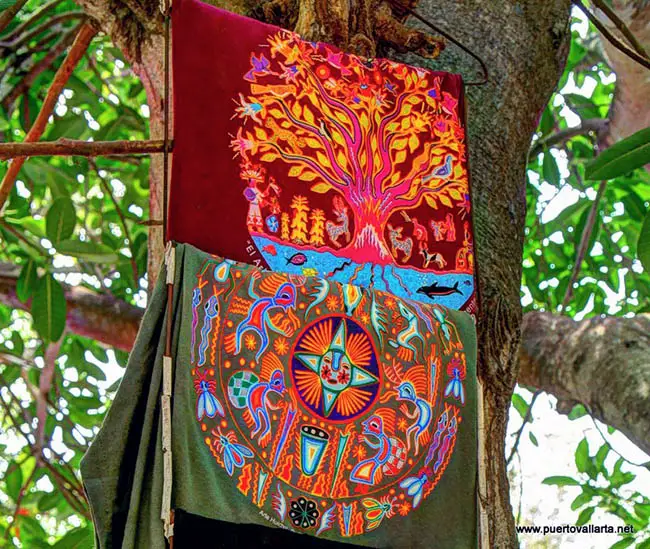
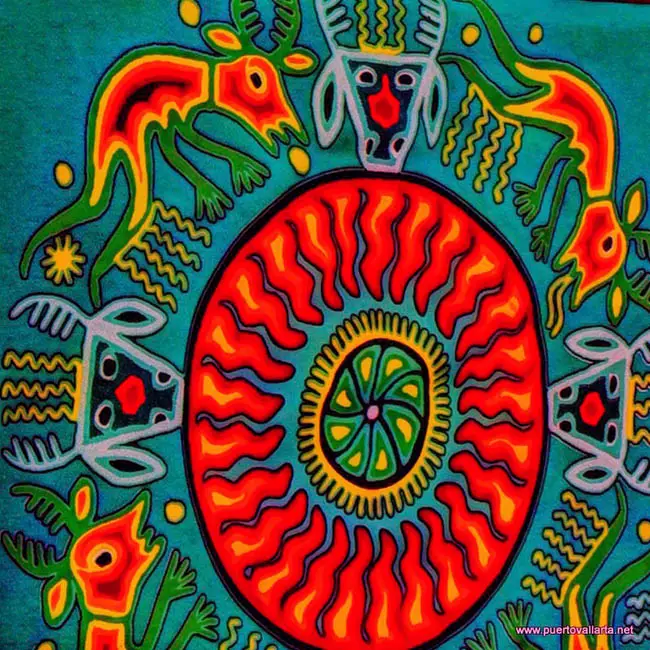
Another very popular type of art because of their “psychedelic” designs are the nierikas or thread boards (yarn paintings). These nierikas mostly contain images representing the visions you’ll experience when you consume peyote, and in some other cases even contain mythological or quite complex esoteric designs. Peyote is a cactus plant widely used in the sacred indigenous rituals as well as for its medicinal effects.

As with the figures made with beads, to make a nierika you extend Campeche wax on a flat piece of wood or some other material, you outline the design and you start sticking the thread little by little until the design is finished. Of course, even their clothing is covered with colorful embroideries that are also part of the Wixárika artistic expression.
As you can see, the Huichol or Wixárika culture is, without a doubt, a gem you can experience during your stay in Puerto Vallarta, within Jalisco and Mexico as a country. Worthy of our admiration and respect, not only for their lifestyle, their ideologies, their veneration of the sacred aspects of nature and life but also for their respect and dedication to their legacies and how they’ve struggled through time and despite the constant attack of Western society, still keep alive their wonderful culture, so filled with magic and color, alive.
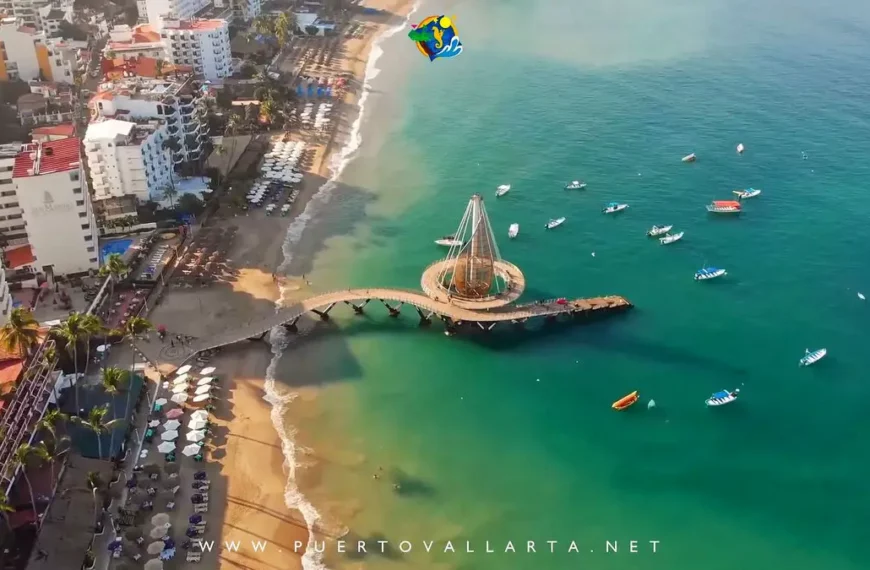
So now you know, while you are in town, do not miss the opportunity to see this up close and personal. Marvel over the art and culture of the Wixárika. There are several art galleries in town and in other surrounding areas where you can find their artwork in display, even the Malecon showcases Huichol designs in the new stone designs.
Author: M. Gallardo
Read more:
More:
FAQ
- What is the safest part of Puerto Vallarta to stay in?
The Marina and the Romantic Zone are considered some of the safest areas to stay in Puerto Vallarta. Both areas are popular among tourists and offer a variety of accommodations, restaurants, and attractions. The Marina is known for its upscale atmosphere, luxury resorts, and high-end shops and restaurants. It has a very secure, controlled environment with 24/7 security personnel. The Romantic Zone offers a more authentic Mexican experience with cobblestone streets, colorful colonial buildings, and a vibrant mix of galleries, cafes, and bars. As a central tourist area, it also has a strong police presence and is considered very safe.
- Where do locals go in Puerto Vallarta?
Locals in Puerto Vallarta enjoy spending time at the city’s beautiful beaches, scenic parks, and lively local markets. Popular beach spots include Playa de Oro, Playa Las Animas, and Playa Camarones for their soft sand and calm waters. Many locals visit the Vallarta Botanical Gardens to enjoy the lush vegetation and hiking trails. They also frequent authentic local food venues like Birrieria las 3 Regiones taco stand, cafes like Cafecito Vallarta, and neighborhood bars like La Cerveceria Union. The downtown Lazaro Cardenas market is a favorite for produce, spices, crafts.
- Is Downtown Puerto Vallarta nice?
Yes, downtown Puerto Vallarta is an exceptionally nice and popular area, celebrated for its vibrant mix of historic Mexican charm and a lively beach town atmosphere. It features a picturesque historic center with cobblestone streets, colorful buildings, and the iconic Parish of Our Lady of Guadalupe church. The downtown seamlessly blends into the scenic Malecón, a beautiful oceanfront boardwalk lined with fascinating sculptures, shops, and restaurants, making it perfect for strolling and enjoying the stunning ocean views.
The area offers an excellent variety of dining, from upscale restaurants to authentic street food, along with fantastic shopping in boutiques and art galleries. Adjacent to the main center is the popular Zona Romántica (Romantic Zone), known for its trendy vibe and energetic nightlife. The entire downtown is considered safe and is very walkable, allowing visitors to easily explore its captivating blend of culture, cuisine, and coastal beauty on foot.
Tip: For an unforgettable experience, head down to the Malecón or any beachfront spot about 30 minutes before the scheduled sundown to watch the spectacular sunset over the bay.
- What is considered old town in Puerto Vallarta?
Old Town, also known as the Romantic Zone or Zona Romántica, is considered the historic heart of Puerto Vallarta. It is characterized by its picturesque cobblestone streets, classic whitewashed buildings, red-tiled roofs, and a lively mix of shops, galleries, restaurants and bars. Nestled between the Sierra Madre mountains and Banderas Bay, Old Town has a traditional Mexican village charm with its colonial architecture and slower pace compared to the rest of Puerto Vallarta. Its romantic ambience comes from the area’s natural beauty, outdoor cafes, and charming boutique hotels. Old Town offers visitors a taste of an authentic Mexican neighborhood.

Book tours & support us
- Best prices
- 100% Local Support
- 2 decades+ of experience in Puerto Vallarta

Puerto Vallarta news, tips & content
- New info every two weeks
- Free content, news, videos
- Unsubscribe at any time

Contact us via WhatsApp
- Talk with our reservations expert
- Real local and human support
- Book tours, hotels, transfers, and more.
Share this article, choose your favorite option!


