Quick facts
- Día de los Muertos, or Day of the Dead, is not a Mexican version of Halloween. The two events differ greatly in traditions and tone.
- Day of the Dead festivities unfold over the first two days of November in an explosion of color and life-affirming joy.
- The theme is death, but the point is to demonstrate love and respect for deceased family members.
- During Día de los Muertos celebrations, family members will often visit the cemeteries where their lost loved ones are interred, cleaning and decorating the tombs and gathering graveside to eat, play music, and speak of and to the dead.
- In 2008, UNESCO recognized the importance of Día de los Muertos by adding the holiday to its list of Intangible Cultural Heritage.
By Esteban R. Gonzalez
While there is still life to live, to hell with death!
Learn a bit more about what the Day of the Dead (Día de Muertos) is:
We Mexicans feel much more alive during the Days of the Dead, every 1st and 2nd of November as years pass.
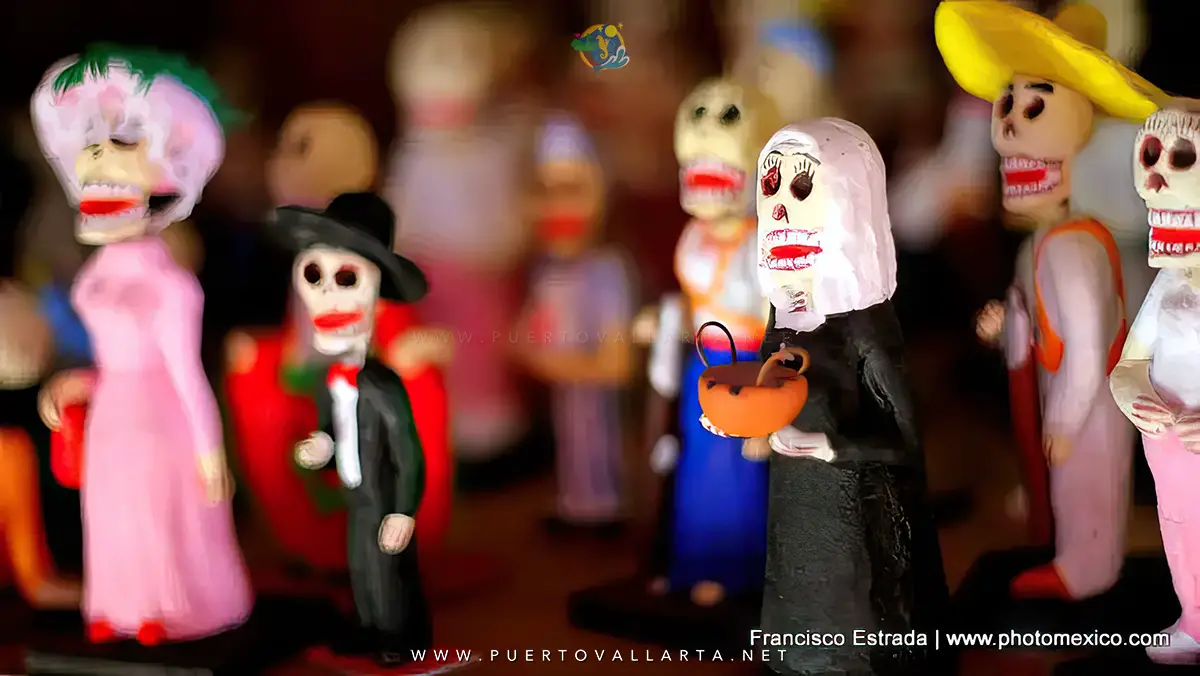
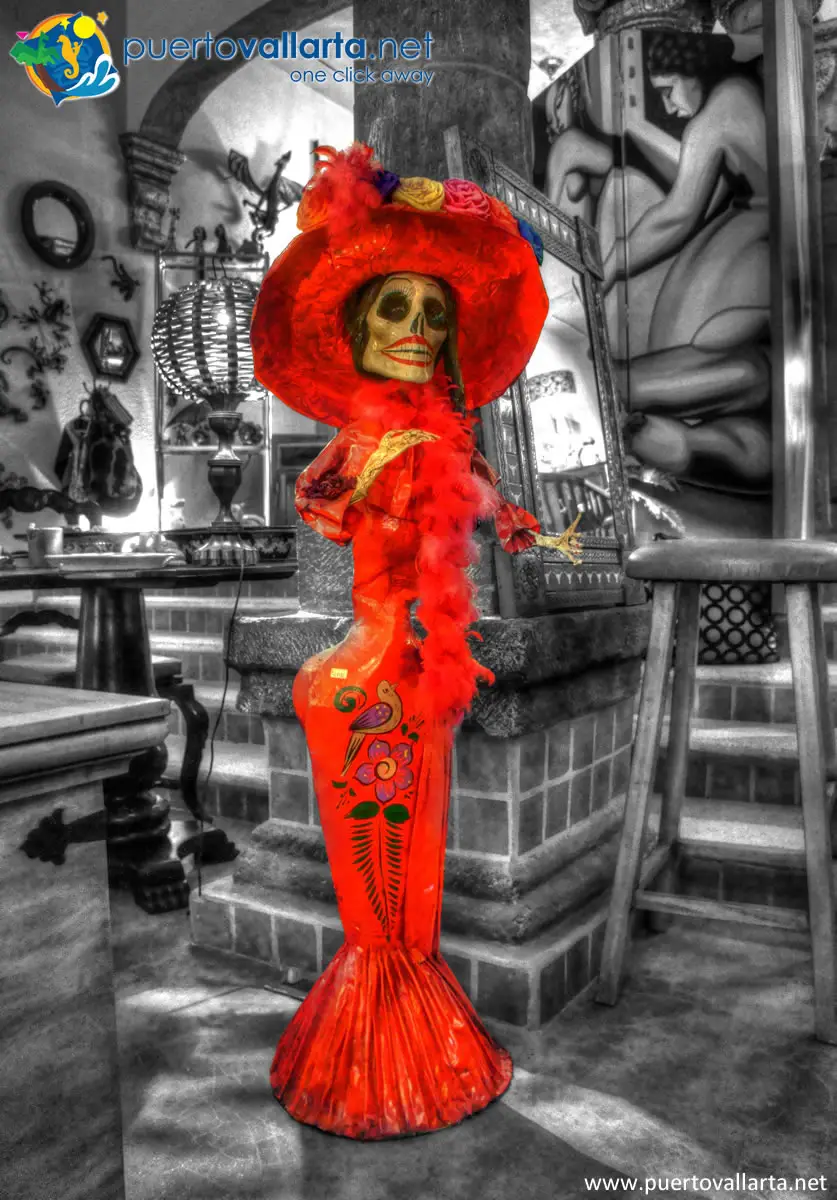
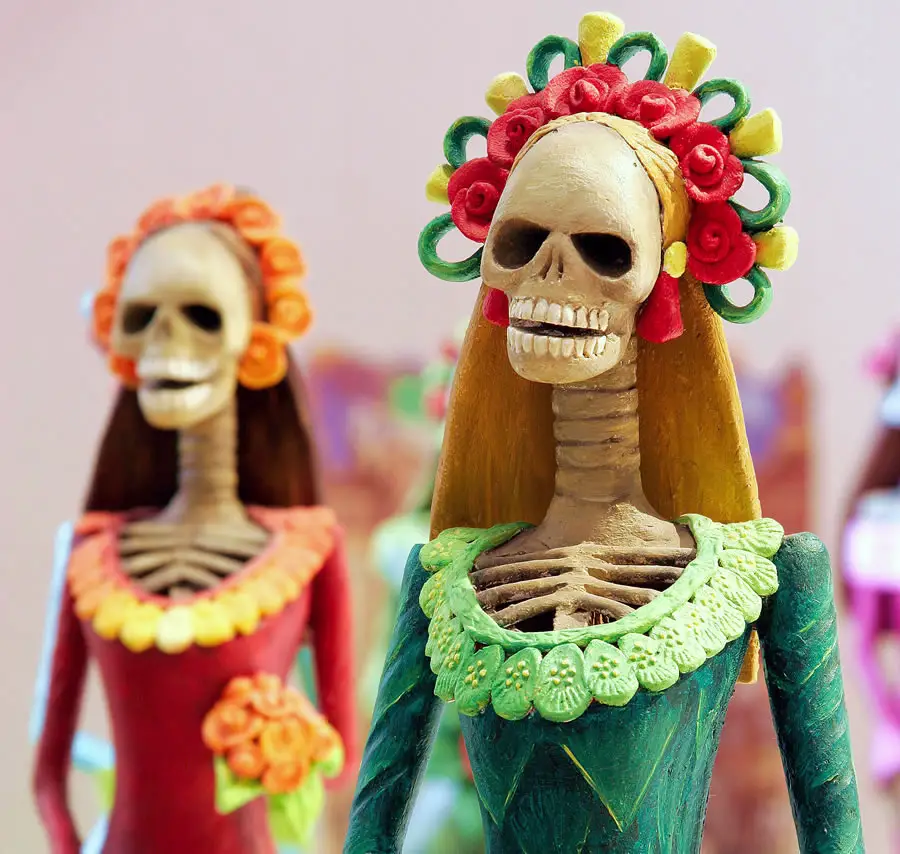
We make fun of La Catrina (a rich old lady, that reminds us that no matter how much money, you can’t escape death) that now symbolizes Death – creating mischievous rhymes known as calaveras (skulls) and giving our friends and family candy skulls with their names on the forehead.
We take the children to the plazas and along the streets to ask for their calaverita (candy and toys) and in the cemeteries, we remember and celebrate our departed ones with Mariachis and Tequilas.
The living are always in need, the dead have too much of everything: altars in their honor are put up in homes and cemeteries and decorated with purple and orange cut paper, taper candles and incense, sugar paste candies and flowers such as cempasuchil -marigolds, the flower of the dead-, terciopelo, nubes and carnations.
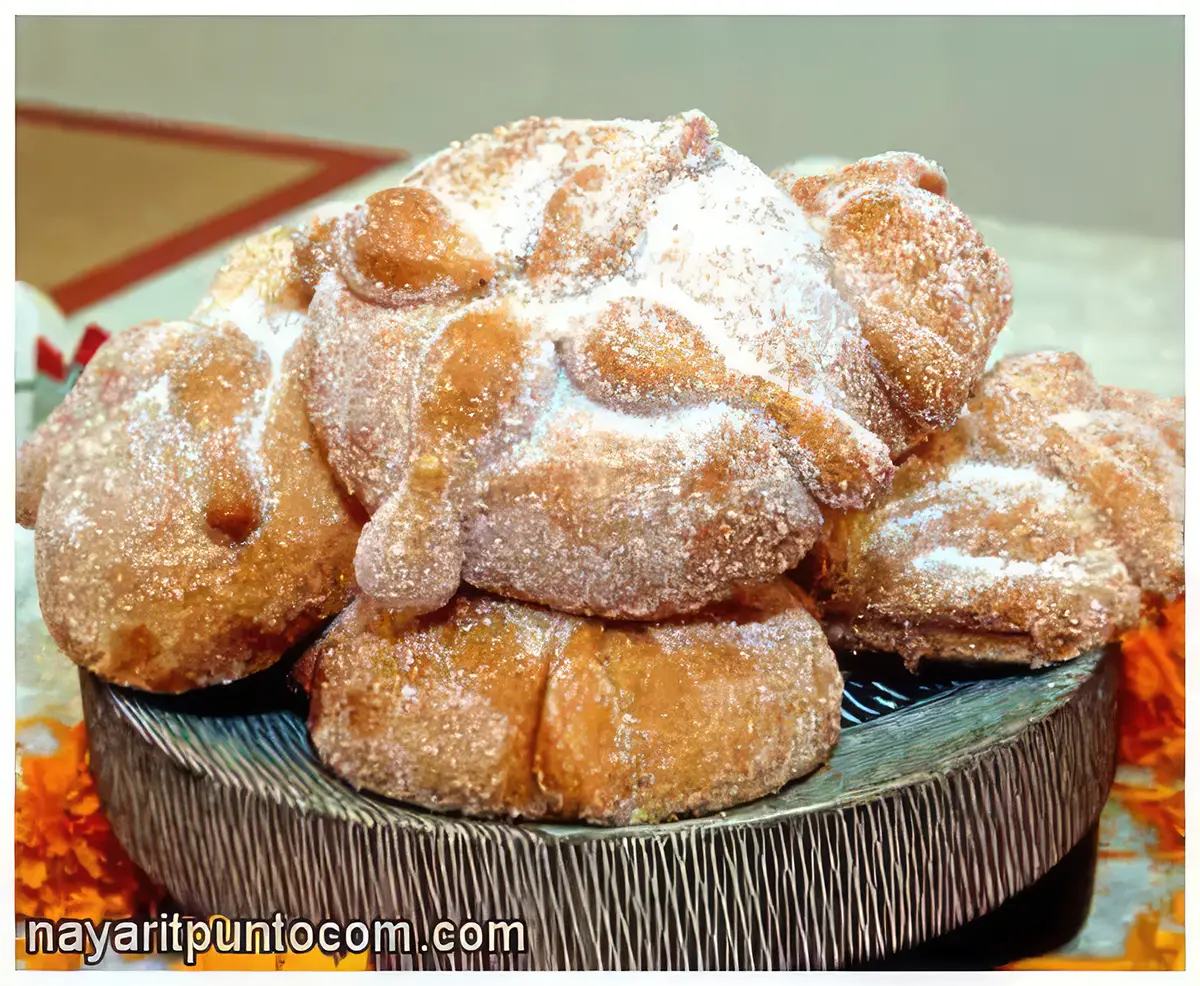
The deceased are offered food made by the living, like tamales, mole and candied pumpkin, and beverages such as atole (a corn flour drink), pulque (fermented maguey juice) and spirits. Included in the offering, placed beside the deceased’s photograph, are cigarettes, seasonal fruit, a water jug and a washbowl – so the souls can cleanse themselves -, as well as the traditional bread of the dead, delicious sugar-coated loaves of bread decorated with bones and tears made out of the same dough.
On the altars for the dead children -the little deceased- there are also toys made out of wood, cardboard, clay or plastic. Thus, the departed ones who visit us on these days will quench their thirst and satisfy their hunger and their spirit.
When the altar is removed at the end of the celebrations, the food will have lost its smell and taste: the souls that have been summoned will be nourished on the food’s essence.
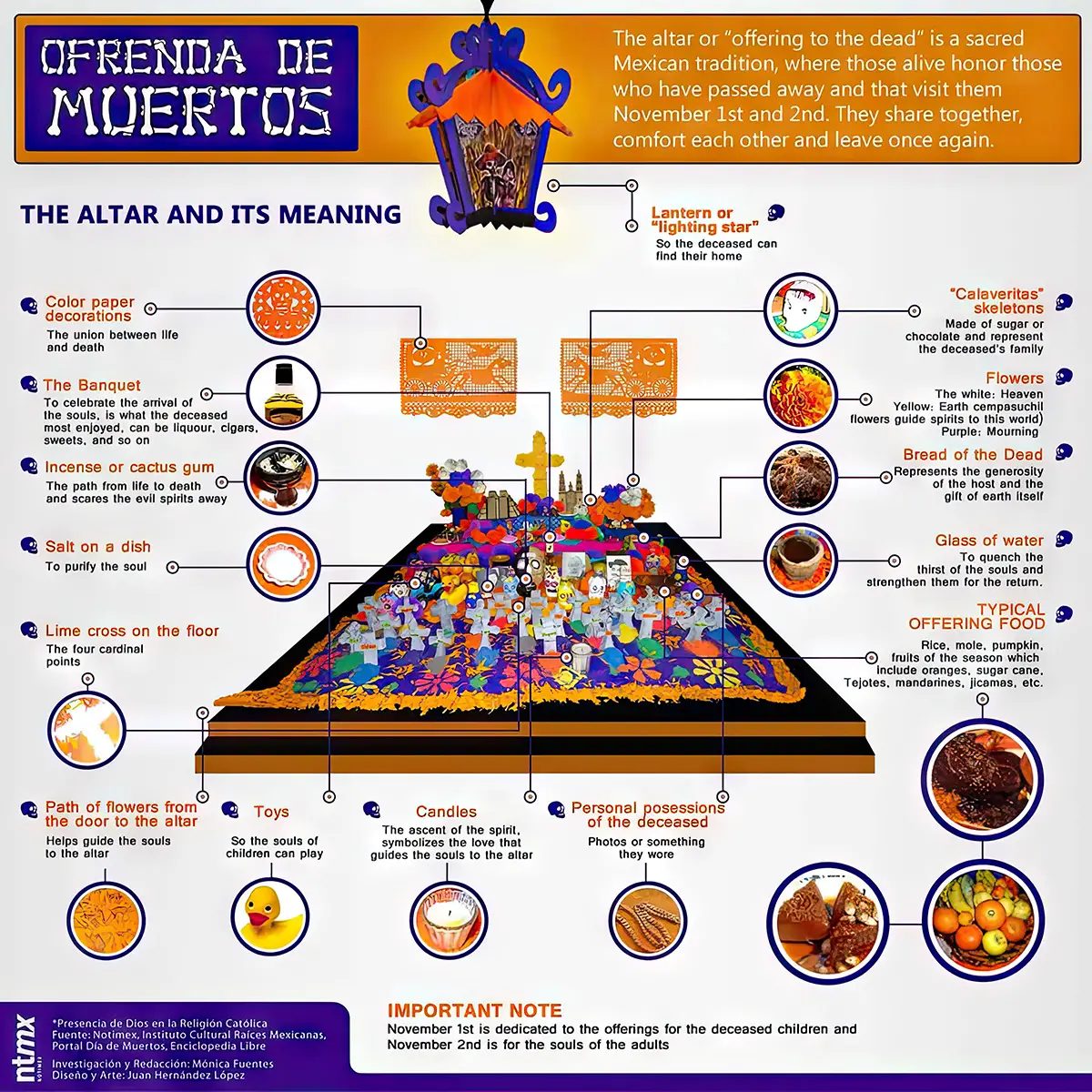
Paths of marigold petals are laid out so the dead can find their way back home and votive candles are lit for every soul. During the Days of the Dead, the characteristic smell of marigold and the aroma of incense and copal fill the night’s atmosphere.
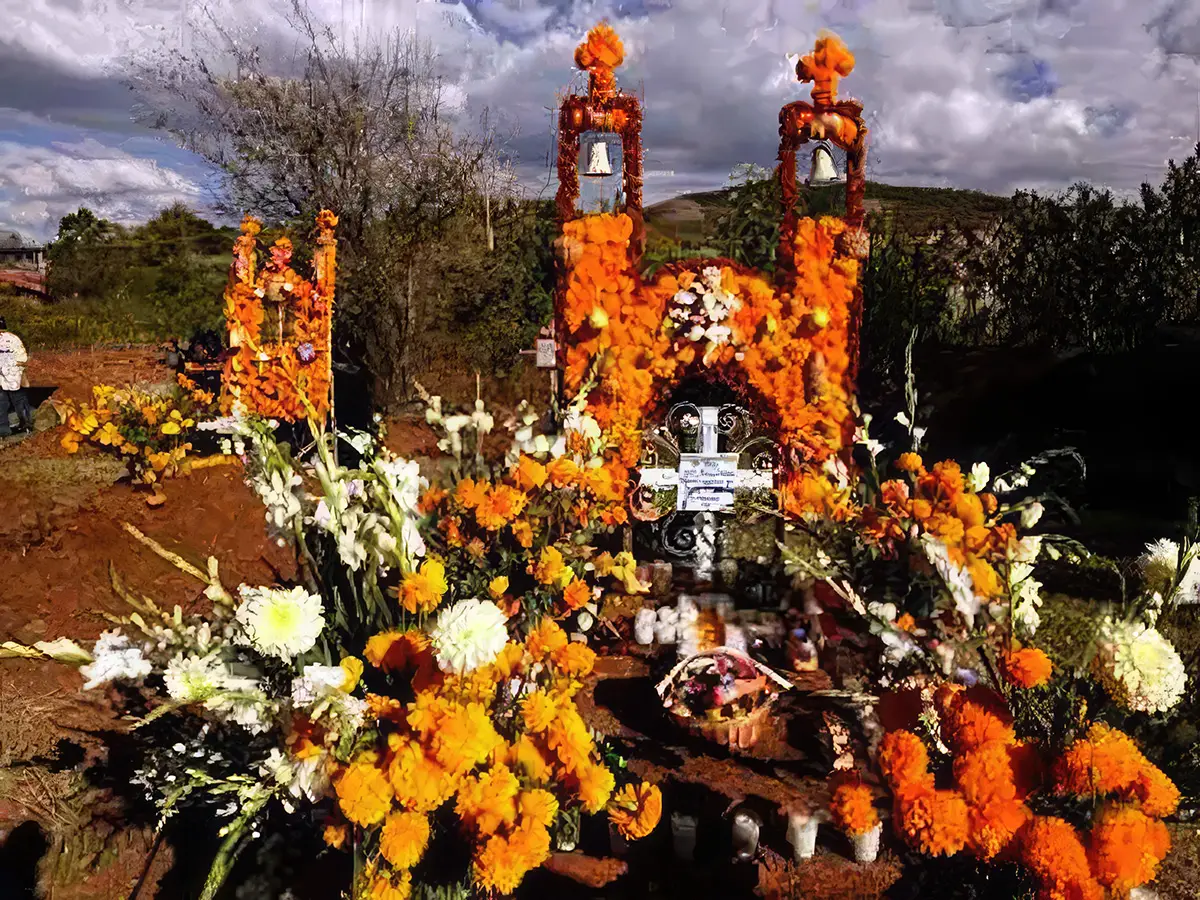
On the small islands on the Lake of Patzcuaro, such as Janitzio and Pacanda, and its lakeside villages, such as Tzintzuntzan and Santa Fe de la Laguna, in the state of Michoacan, and in Xochimilco and Mixquic, in Mexico City, where the graves are bedecked with flower petals, this tradition is celebrated with impressive solemnity, in an ambiance of mestization where the sacred and the profane are complemented by millenary pre-Hispanic rites.
Life gains meaning with death: after all, we were born to die. And more so on these days, during the well-attended wakes at the cemeteries where, with tequila or with mezcal, we share a toast with our departed ones, accompanying them at their last resting place. Then we remember that in a hundred years we will all be goners… But in the meantime. as the popular Mexican saying goes: “the dead to the well and the living to revel!”
Read more on Wikipedia.
FAQ
- What is the safest part of Puerto Vallarta to stay in?
The Marina and the Romantic Zone are considered some of the safest areas to stay in Puerto Vallarta. Both areas are popular among tourists and offer a variety of accommodations, restaurants, and attractions. The Marina is known for its upscale atmosphere, luxury resorts, and high-end shops and restaurants. It has a very secure, controlled environment with 24/7 security personnel. The Romantic Zone offers a more authentic Mexican experience with cobblestone streets, colorful colonial buildings, and a vibrant mix of galleries, cafes, and bars. As a central tourist area, it also has a strong police presence and is considered very safe.
- Where do locals go in Puerto Vallarta?
Locals in Puerto Vallarta enjoy spending time at the city’s beautiful beaches, scenic parks, and lively local markets. Popular beach spots include Playa de Oro, Playa Las Animas, and Playa Camarones for their soft sand and calm waters. Many locals visit the Vallarta Botanical Gardens to enjoy the lush vegetation and hiking trails. They also frequent authentic local food venues like Birrieria las 3 Regiones taco stand, cafes like Cafecito Vallarta, and neighborhood bars like La Cerveceria Union. The downtown Lazaro Cardenas market is a favorite for produce, spices, crafts.
- Is Downtown Puerto Vallarta nice?
Yes, downtown Puerto Vallarta is an exceptionally nice and popular area, celebrated for its vibrant mix of historic Mexican charm and a lively beach town atmosphere. It features a picturesque historic center with cobblestone streets, colorful buildings, and the iconic Parish of Our Lady of Guadalupe church. The downtown seamlessly blends into the scenic Malecón, a beautiful oceanfront boardwalk lined with fascinating sculptures, shops, and restaurants, making it perfect for strolling and enjoying the stunning ocean views.
The area offers an excellent variety of dining, from upscale restaurants to authentic street food, along with fantastic shopping in boutiques and art galleries. Adjacent to the main center is the popular Zona Romántica (Romantic Zone), known for its trendy vibe and energetic nightlife. The entire downtown is considered safe and is very walkable, allowing visitors to easily explore its captivating blend of culture, cuisine, and coastal beauty on foot.
Tip: For an unforgettable experience, head down to the Malecón or any beachfront spot about 30 minutes before the scheduled sundown to watch the spectacular sunset over the bay.
- What is considered old town in Puerto Vallarta?
Old Town, also known as the Romantic Zone or Zona Romántica, is considered the historic heart of Puerto Vallarta. It is characterized by its picturesque cobblestone streets, classic whitewashed buildings, red-tiled roofs, and a lively mix of shops, galleries, restaurants and bars. Nestled between the Sierra Madre mountains and Banderas Bay, Old Town has a traditional Mexican village charm with its colonial architecture and slower pace compared to the rest of Puerto Vallarta. Its romantic ambience comes from the area’s natural beauty, outdoor cafes, and charming boutique hotels. Old Town offers visitors a taste of an authentic Mexican neighborhood.

Book tours & support us
- Best prices
- 100% Local Support
- 2 decades+ of experience in Puerto Vallarta

Puerto Vallarta news, tips & content
- New info every two weeks
- Free content, news, videos
- Unsubscribe at any time

Contact us via WhatsApp
- Talk with our reservations expert
- Real local and human support
- Book tours, hotels, transfers, and more.
Last updated on:
Share this article, choose your favorite option!