
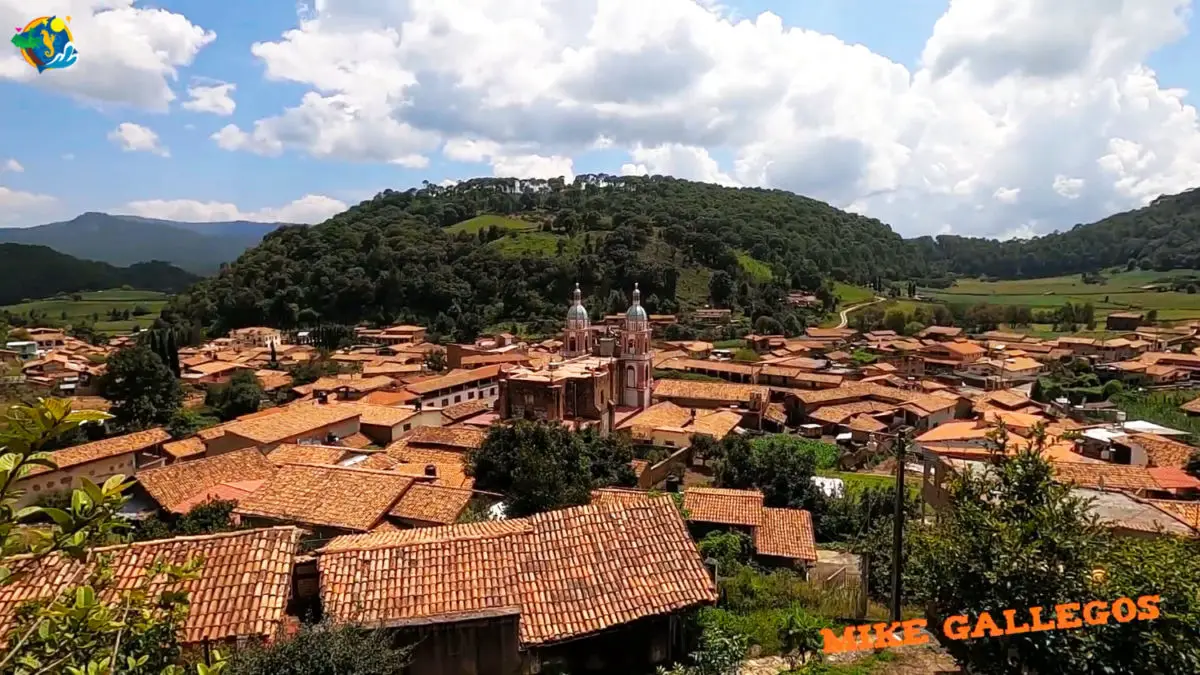
Navidad, panoramic view of the town (Credit: Mike Gallegos)
Features & amenities
Restaurants
Natural Attractions
Cultural Heritage
Land Activiites
Mascota
Navidad details
- Inhabitants 170 (2020 census)
- Latitude: 20.570833
- Longitude: -104.673333
- 1,860-2000 m o.s.l.
More details
- 3 hours from Puerto Vallarta
- 40 minutes from Mascota, Jalisco
- Founded on December 25, 1820


Introduction
Navidad is one of most visited and praised towns in the municipality of Mascota, Jalisco, by tourists not only thanks to its natural beauty but also for its tranquillity and celebration of traditional festivals in July, though there are also many other religious and social festivals during the course of the year.
The town’s streets are very irregular both in design, alignment and surface thanks to the rugged terrain where this town was established. Houses is very similar to one another, most are built from adobe and have baked clay tile roofs.
This town does not have a river but there are a few close by. It only has two streams that disappear during the dry season.
Navidad, Jalisco, is categorized as a Municipal Delegation and is connected and related to the following “rancherias”: to the northeast with Agua Zarca and El Potrero, to the south with Santa Rosa (Ejido Navidad) and to the west Cimarrón Chico and Juanacatlan and to the northwest with El Cabrito.
Where is Navidad, Jalisco?
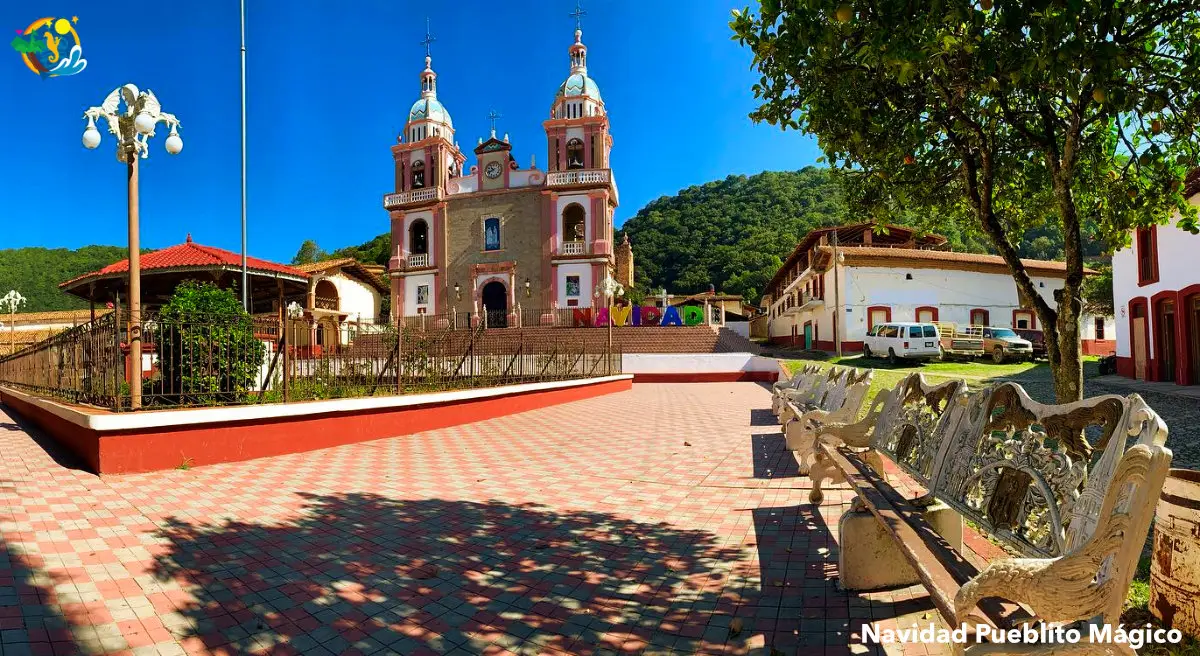
Navidad Pueblito Mágico, main square and town church
It’s a small colonial town up in between the hills and mountains of the Sierra located 40 minutes (19.1 km) from the town of Mascota, Jalisco, and 3 hours (123 km) from Puerto Vallarta, Jalisco. The small town’s population is 170 inhabitants based on the 2020 census. On the way up from Mascota you pass through the towns of La Hierbabuena and Cimarrón Chico.
How to get to the town of Navidad?
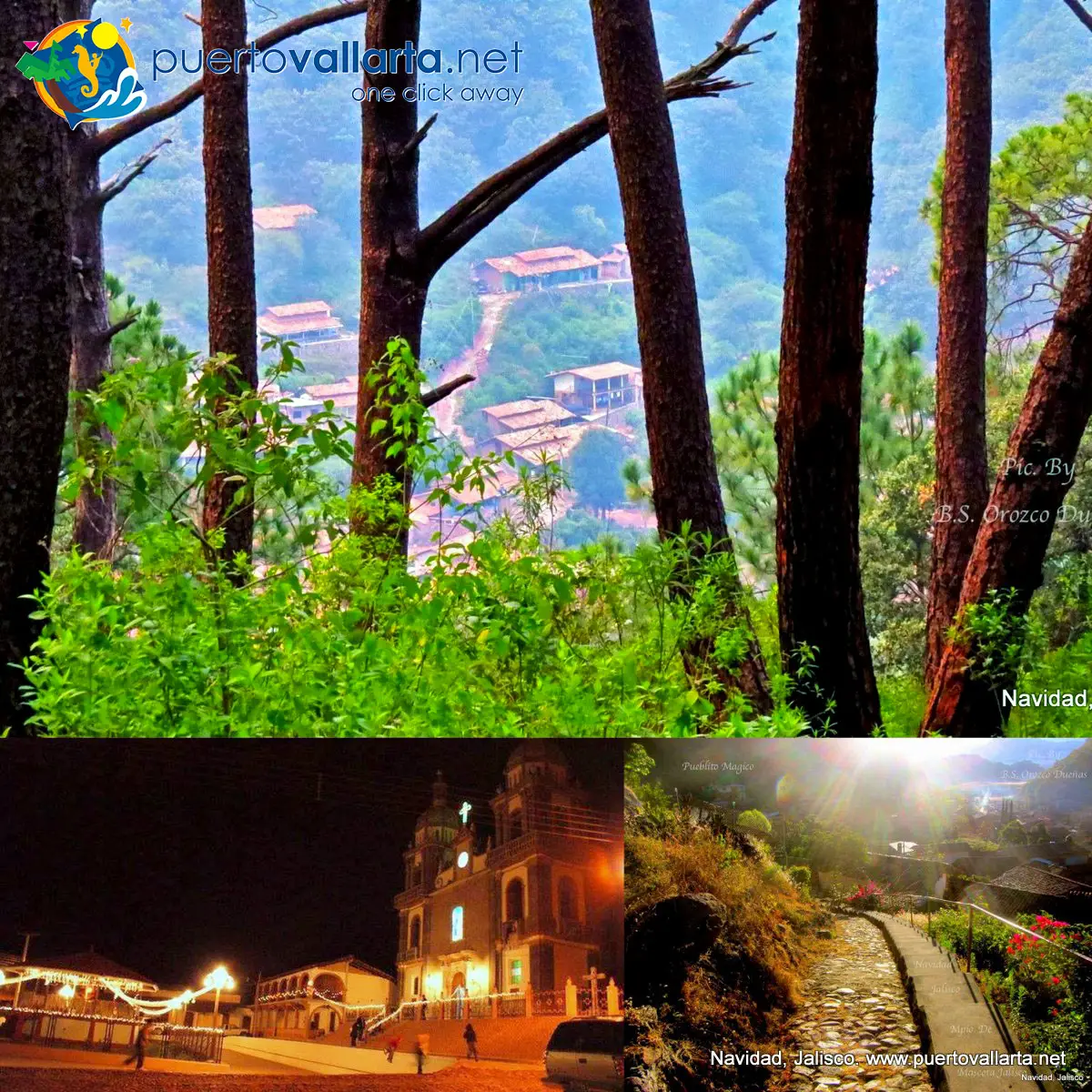
Navidad, Mascota, Jalisco, Mexico
The town is built between 1,860 and 2,000 meters above sea level (6135 – 6560 ft o.s.l.). The weather is quite variable and is considered a cold area due to its height, although, in reality, the weather is not very extreme due to the rugged terrain and the surrounding vegetation.
Specialities of Navidad
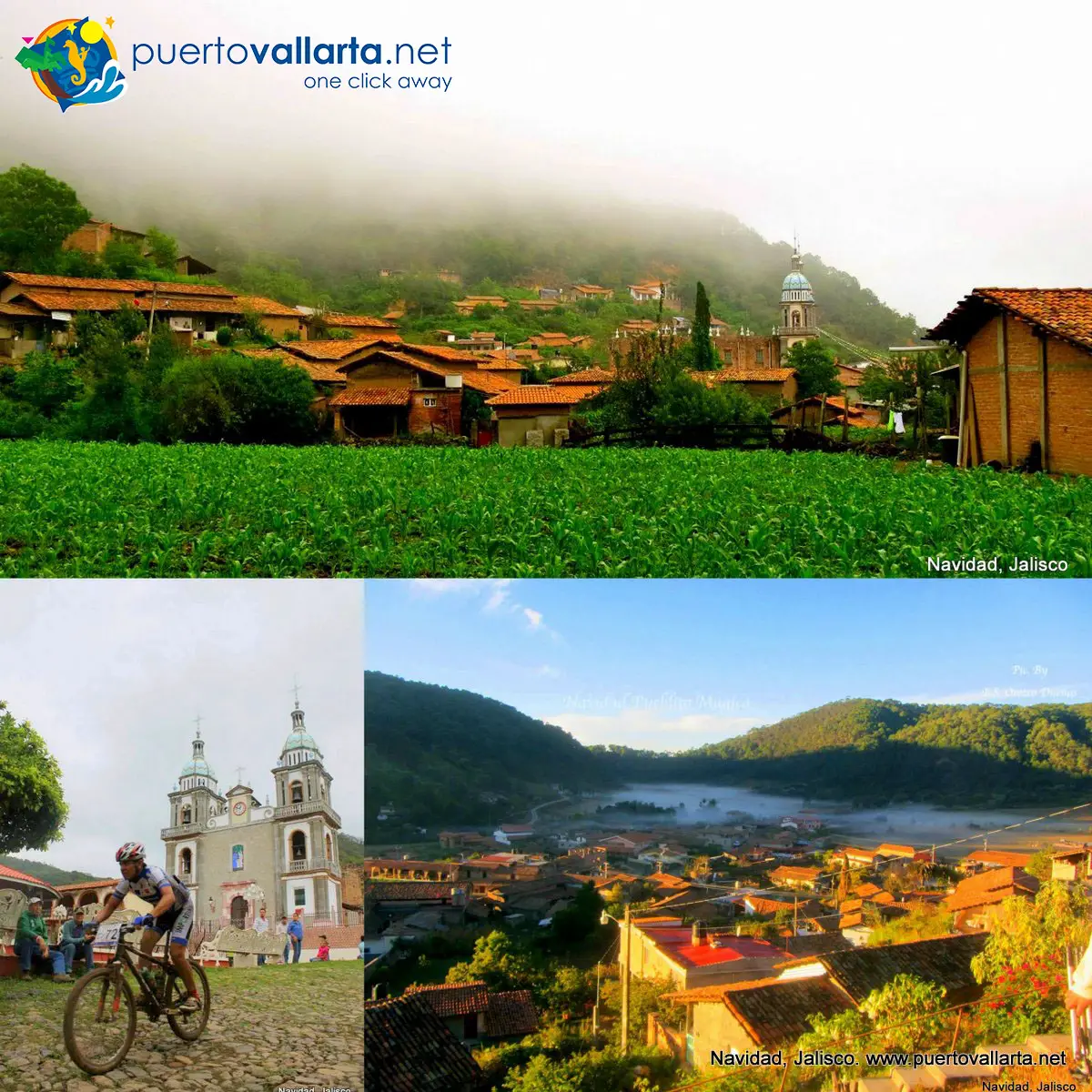
Postcard views from Navidad, Jalisco
The town is bounded by mountains covered with vegetation mainly composed of pines, oaks and live oaks.
Local produce includes peach and apples (perón – Pyrus malus), although plums are also produced on a very small scale. Vegetables include corn, beans, barley and clover.
The main activities in town now are handicrafts, agriculture and Raicilla production which is a liquor produced from an agave plant called Lechuguilla.
A bit of history
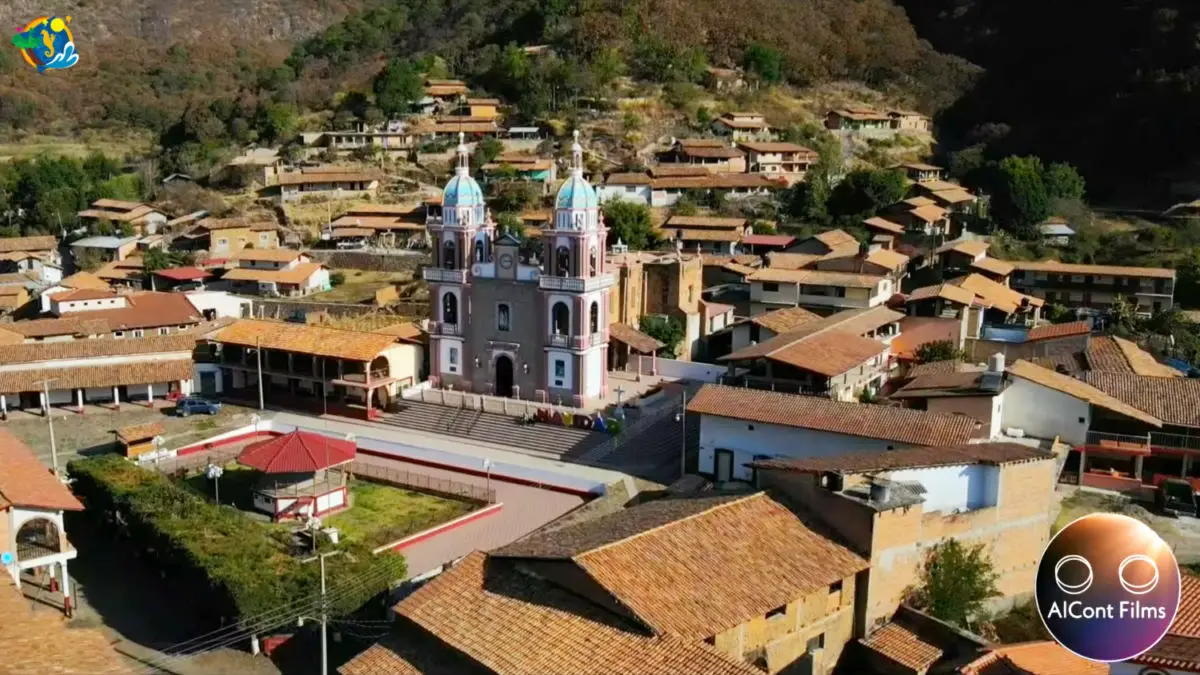
Navidad’s main square & church (Credit: AlCont Films)
By some accounts Navidad dates back to the mid-1600s, more precisely 1644 when they started finding mines in the area, though it was located behind another hill close to a pond, then it was moved to the present location.
When Navidad was founded is not exactly known, some people say that it was established on December 25, 1547, and others on the same date, but in 1820. From the data recollected so far, this last date seems to be the most accurate, reflecting when several families moved from a place called “El Arroyito de la Iglesia”, located a few miles from where the town is currently located. This relocation was on Christmas Eve and explains the town’s name, Navidad (Christmas).
The church was built in the year 1900 and still maintains its original stone construction and baroque style, though it has, of course, suffered modifications over time. On July 26, 1987, the remodelled temple was inaugurated (with a new floor and added towers).
In 1935 the town’s main square was built, without a kiosk and with a brick-mud surface, the space was previously used as a pantheon. In 1940 the kiosk was built, but it collapsed in April 2003 and a larger one was built to accommodate mariachis during the patron saint festivities.
Navidad started growing with the mining boom that also developed the other towns in the surroundings, including Puerto Vallarta. At its peak, it had over 1200 inhabitants, but now it’s a town lost in time, offering a relaxed and interesting view of what life is in rural Mexico and what larger towns and cities in Jalisco were like centuries ago.
Conclusion
Navidad is a very picturesque little town, its inhabitants are very sociable and united, it has very colourful local customs and traditions but unfortunately, they are in danger of being disappearing, as many of the families have been leaving the town searching for better living conditions. In some cases, it is young adults that leave the town in search of a better life for themselves and with the desire to help their parents who remain in the village.
More information
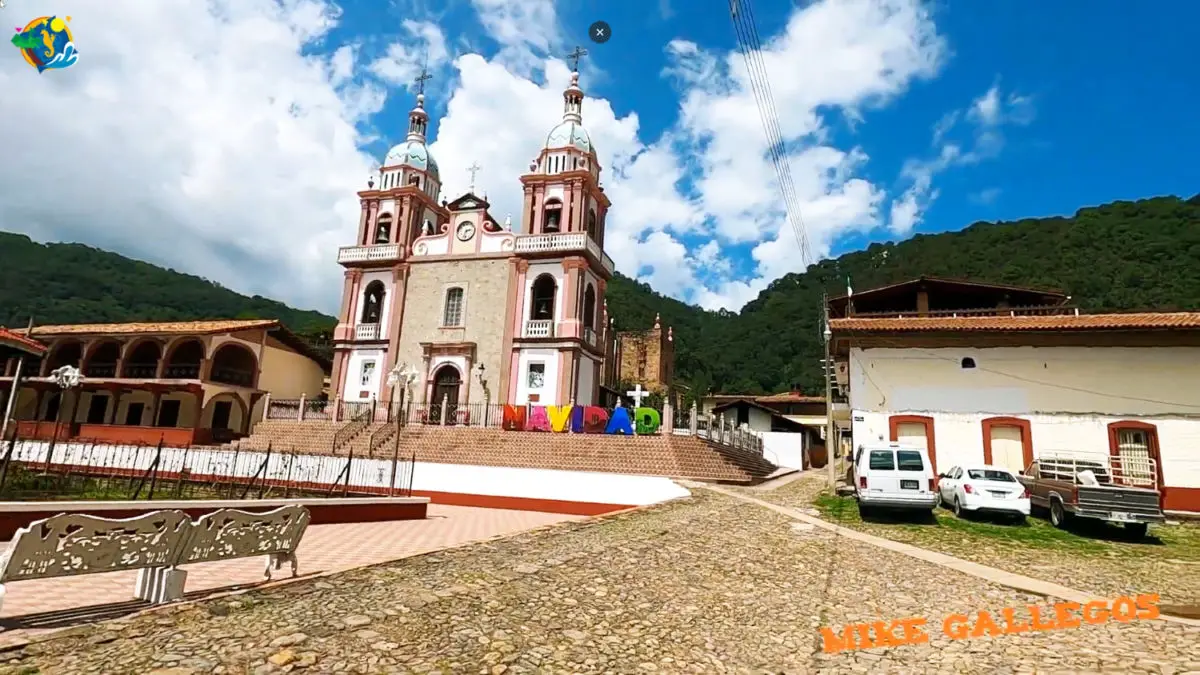
Navidad’s church (Credit: Mike Gallegos)
- For more information on Navidad, visit their Official FB Page
- The route from Mascota to Navidad is fairly popular among mountain bikers (check it out)
- Video de Navidad de Mike Gallegos
- Navidad video, AlCont Films
FAQ
- What is the safest part of Puerto Vallarta to stay in?
The Marina and the Romantic Zone are considered some of the safest areas to stay in Puerto Vallarta. Both areas are popular among tourists and offer a variety of accommodations, restaurants, and attractions. The Marina is known for its upscale atmosphere, luxury resorts, and high-end shops and restaurants. It has a very secure, controlled environment with 24/7 security personnel. The Romantic Zone offers a more authentic Mexican experience with cobblestone streets, colorful colonial buildings, and a vibrant mix of galleries, cafes, and bars. As a central tourist area, it also has a strong police presence and is considered very safe.
- Where do locals go in Puerto Vallarta?
Locals in Puerto Vallarta enjoy spending time at the city’s beautiful beaches, scenic parks, and lively local markets. Popular beach spots include Playa de Oro, Playa Las Animas, and Playa Camarones for their soft sand and calm waters. Many locals visit the Vallarta Botanical Gardens to enjoy the lush vegetation and hiking trails. They also frequent authentic local food venues like Birrieria las 3 Regiones taco stand, cafes like Cafecito Vallarta, and neighborhood bars like La Cerveceria Union. The downtown Lazaro Cardenas market is a favorite for produce, spices, crafts.
- Is Downtown Puerto Vallarta nice?
Yes, downtown Puerto Vallarta is an exceptionally nice and popular area, celebrated for its vibrant mix of historic Mexican charm and a lively beach town atmosphere. It features a picturesque historic center with cobblestone streets, colorful buildings, and the iconic Parish of Our Lady of Guadalupe church. The downtown seamlessly blends into the scenic Malecón, a beautiful oceanfront boardwalk lined with fascinating sculptures, shops, and restaurants, making it perfect for strolling and enjoying the stunning ocean views.
The area offers an excellent variety of dining, from upscale restaurants to authentic street food, along with fantastic shopping in boutiques and art galleries. Adjacent to the main center is the popular Zona Romántica (Romantic Zone), known for its trendy vibe and energetic nightlife. The entire downtown is considered safe and is very walkable, allowing visitors to easily explore its captivating blend of culture, cuisine, and coastal beauty on foot.
Tip: For an unforgettable experience, head down to the Malecón or any beachfront spot about 30 minutes before the scheduled sundown to watch the spectacular sunset over the bay.
- What is considered old town in Puerto Vallarta?
Old Town, also known as the Romantic Zone or Zona Romántica, is considered the historic heart of Puerto Vallarta. It is characterized by its picturesque cobblestone streets, classic whitewashed buildings, red-tiled roofs, and a lively mix of shops, galleries, restaurants and bars. Nestled between the Sierra Madre mountains and Banderas Bay, Old Town has a traditional Mexican village charm with its colonial architecture and slower pace compared to the rest of Puerto Vallarta. Its romantic ambience comes from the area’s natural beauty, outdoor cafes, and charming boutique hotels. Old Town offers visitors a taste of an authentic Mexican neighborhood.

Book tours & support us
- Best prices
- 100% Local Support
- 2 decades+ of experience in Puerto Vallarta

Puerto Vallarta news, tips & content
- New info every two weeks
- Free content, news, videos
- Unsubscribe at any time

Contact us via WhatsApp
- Talk with our reservations expert
- Real local and human support
- Book tours, hotels, transfers, and more.
Last updated on:
Share this article, choose your favorite option!


