
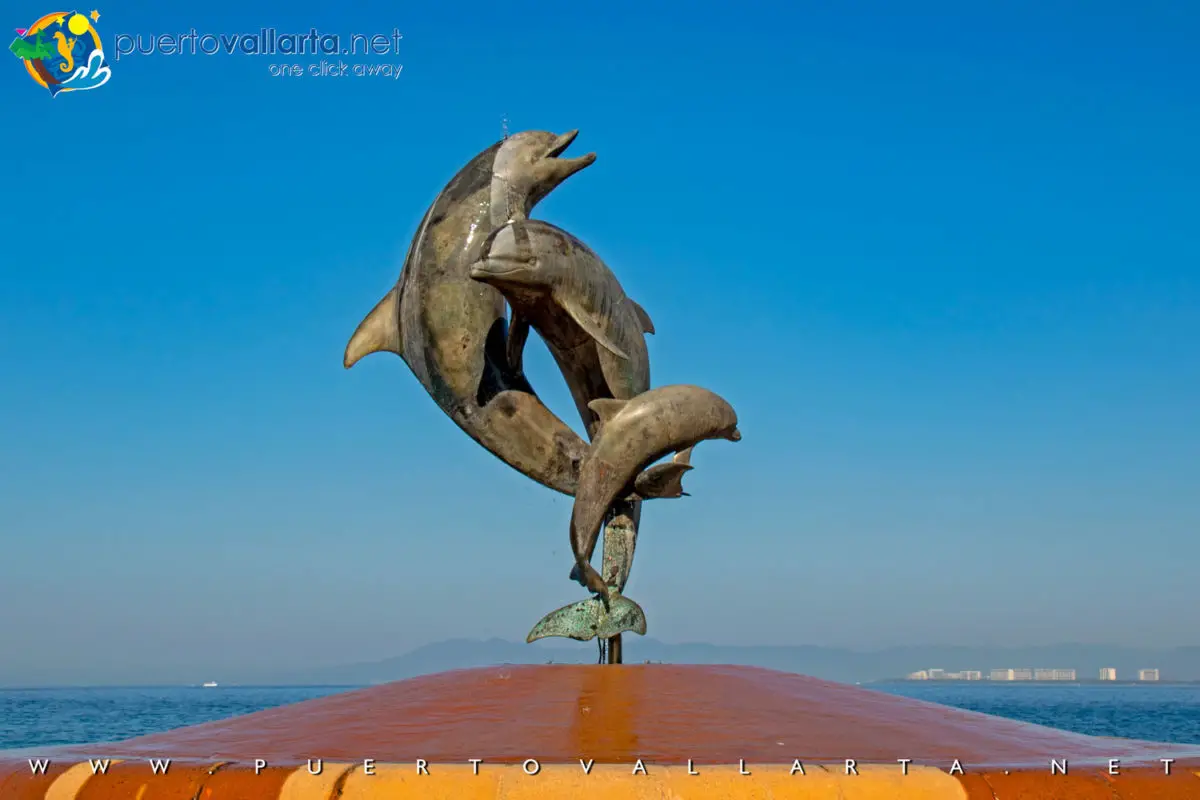
The Friendship Fountain by James Bottoms and Octavio González Gutiérrez on the Malecon
Summary
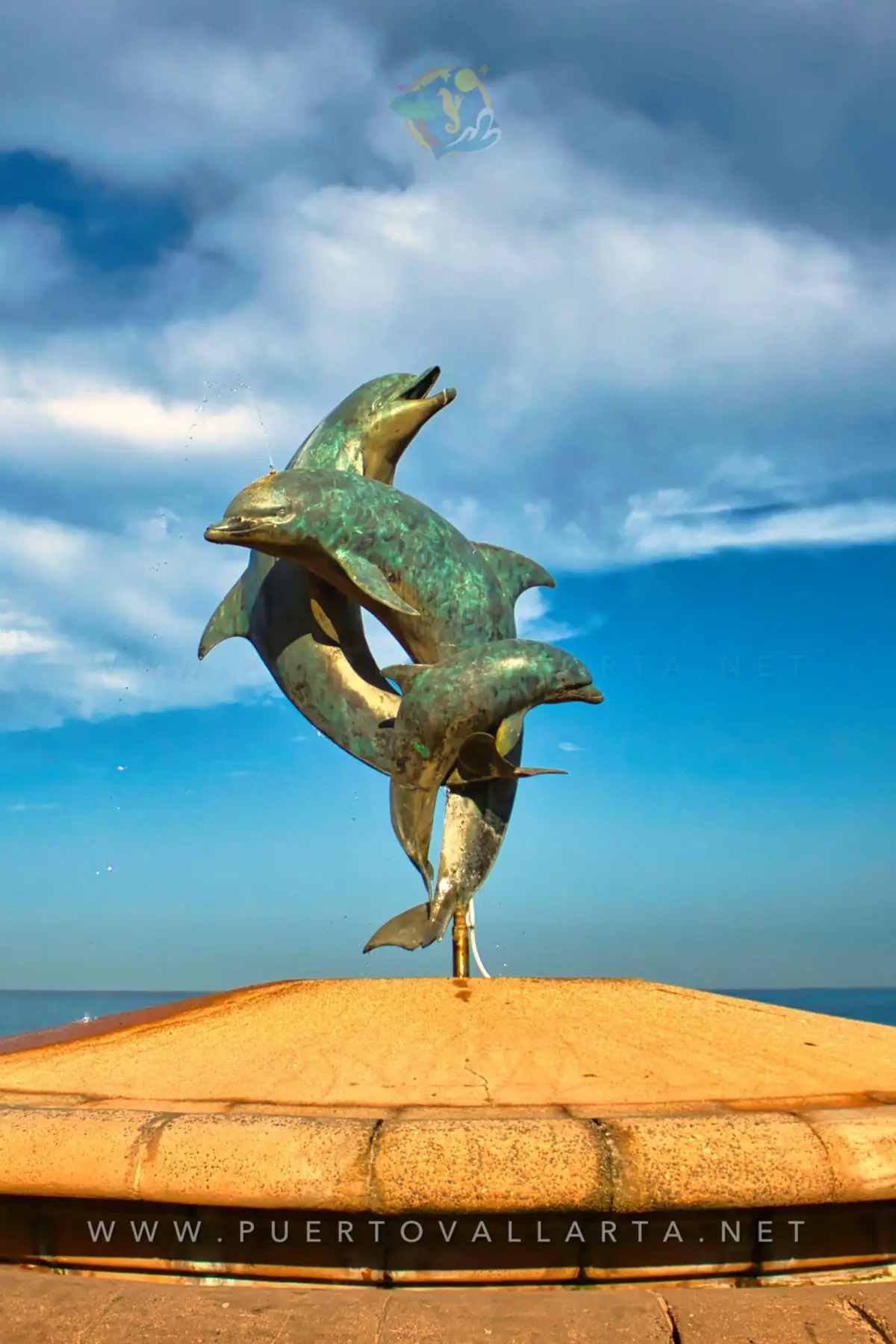
- The fountain features two dolphins jumping out of the water and is a symbol of the friendship between Puerto Vallarta and Santa Barbara, California, which became sister cities in 1973.
- The top dolphin of the fountain shoots out a small stream of water at times, while at other times, the fountain is off.
- James Bottoms also created a similar sculpture called the Bicentennial Friendship Fountain in Santa Barbara.
- The Friendship Fountain is one of many sculptures and statues located along the Malecon in Puerto Vallarta, including The Fisherman, Nostalgia, and The Boy on the Seahorse.


Introduction
One of the best-known sculptures in town, this piece depicts three jumping dolphins and has an interesting story to tell.
Puerto Vallarta became a Sister City with Santa Barbara CA on June 12th, 1973. over the years citizens of both communities have had all kinds of positive exchange, humanitarian missions, sojourns, donations and more. See website.
A friendship plaza was created, including this, The Friendship Fountain or Dancing Dolphins Fountain, which has now been moved behind the Arches to one side of the Naval Historical Museum.
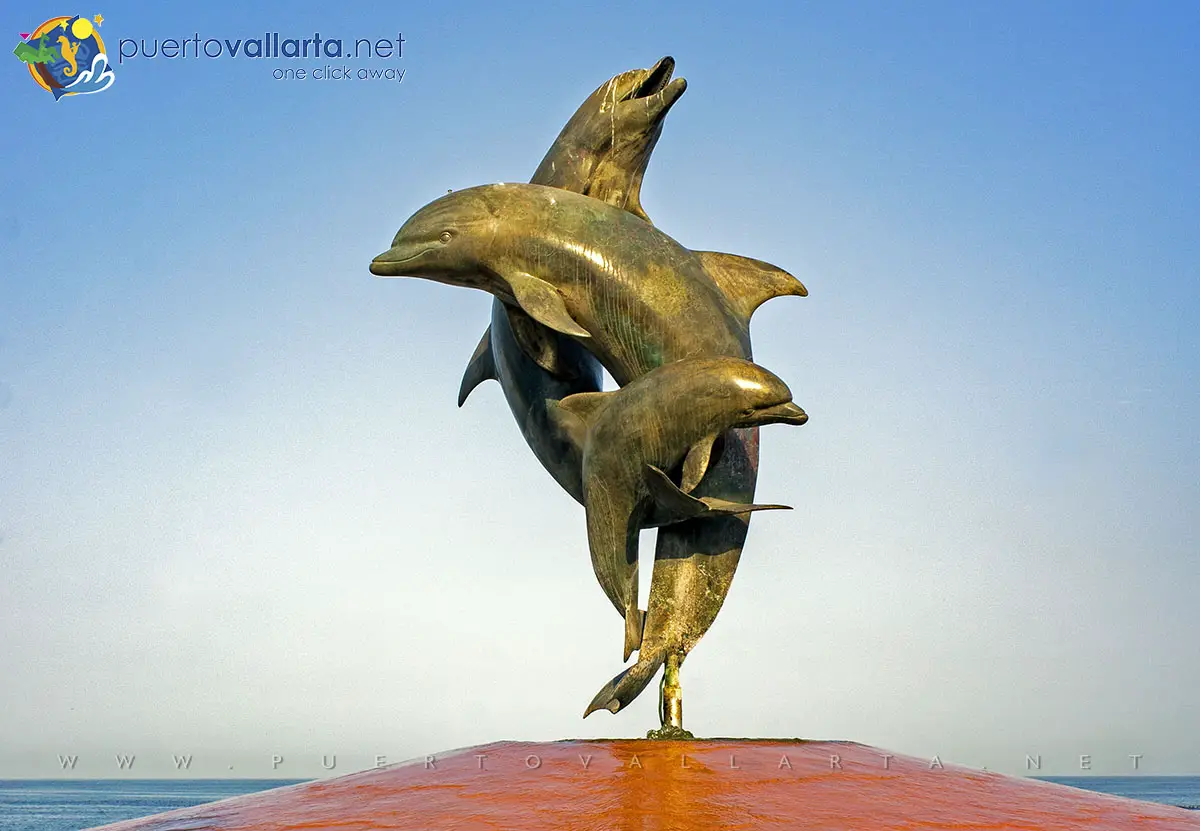
The Friendship Fountain (Dancing Dolphins Fountain), Malecon, Puerto Vallarta
About the sculpture
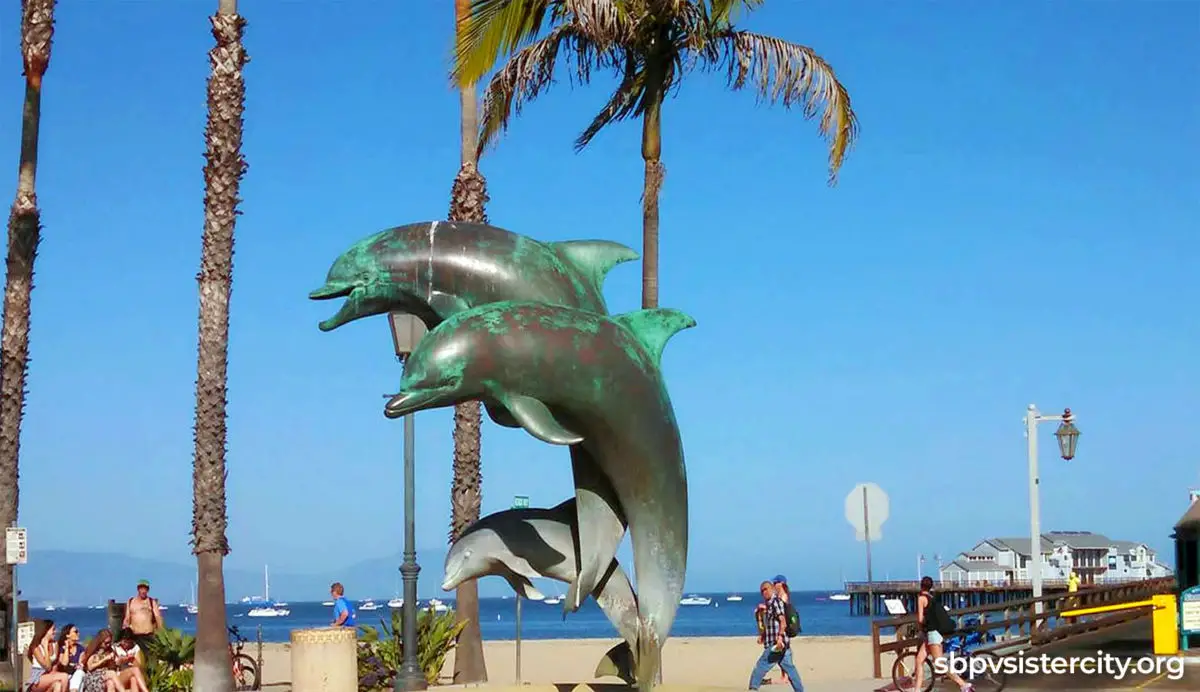
Dolphin Family, Stearns Wharf, Santa Barbara, California
This sculpture is similar to a bronze sculpture in Santa Barbara which he designed called the Bicentennial Friendship Fountain, the one in Puerto Vallarta is based on it, but in a different layout.
James “Bud” Bottoms (1928-2018) was the artist that created the sculpture elements and Octavio González Gutiérrez was in charge of the sculpting work (foundry) and putting it together.
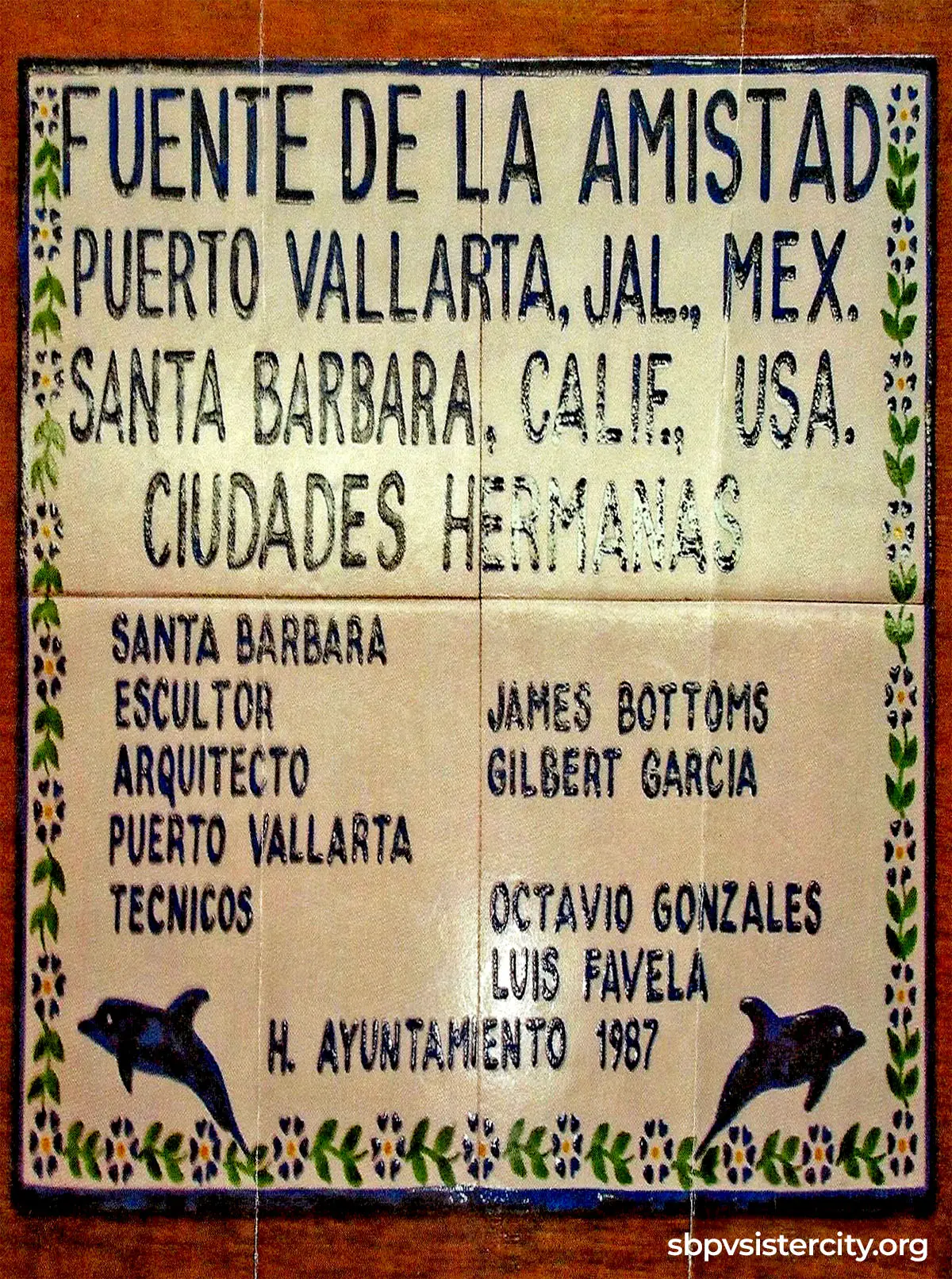
Fuente de la Amistad Plaque 1987
Octavio González mentions that the elements were sent separately and he was left with the task of putting it all together, so he created the layout as he most saw it fit and as he liked it.

The Friendship Fountain (Dancing Dolphins Fountain) by James Bud Bottoms and Octavio González Gutiérrez (1987)
I feel the original sculpture in California has an air of dynamics and movement, plus teamwork, whereas the Vallarta version has more of a feeling of love and tenderness. I like them both.
The fountain and sculpture were finished in 1987. The artist himself calls it “The Dancing Dolphins Fountain”.


Inspiration for the sculpture

Rock art of the Chumash people, Santa Barbara County, USA
The use of dolphins is inspired by a Chumash Indian myth in which the Earth Goddess, Hutash creates a rainbow bridge, Wishtoyo, to help the Indians cross over to the mainland, along the way some looked down (despite being told not to do so) and fell off the bridge, to prevent them from drowning they were transformed into dolphins and since then the Chumash have considered them as brothers.
Where is the fountain?
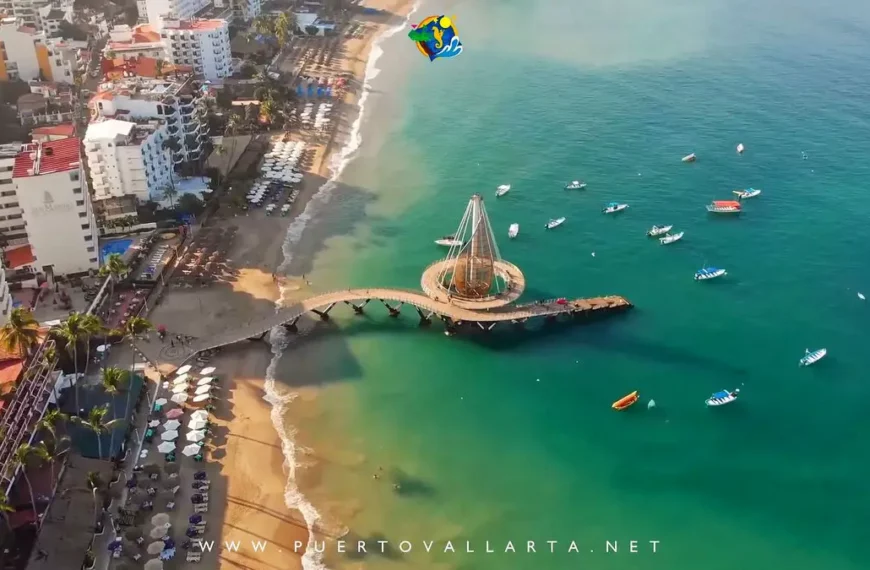
You’ll find it on the southern end of the original Malecón, beside the Naval Historical Museum and right by the Aquiles Serdan Amphitheater and The Arches.
Artists involved
James Alfred “Bud” Bottoms
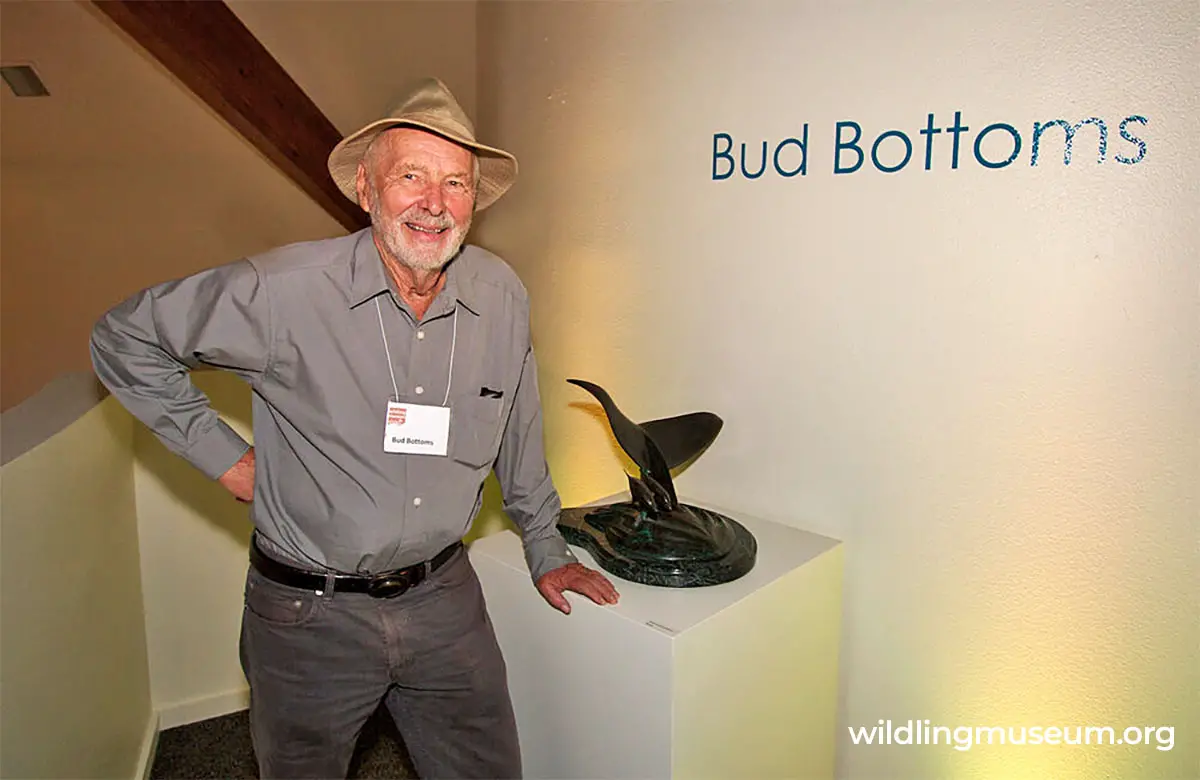
James “Bud” Bottoms was a Californian sculptor and environmentalist that lived in Santa Barbara. James Alfred Bottoms was born on January 28, 1928, in Los Angeles, CA, USA. Studied art at Jefferson Machamer School of Art in Santa Monica (1947-48) and at the University of California-Santa Barbara (1948-52). “Bud” Bottoms created monuments and fountains not only in Puerto Vallarta but also in Toba City, Japan and Dingle, Ireland. A considerable amount of his artistic work is based on sea mammals that were inspired by his love of diving and snorkelling and often combined them with humans symbolizing our basic interrelationship. The artist passed away peacefully in the comfort of his home, September 23, 2018.
Octavio González Gutiérrez

Octavio González Gutiérrez is a Mexican sculptor best known for his Vallarta whale. He was born in Tepatitlán de Morelos, Jalisco. Started off in the arts drawing portraits and his first sculpting jobs were busts. He learnt his foundry techniques in Santa Barbara and Berkeley and opened his first workshop in Puerto Vallarta. The famous singer Vicente Fernández is one of his biggest fans and has bought many of his pieces. He has sculptures all over Mexico (La Paz, Cancún, Ciudad de México and more) and some in the USA (Chicago & Seattle).
FAQ
- What is the safest part of Puerto Vallarta to stay in?
The Marina and the Romantic Zone are considered some of the safest areas to stay in Puerto Vallarta. Both areas are popular among tourists and offer a variety of accommodations, restaurants, and attractions. The Marina is known for its upscale atmosphere, luxury resorts, and high-end shops and restaurants. It has a very secure, controlled environment with 24/7 security personnel. The Romantic Zone offers a more authentic Mexican experience with cobblestone streets, colorful colonial buildings, and a vibrant mix of galleries, cafes, and bars. As a central tourist area, it also has a strong police presence and is considered very safe.
- Where do locals go in Puerto Vallarta?
Locals in Puerto Vallarta enjoy spending time at the city’s beautiful beaches, scenic parks, and lively local markets. Popular beach spots include Playa de Oro, Playa Las Animas, and Playa Camarones for their soft sand and calm waters. Many locals visit the Vallarta Botanical Gardens to enjoy the lush vegetation and hiking trails. They also frequent authentic local food venues like Birrieria las 3 Regiones taco stand, cafes like Cafecito Vallarta, and neighborhood bars like La Cerveceria Union. The downtown Lazaro Cardenas market is a favorite for produce, spices, crafts.
- Is Downtown Puerto Vallarta nice?
Yes, downtown Puerto Vallarta is an exceptionally nice and popular area, celebrated for its vibrant mix of historic Mexican charm and a lively beach town atmosphere. It features a picturesque historic center with cobblestone streets, colorful buildings, and the iconic Parish of Our Lady of Guadalupe church. The downtown seamlessly blends into the scenic Malecón, a beautiful oceanfront boardwalk lined with fascinating sculptures, shops, and restaurants, making it perfect for strolling and enjoying the stunning ocean views.
The area offers an excellent variety of dining, from upscale restaurants to authentic street food, along with fantastic shopping in boutiques and art galleries. Adjacent to the main center is the popular Zona Romántica (Romantic Zone), known for its trendy vibe and energetic nightlife. The entire downtown is considered safe and is very walkable, allowing visitors to easily explore its captivating blend of culture, cuisine, and coastal beauty on foot.
Tip: For an unforgettable experience, head down to the Malecón or any beachfront spot about 30 minutes before the scheduled sundown to watch the spectacular sunset over the bay.
- What is considered old town in Puerto Vallarta?
Old Town, also known as the Romantic Zone or Zona Romántica, is considered the historic heart of Puerto Vallarta. It is characterized by its picturesque cobblestone streets, classic whitewashed buildings, red-tiled roofs, and a lively mix of shops, galleries, restaurants and bars. Nestled between the Sierra Madre mountains and Banderas Bay, Old Town has a traditional Mexican village charm with its colonial architecture and slower pace compared to the rest of Puerto Vallarta. Its romantic ambience comes from the area’s natural beauty, outdoor cafes, and charming boutique hotels. Old Town offers visitors a taste of an authentic Mexican neighborhood.

Book tours & support us
- Best prices
- 100% Local Support
- 2 decades+ of experience in Puerto Vallarta

Puerto Vallarta news, tips & content
- New info every two weeks
- Free content, news, videos
- Unsubscribe at any time

Contact us via WhatsApp
- Talk with our reservations expert
- Real local and human support
- Book tours, hotels, transfers, and more.
Share this article, choose your favorite option!


