
Summary
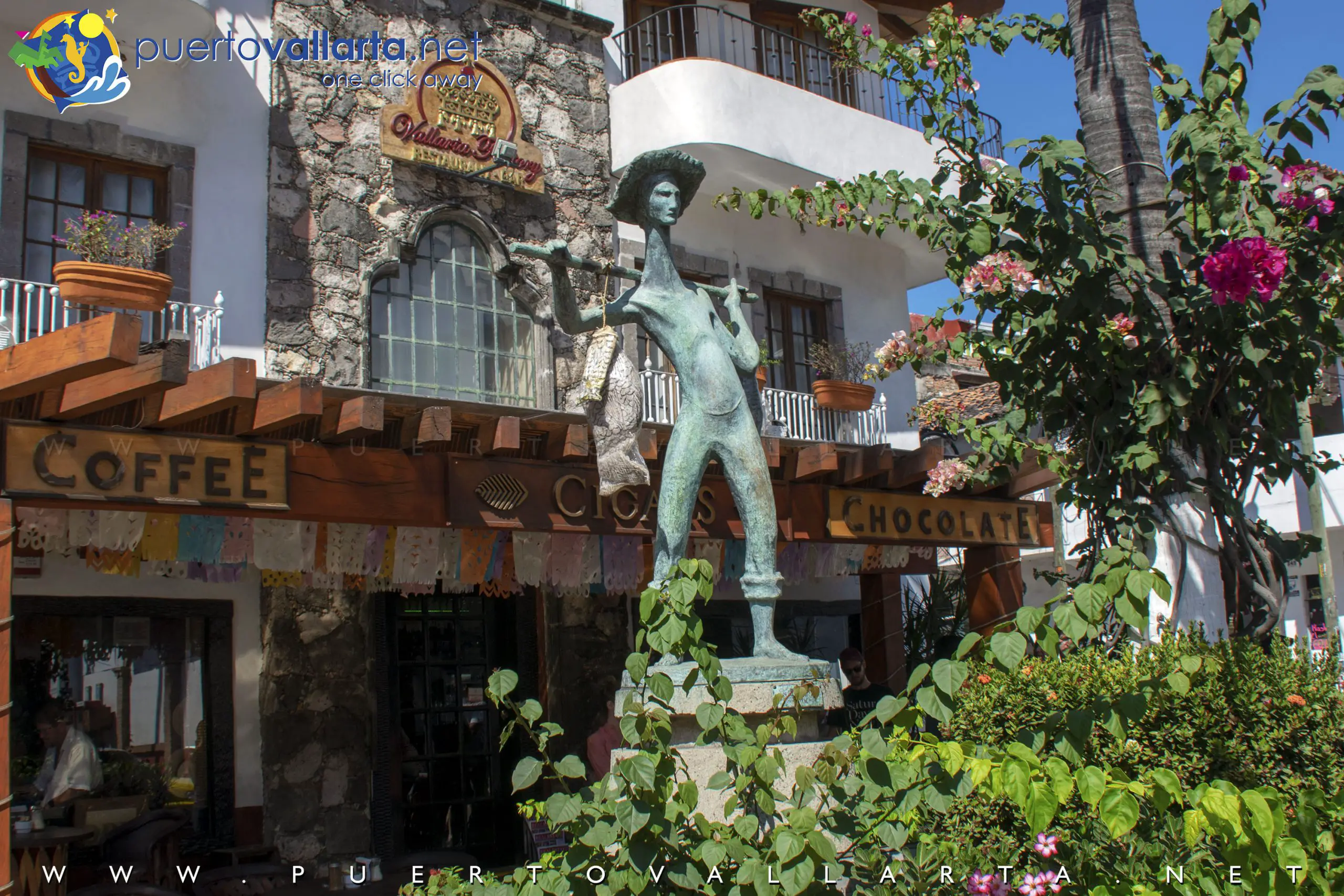
- Created by artist Jose Ramiz Barquet in 1996, “The Fisherman” pays tribute to the fishermen of Puerto Vallarta.
- It represents one of the typical town characters from when the area was a quiet cobblestone fisherman village.
- The fisherman is depicted in a contemplative pose, perhaps reflecting on his catch or the sea. His expression conveys a mix of determination and weariness.
- Jose Ramiz Barquet intended for “The Fisherman” to evoke nostalgia and celebrate the town’s heritage.


Introduction
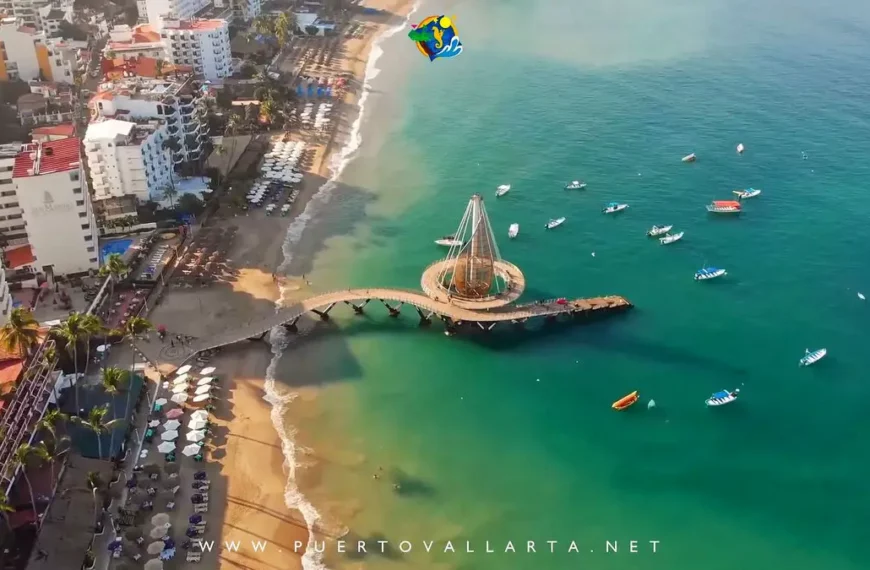
Ramiz Barquet (1920-2010) is by far the artist with most sculptures in Puerto Vallarta, starting off with “La Nostalgia” in 1984, he has his work in Vallarta, Mexico City, and other locations in Mexico and the world.
The Fisherman
The Fisherman (El Pescador or AKA Isidro El Pescador) is a bronze statue created by Mexican artist Ramiz Barquet, it was inaugurated on January 12th, 1996, and is located where three streets, Libertad, Agustin Ramirez, and Insurgentes unite, in downtown Puerto Vallarta.
Ramiz liked to call the fisherman Isidro, the sculpture was donated by his wife Nelly, the same Nelly that inspired the landmark sculpture “Nostalgia” on the Malecon.

This sculpture is a tribute to the fishermen of the area, one of the typical town characters in the times when Vallarta was still a fisherman village; barefooted, their hats still humid with the saltwater, pants rolled up after a very early start of the day, on one side Spanish mackerel and on the other red snappers, as Carlos Munguía Fregoso, the city historian, recounts in one of his books.
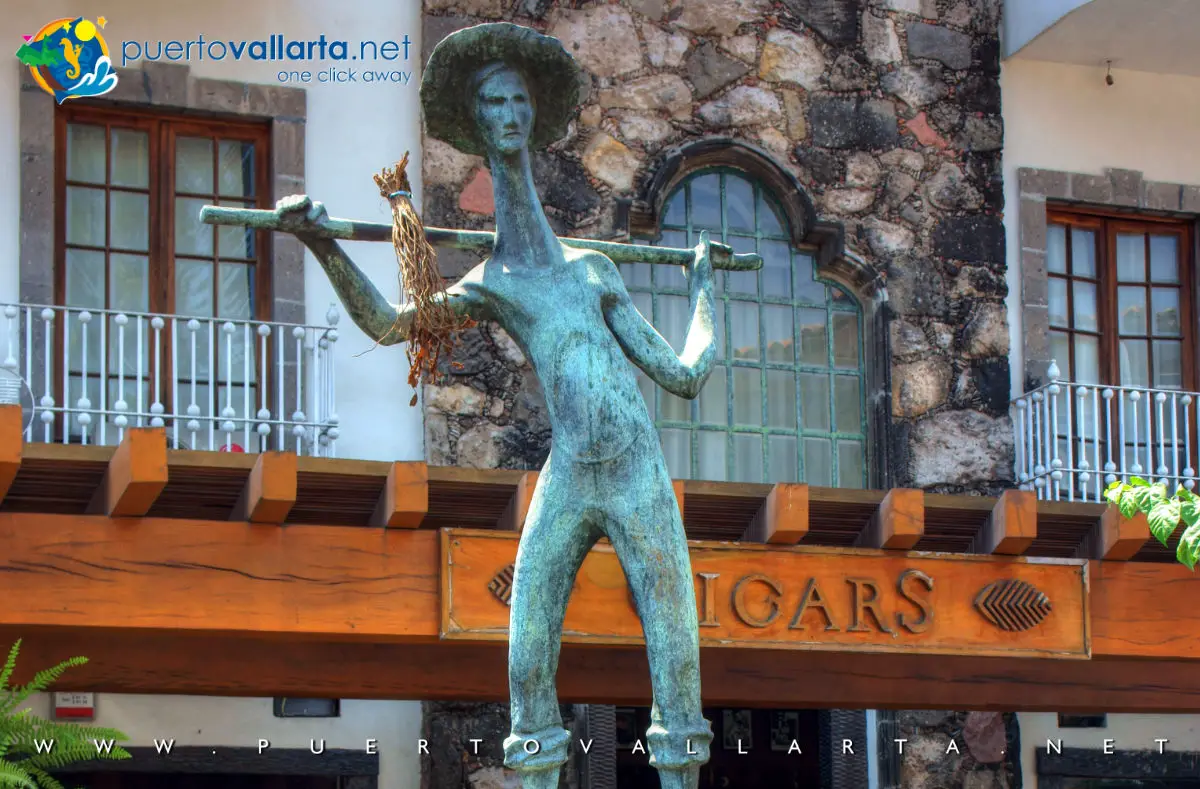
The Fisherman Isidro (El Pescador) José Ramiz Barquet, Puerto Vallarta
Catalina Montes de Oca, another Vallarta historian, wrote that fishermen would carry their catch hanging in batches from their oars and would walk through town offering them by banging their knives on their wooden oars.
Where is The Fisherman sculpture in Puerto Vallarta?
About the artist: José Ramiz Barquet (1920-2010)
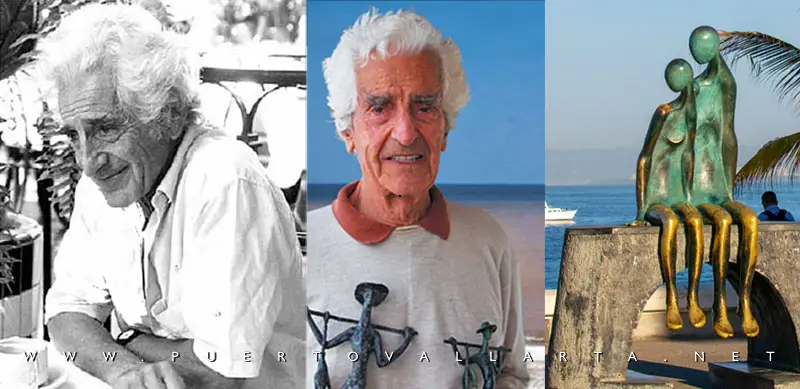
Just as a monument in Beirut, Lebanon, honors his ancestors, his sculptural works adorn the streets and boardwalk of Puerto Vallarta and honor his adoptive city.
He simply says, “I live here, I love the place and I want to give something back”, “Art must be shared, beautiful art leads us to do beautiful things, it makes us better. Why keep it in the dark when it brings so much happiness in the light?”.
Ramiz Barquet was born in Mexico City on March 7, 1920, and from an early age, he started carving wood. Ebony and precious woods were his favorites and he always preferred the human figure as his subject, although he has some well-known animals too, pelicans and sharks. He lived for 5 years in Montreal, Canada, studying humanities and exploring nature, something that later always influenced his art.
“As a child, I carved wood, then rock, and then marble – a material too cold and only good for rolling out pizzas – until I discovered the superior material, bronze. Eventually, my style would not accept any other material, bronze was the right one for the slim and tall lines I prefer.”
He was always a very respected sculptor and artist in the city, not only for his work but also for his active participation in the community and in all cultural aspects of the city. He was the artist behind innumerable works and monuments in the city and can be considered as a patriarch and artistic philanthropist of Puerto Vallarta. He donated the art content of all his local public works and in some cases helped raise funds for the foundry and transportation costs of the pieces. He donated small sculptures to be auctioned and worked to raise funds and resources for local charities for scholarships, the Puerto Vallarta International Film Festival, and the Los Mangos Public Library.

He also has works scattered all over Mexico, partly because he was the assistant and protégé of Augusto Bozanno. Master Bozanno was the former director of the famous Academy of Arts in Florence, Italy. He had to emigrate to Mexico City from Italy as a political refugee in the late 1930s for having protested against B. Mussolini.
Another famous work by José Ramiz Barquet, with Lebanese roots (both parents were from Lebanon), is exactly one of a Lebanese expatriate, officially titled “The Lebanese Emigrant” (El Emigrante Libanés), commissioned by the Centro Libanés, A.C. in Mexico City. It was created to celebrate the centennial of the arrival of Lebanese immigrants (expatriates) to Mexico and was placed in the garden of the Lebanese Cultural Center in Mexico City in 1979. It is a work of 1.5 tons and 3.5 meters (12 ft) high in bronze.
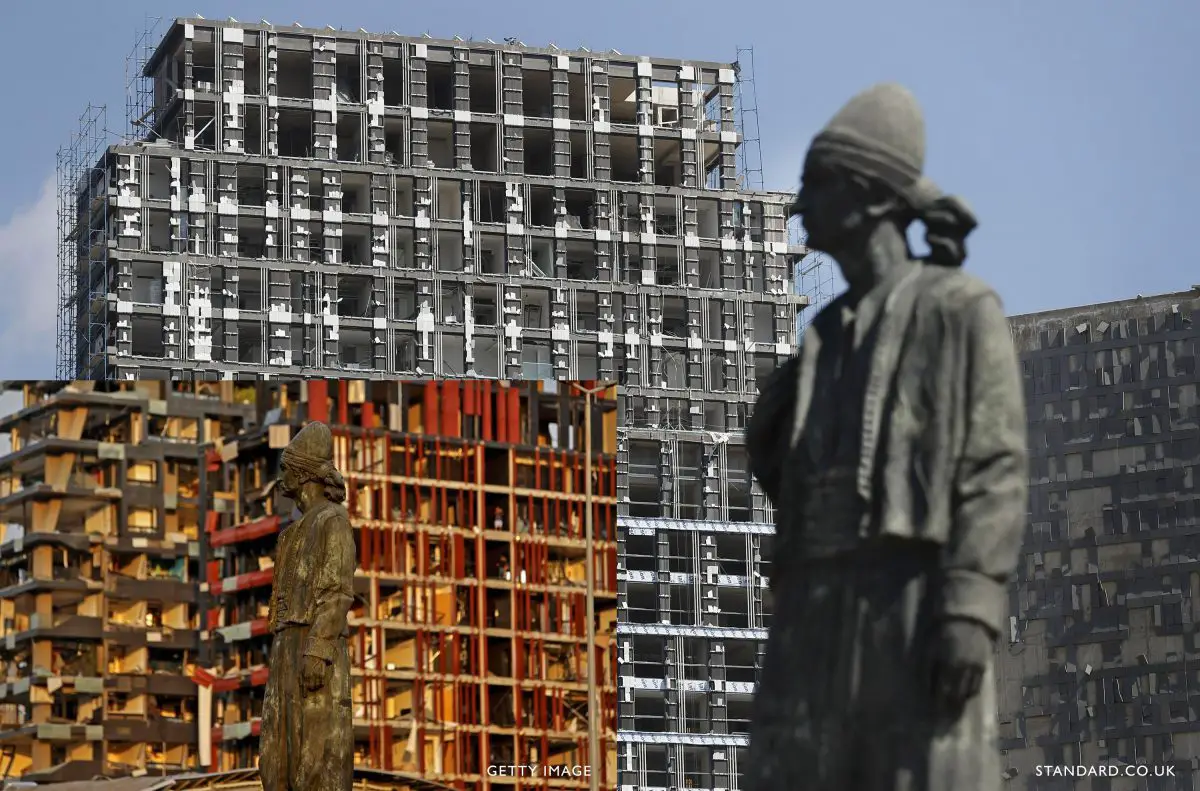
This symbol has taken on current importance after having survived the explosion in the port of Beirut, Lebanon, where a replica of the work is located. It has become a symbol of the Lebanese diaspora, its tribulations, and its efforts to prosper and maintain its culture. There are replicas of that statue on the Paseo Reforma in Mexico City, in the port of Veracruz, Mexico; in Chihuahua, Puebla, Mérida, Coatzacoalcos, Guadalajara, Saltillo, San Luis Potosí, Brisbane, and Melbourne in Australia and more recently on both Canada’s coasts, on the Pacific in Victoria, BC, and on the Atlantic side in Halifax, Nova Scotia. More about the sculpture: http://www.emigrantelibanes.com/
He participated in many groups and solo exhibitions in Mexico City, Monterrey, Guadalajara, Cancun, and Puerto Vallarta. He also held exhibitions in US cities such as Houston and Los Angeles.
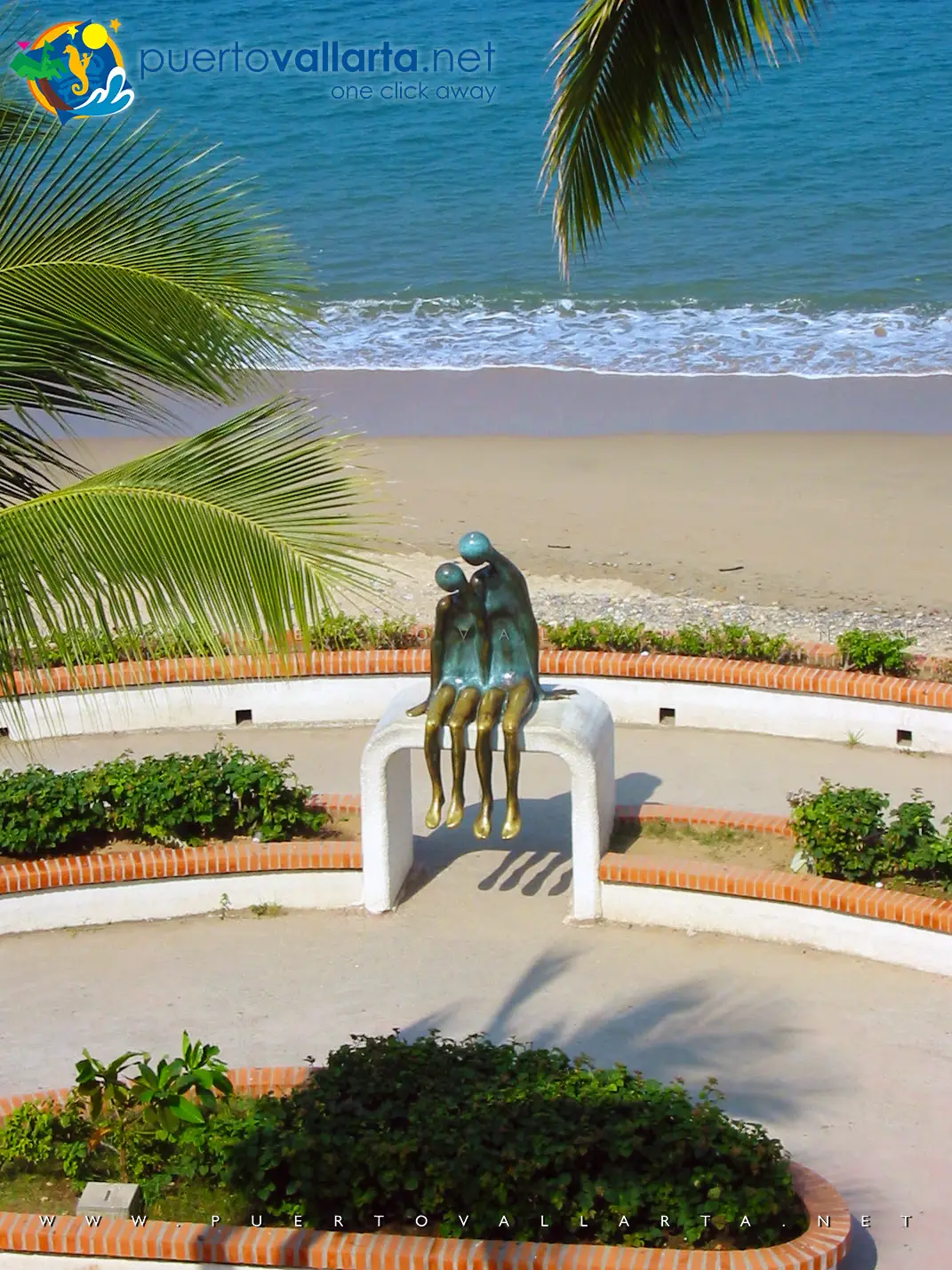
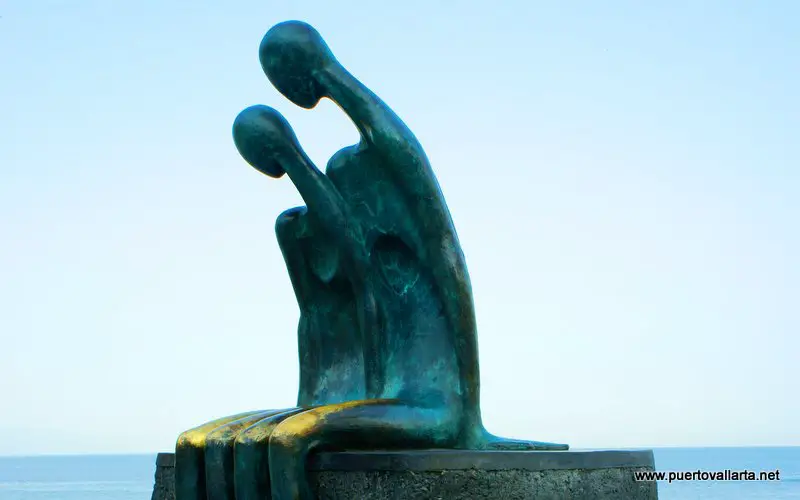
His most famous work, “Nostalgia”, has been on the Malecón promenade since 1984 and is one of the main visual symbols of Puerto Vallarta. It appears in various magazines, newspapers, and travel books. The very romantic story of how he was inspired by his relationship with his wife Nelly has captured the imagination of couples of all ages, serving as a symbol of universal love, as well as a tribute to the special romantic qualities of Puerto Vallarta.
Puerto Vallarta’s most famous and beloved sculptor and artist passed away on July 4, 2010.
Other José Ramiz Barquet sculptures in Puerto Vallarta
Spiral Shark (1996)
A piece in honor of the shark, which the artist named “Gaspar” by his friend Gaspar Elizondo. The history of Puerto Vallarta is traditionally linked to fishing sharks too. It is also a creature rejected by man, but created with infinite wisdom that has survived millions of years, with a valuable place in the universe in honor of the perfection and efficiency of its being. Located in a small square ending Púlpito street with Los Muertos Beach, between the La Palapa and El Dorado restaurants.
More information
The Minstrel’s Corner (1999)
It represents, as the name implies, a minstrel playing the flute. It is located at the intersection of Hidalgo and Galeana in downtown Puerto Vallarta.
More information
A Boy, A Book, A Future (2000)
At the entrance to the public library “Los Mangos” in Francisco Villa street. It symbolizes the importance of education and access to books as a gateway to a better future for the individual and for the whole of society.
Nothing emphasizes better why a public library is valuable and vital.
More information
San Pascual Bailón (2008)
This sculpture is part of the extension of the traditional Malecón south to the Cuale River (Malecón II). It is located in front of Restaurant Vitea and represents the patron saint of cooks (and chefs).
More information
References
https://galeriapacifico.com/artists/ramiz-barquet/
https://www.sobeirut.com/features/42/the-lebanese-emigrant-statue-or-did-really-no-women-emigrate
https://www.yumpu.com/es/document/view/5074798/el-emigrante-libanes-centro-libanes
https://www.the961.com/statue-of-lebanese-immigrant-was-just-unveiled-in-halifax-canada/
https://wlcui.com/2019/02/18/lebanese-emigrant-statue/
https://www.claudiaarellanob.com/7715-2/
Author: M. A. Gallardo
FAQ
- What is the safest part of Puerto Vallarta to stay in?
The Marina and the Romantic Zone are considered some of the safest areas to stay in Puerto Vallarta. Both areas are popular among tourists and offer a variety of accommodations, restaurants, and attractions. The Marina is known for its upscale atmosphere, luxury resorts, and high-end shops and restaurants. It has a very secure, controlled environment with 24/7 security personnel. The Romantic Zone offers a more authentic Mexican experience with cobblestone streets, colorful colonial buildings, and a vibrant mix of galleries, cafes, and bars. As a central tourist area, it also has a strong police presence and is considered very safe.
- Where do locals go in Puerto Vallarta?
Locals in Puerto Vallarta enjoy spending time at the city’s beautiful beaches, scenic parks, and lively local markets. Popular beach spots include Playa de Oro, Playa Las Animas, and Playa Camarones for their soft sand and calm waters. Many locals visit the Vallarta Botanical Gardens to enjoy the lush vegetation and hiking trails. They also frequent authentic local food venues like Birrieria las 3 Regiones taco stand, cafes like Cafecito Vallarta, and neighborhood bars like La Cerveceria Union. The downtown Lazaro Cardenas market is a favorite for produce, spices, crafts.
- Is Downtown Puerto Vallarta nice?
Yes, downtown Puerto Vallarta is an exceptionally nice and popular area, celebrated for its vibrant mix of historic Mexican charm and a lively beach town atmosphere. It features a picturesque historic center with cobblestone streets, colorful buildings, and the iconic Parish of Our Lady of Guadalupe church. The downtown seamlessly blends into the scenic Malecón, a beautiful oceanfront boardwalk lined with fascinating sculptures, shops, and restaurants, making it perfect for strolling and enjoying the stunning ocean views.
The area offers an excellent variety of dining, from upscale restaurants to authentic street food, along with fantastic shopping in boutiques and art galleries. Adjacent to the main center is the popular Zona Romántica (Romantic Zone), known for its trendy vibe and energetic nightlife. The entire downtown is considered safe and is very walkable, allowing visitors to easily explore its captivating blend of culture, cuisine, and coastal beauty on foot.
Tip: For an unforgettable experience, head down to the Malecón or any beachfront spot about 30 minutes before the scheduled sundown to watch the spectacular sunset over the bay.
- What is considered old town in Puerto Vallarta?
Old Town, also known as the Romantic Zone or Zona Romántica, is considered the historic heart of Puerto Vallarta. It is characterized by its picturesque cobblestone streets, classic whitewashed buildings, red-tiled roofs, and a lively mix of shops, galleries, restaurants and bars. Nestled between the Sierra Madre mountains and Banderas Bay, Old Town has a traditional Mexican village charm with its colonial architecture and slower pace compared to the rest of Puerto Vallarta. Its romantic ambience comes from the area’s natural beauty, outdoor cafes, and charming boutique hotels. Old Town offers visitors a taste of an authentic Mexican neighborhood.

Book tours & support us
- Best prices
- 100% Local Support
- 2 decades+ of experience in Puerto Vallarta

Puerto Vallarta news, tips & content
- New info every two weeks
- Free content, news, videos
- Unsubscribe at any time

Contact us via WhatsApp
- Talk with our reservations expert
- Real local and human support
- Book tours, hotels, transfers, and more.
Share this article, choose your favorite option!


