
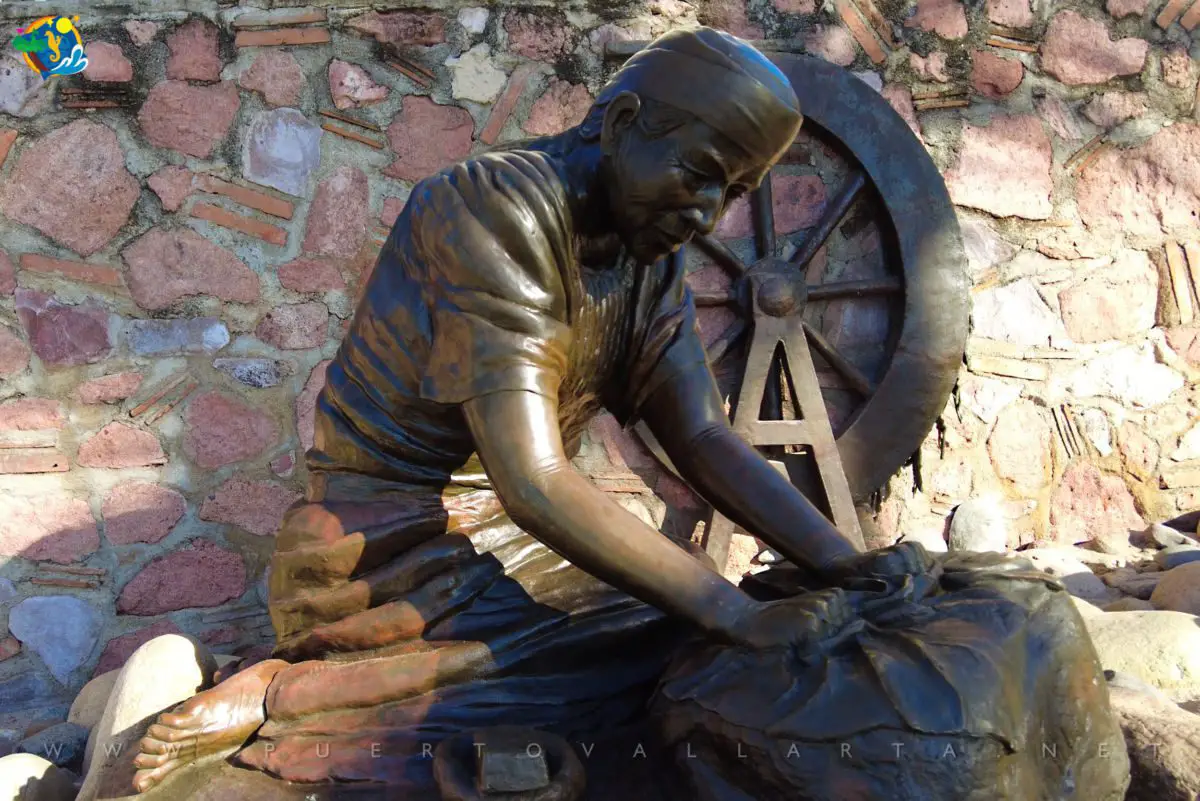
The Washer Woman, Jim Demetro, Puerto Vallarta
Summary
- The Washer Woman is a bronze sculpture by Jim Demetro installed on a wall of Puerto Vallarta’s Molino de Agua Condominium in the Mexican state of Jalisco.
- The statue depicts an elderly woman, apparently an indigenous woman, washing clothes on a rock with a water wheel behind her, and is a beautiful representation of the dying traditions of Puerto Vallarta.


About the sculpture
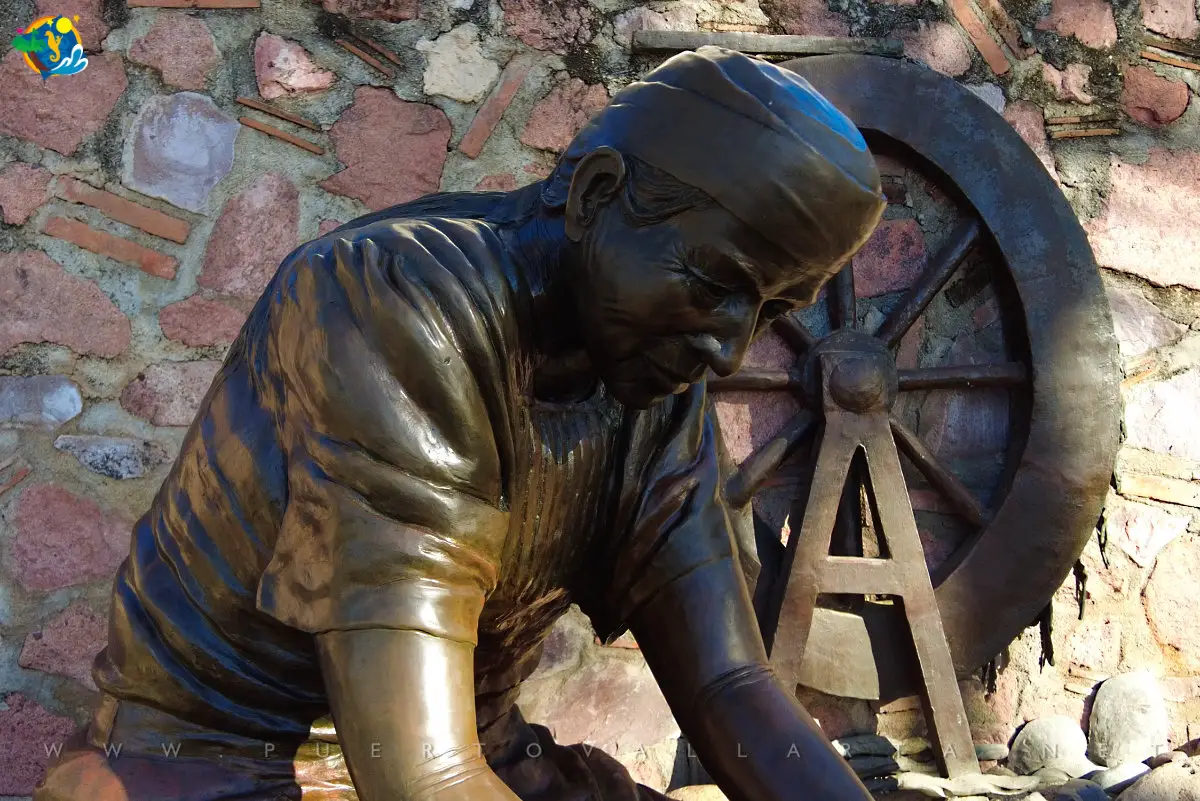
You’ll find this sculpture “The Washer Woman” by Jim Demetro in front of the buildings that replaced the lush and beautiful gardens of Molino de Agua.
This bronze sculpture on the wall of the Molino de Agua Condominium by artist Jim Demetro depicts a woman scrubbing her clothes on a rock, as was traditional in the Cuale River and is still done by many people along the edges of this and other rivers in Jalisco and Mexico.
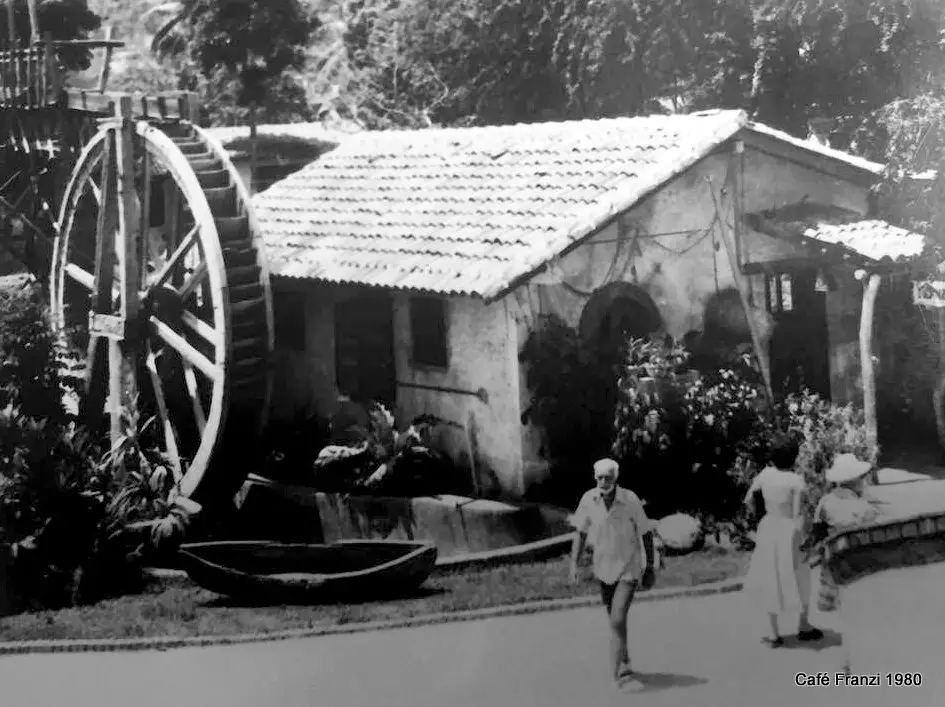
Cafe Franzi by the water wheel, Cuale River Island 1980
The water wheel behind her is a “Molino de agua”, there was one on the Island for some time and there was also a hotel with the same name.
The sculptor, Jim Demetro, had a local 76-year-old woman as his model for this, one of Puerto Vallarta‘s traditional washerwomen, hoping to preserve this local custom in bronze.
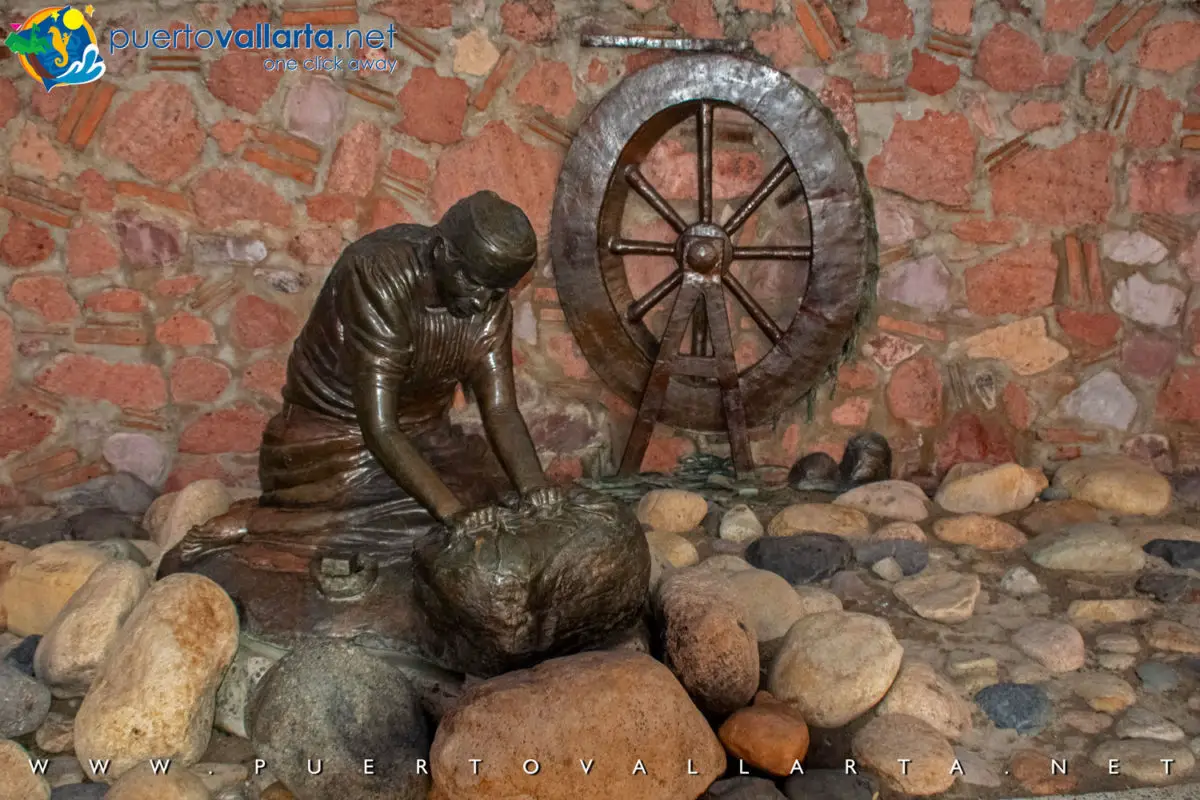
The Washer Woman, Jim Demetro
History and Inspiration
The local washerwomen would walk to the river banks with packs of clothes on their heads. There they would build rustic palapas with three sticks and a couple of palm fronds, creating a bit of shade and a respite to the hot sun and heat while they washed their own family’s laundry and for some extra pesos, that of other families in town, in the river flow, laying it out on flat stones, scrubbing and hitting them on the flat stones.
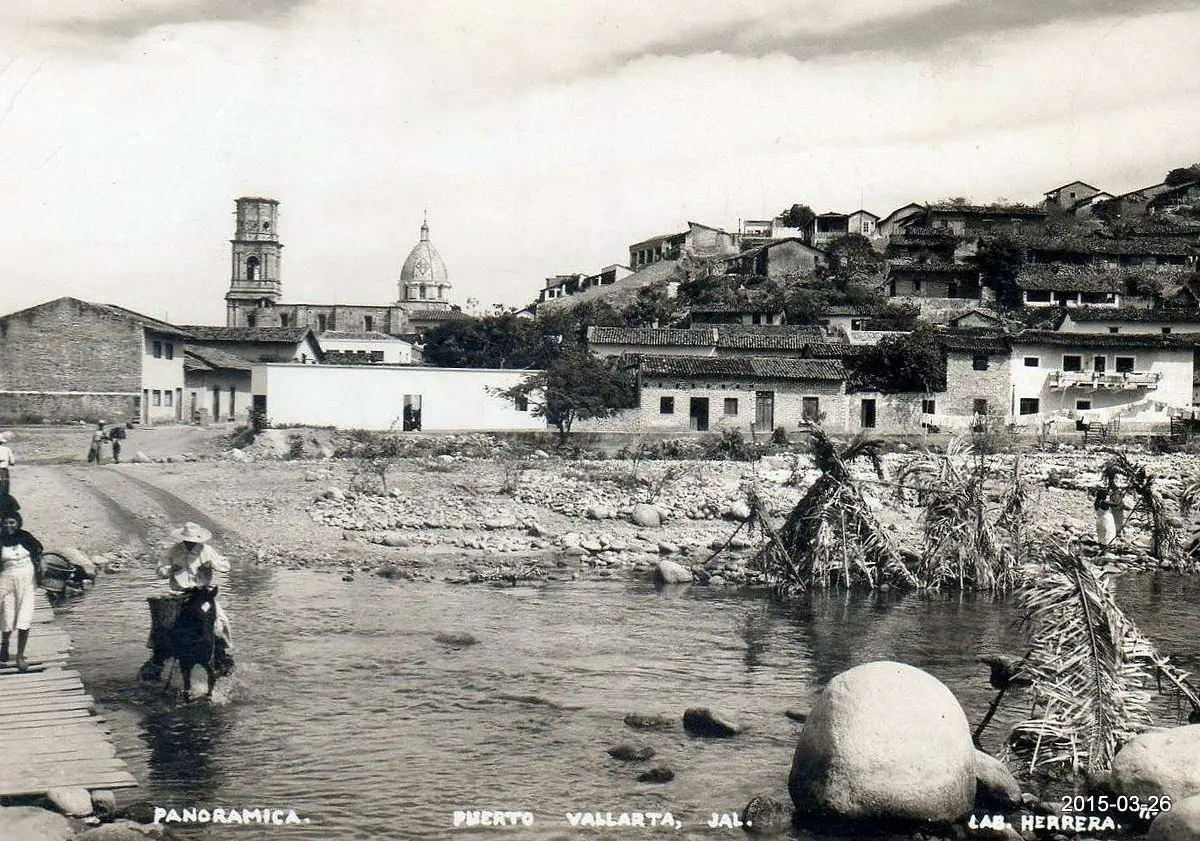
Banks of the Cuale River 1959
Josefina Cortés Lugo de Torres mentions this tradition in her book titled “Remembering a Paradise”.
Customs and Traditions, Our Town
Even though I have witnessed the transformation of my town into a great city and tourist destination that Puerto Vallarta is now, I cannot erase from my memory the memories of smells, flavors, colors and customs that I have experienced since I can remember.
I remember how women used to wash clothes in the Cuale River with wild hazelnut guide herbs bundled up and used as scouring pads; the dish washing brushes were made of magueys, roots or different plants from the hills that were sold from the nearby ranches.
The washerwomen made shades out of palapa and bush branches that grew on the banks of the river to protect themselves from the sun’s rays and heat; their clotheslines lay on the ground: they were stones arranged like cobblestones, but without dirt. They also used them to extend and whiten the soapy clothes, every now and then they would dampen them so they wouldn’t toast in the sun. There were some ladies who used dry bush branches and, on them, they dried the clothes, already rinsed and clean. It was such a beautiful sight to see the palapa frond cones and the clothes stretched out on the cobblestones on both banks of the river!
In dry times, people who lived nearby could leave their clothes there. Those who lived far away would leave their clothes with their neighbors. No one dared to steal them. Only in the rainy season would they would pick them up in the afternoon for fear that the rising river might come and wash everything away, as it did several times.
About the artist

Jim Demetro, wife and daughter with one of their sculptures, Elizabeth Taylor and Richard Burton
Jim Demetro is from Battle Ground in Washington state. Since 1992, he has worked sculpting professionally and has produced nearly 50 works of public art.
During his 13 years living in Puerto Vallarta, he has donated a number of public sculptures to his favorite city including these iconic Vallarta Dancers on the Malecon, one in front of Molino de Agua condos, The washerwoman, The Fishermen on Los Muertos Beach, Ándale Bernardo (the donkey statue) at Lázaro Cárdenas Square and other statues around town.
Artist Gallery Website: http://demetro.net/
Location
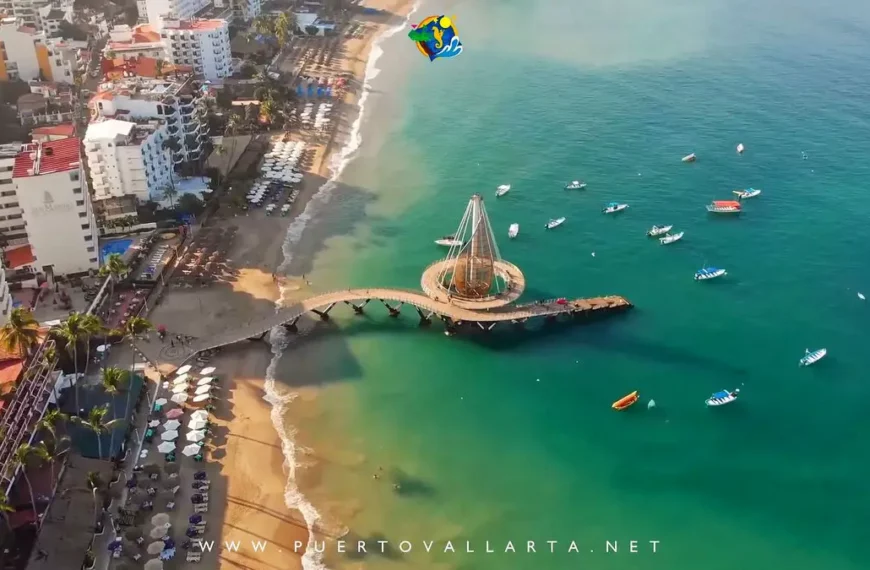
You’ll find this beautiful sculpture to your left when crossing the mouth of the Cuale River, over the bridge laid out at the end of the Malecón II, this is the start of the Romanic Zone (Old Vallarta) and to your right, the beach is the one known as Olas Altas.
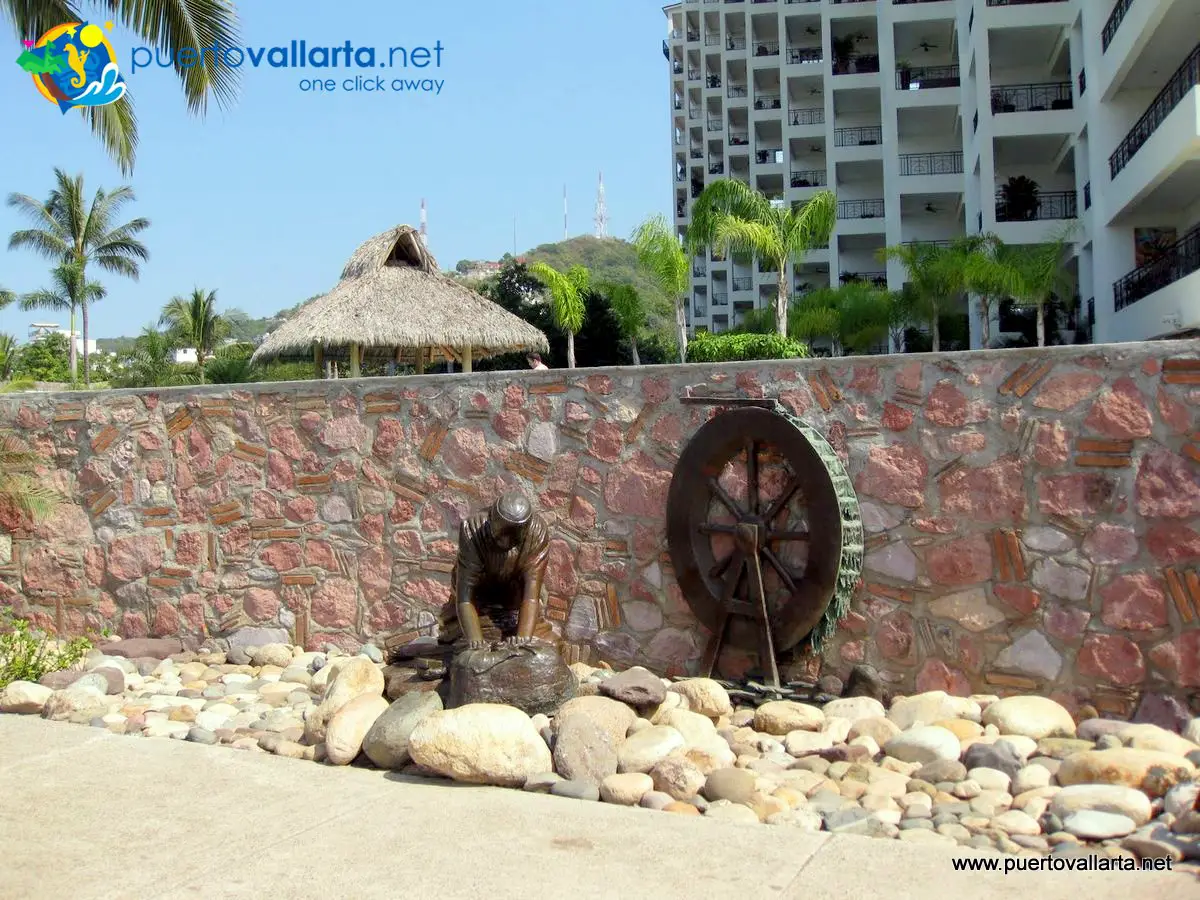
Washer Woman, Jim Demetro, Puerto Vallarta
Author: M. A. Gallardo
FAQ
- What is the safest part of Puerto Vallarta to stay in?
The Marina and the Romantic Zone are considered some of the safest areas to stay in Puerto Vallarta. Both areas are popular among tourists and offer a variety of accommodations, restaurants, and attractions. The Marina is known for its upscale atmosphere, luxury resorts, and high-end shops and restaurants. It has a very secure, controlled environment with 24/7 security personnel. The Romantic Zone offers a more authentic Mexican experience with cobblestone streets, colorful colonial buildings, and a vibrant mix of galleries, cafes, and bars. As a central tourist area, it also has a strong police presence and is considered very safe.
- Where do locals go in Puerto Vallarta?
Locals in Puerto Vallarta enjoy spending time at the city’s beautiful beaches, scenic parks, and lively local markets. Popular beach spots include Playa de Oro, Playa Las Animas, and Playa Camarones for their soft sand and calm waters. Many locals visit the Vallarta Botanical Gardens to enjoy the lush vegetation and hiking trails. They also frequent authentic local food venues like Birrieria las 3 Regiones taco stand, cafes like Cafecito Vallarta, and neighborhood bars like La Cerveceria Union. The downtown Lazaro Cardenas market is a favorite for produce, spices, crafts.
- Is Downtown Puerto Vallarta nice?
Yes, downtown Puerto Vallarta is an exceptionally nice and popular area, celebrated for its vibrant mix of historic Mexican charm and a lively beach town atmosphere. It features a picturesque historic center with cobblestone streets, colorful buildings, and the iconic Parish of Our Lady of Guadalupe church. The downtown seamlessly blends into the scenic Malecón, a beautiful oceanfront boardwalk lined with fascinating sculptures, shops, and restaurants, making it perfect for strolling and enjoying the stunning ocean views.
The area offers an excellent variety of dining, from upscale restaurants to authentic street food, along with fantastic shopping in boutiques and art galleries. Adjacent to the main center is the popular Zona Romántica (Romantic Zone), known for its trendy vibe and energetic nightlife. The entire downtown is considered safe and is very walkable, allowing visitors to easily explore its captivating blend of culture, cuisine, and coastal beauty on foot.
Tip: For an unforgettable experience, head down to the Malecón or any beachfront spot about 30 minutes before the scheduled sundown to watch the spectacular sunset over the bay.
- What is considered old town in Puerto Vallarta?
Old Town, also known as the Romantic Zone or Zona Romántica, is considered the historic heart of Puerto Vallarta. It is characterized by its picturesque cobblestone streets, classic whitewashed buildings, red-tiled roofs, and a lively mix of shops, galleries, restaurants and bars. Nestled between the Sierra Madre mountains and Banderas Bay, Old Town has a traditional Mexican village charm with its colonial architecture and slower pace compared to the rest of Puerto Vallarta. Its romantic ambience comes from the area’s natural beauty, outdoor cafes, and charming boutique hotels. Old Town offers visitors a taste of an authentic Mexican neighborhood.

Book tours & support us
- Best prices
- 100% Local Support
- 2 decades+ of experience in Puerto Vallarta

Puerto Vallarta news, tips & content
- New info every two weeks
- Free content, news, videos
- Unsubscribe at any time

Contact us via WhatsApp
- Talk with our reservations expert
- Real local and human support
- Book tours, hotels, transfers, and more.
Share this article, choose your favorite option!


