
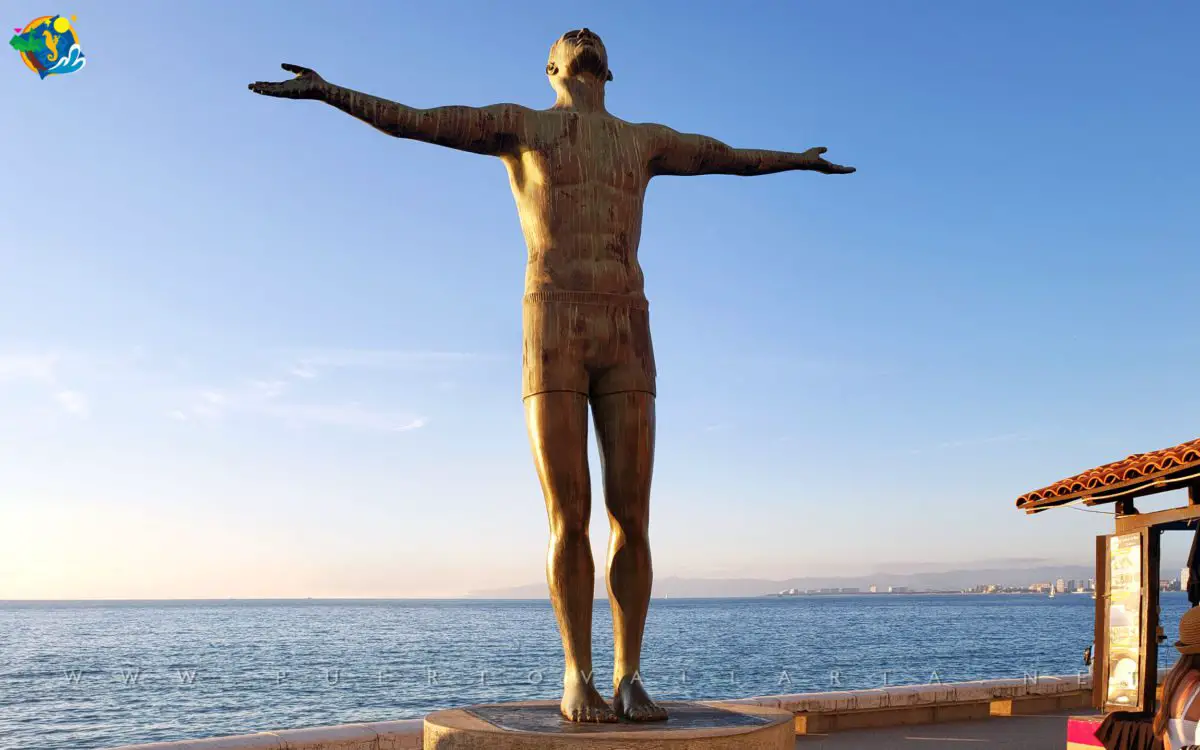
Lluvia (Rain) an impressive sculpture by Jovian on the Malecon
Summary
- “Lluvia” is a monumental sculpture located on the Malecon in Puerto Vallarta, Mexico.
- The sculpture was created by Mexican artist Jovian and was installed in 2020 during the COVID-19 pandemic.
- It stands at 3.5 meters tall (11.5 ft) and is made of bronze.
- The sculpture was donated to the municipality through Galería Corsica and the Instituto Vallartense de Cultura (IVC).
- It has become a new addition to the artistic landscape of the Puerto Vallarta Malecon.


Introduction
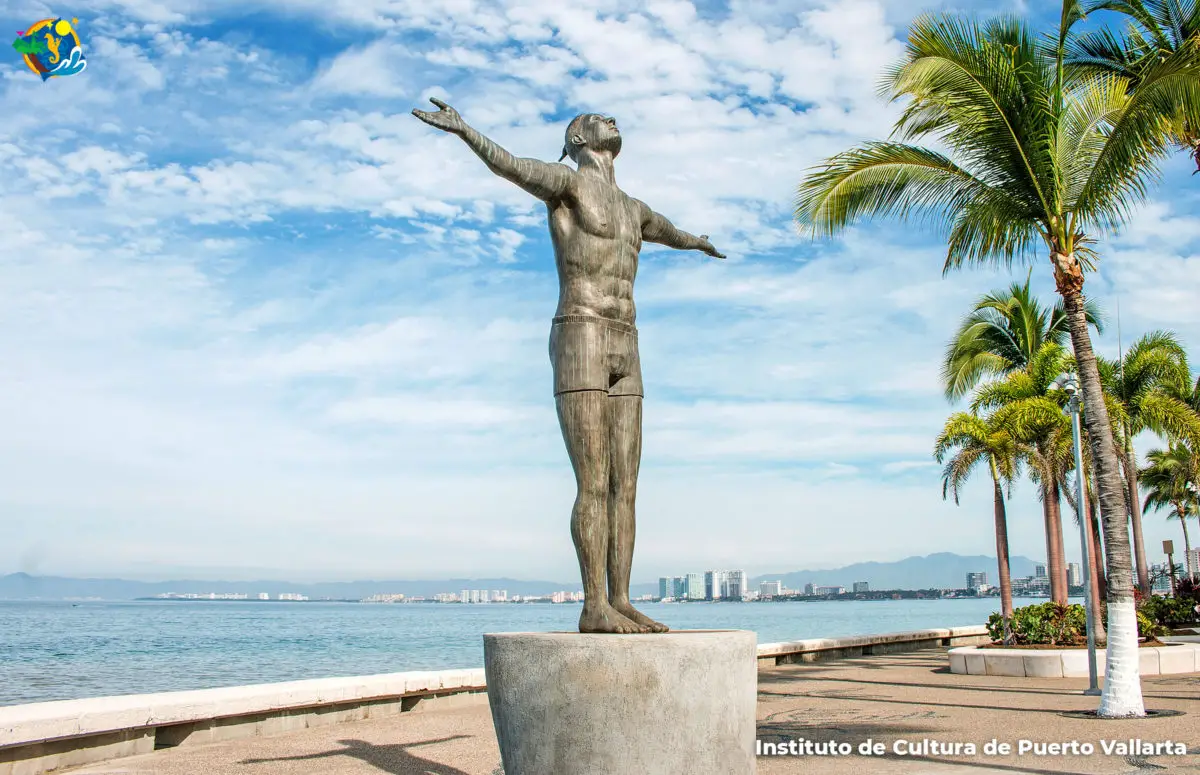
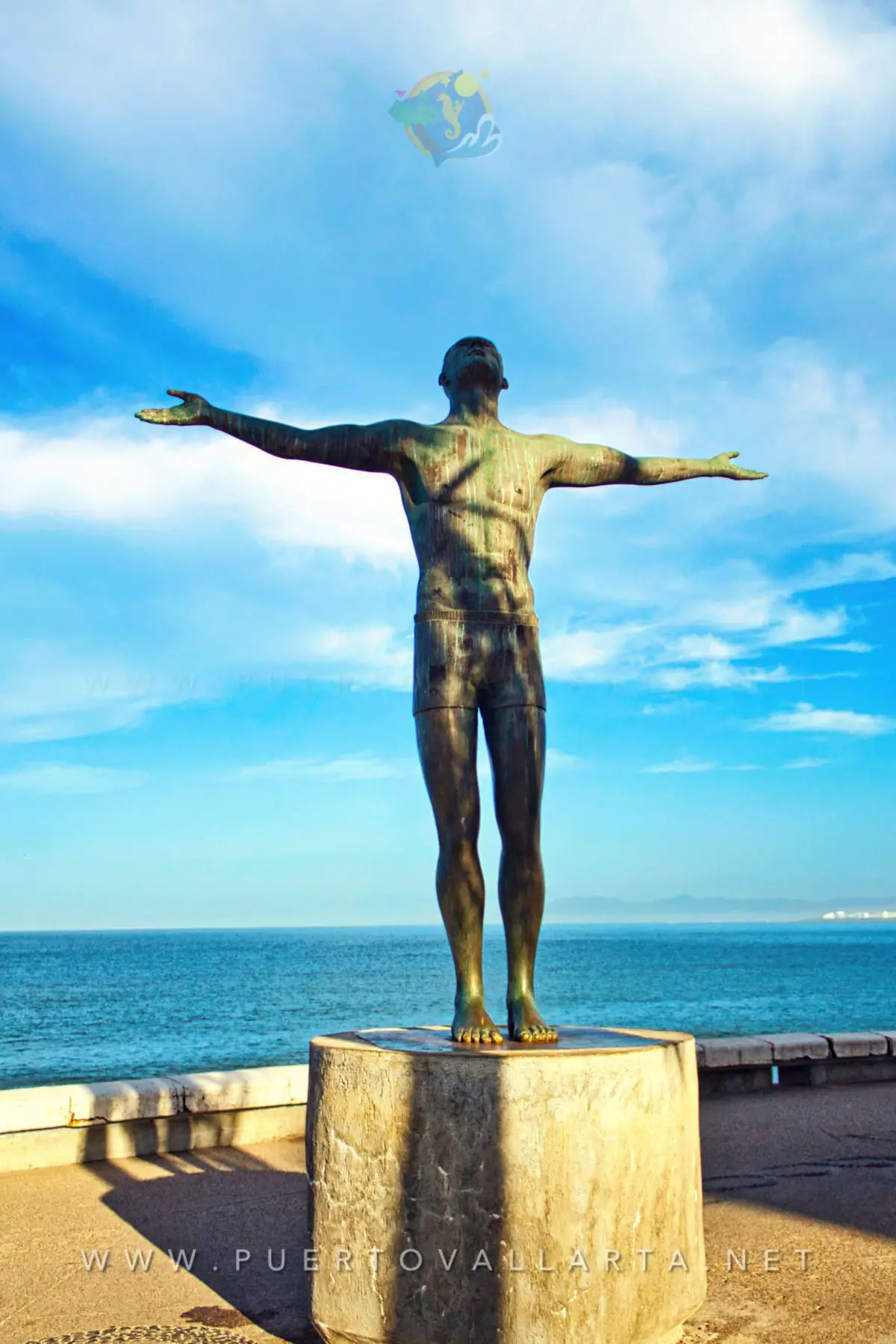
Lluvia (Rain) is a new monumental sculpture unveiled December 10th, 2020 on the Malecon.
It depicts a young man standing with outstretched arms looking upward into the sky (or rain). It can remind you a bit of Christ the Redeemer in Rio de Janeiro. This figure not only seems to represent the connection of humans and nature but also seems to offer a welcome embrace (or hug) to all visitors.
It becomes the 34th sculpture placed along the edge of the sea in Puerto Vallarta.
About the sculpture
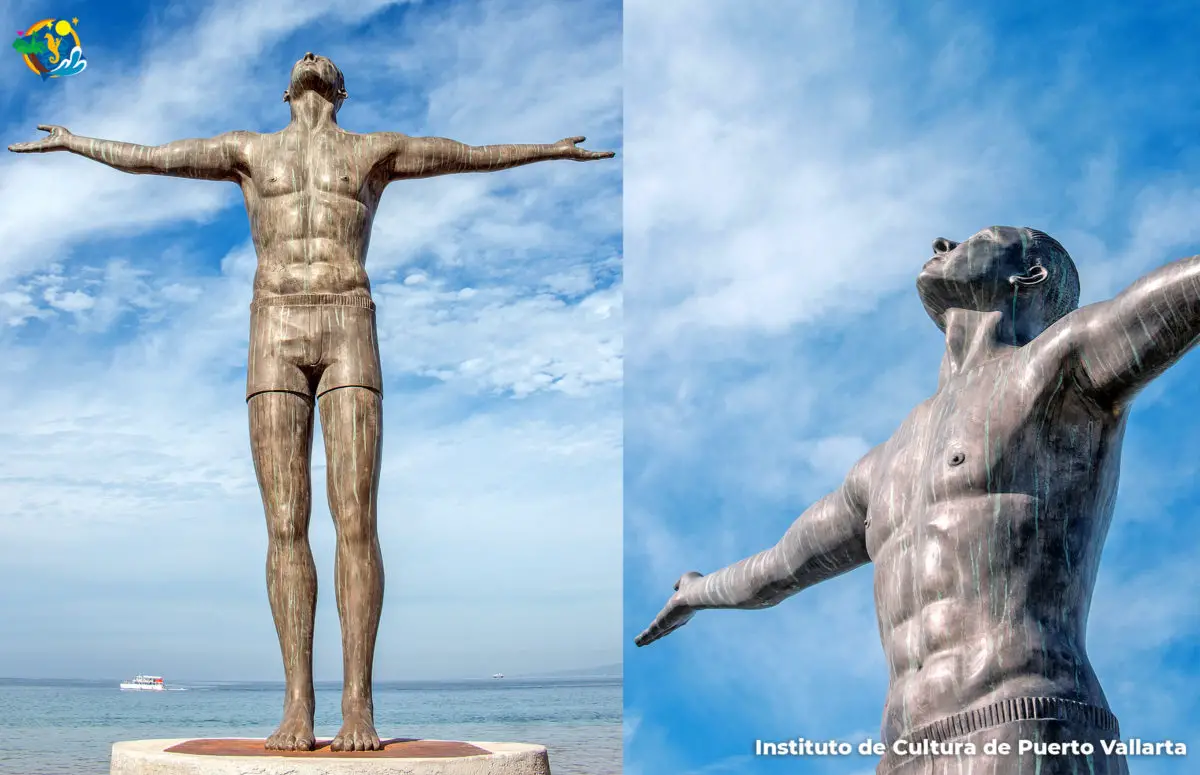
Lluvia by Jovian on the Puerto Vallarta Malecon
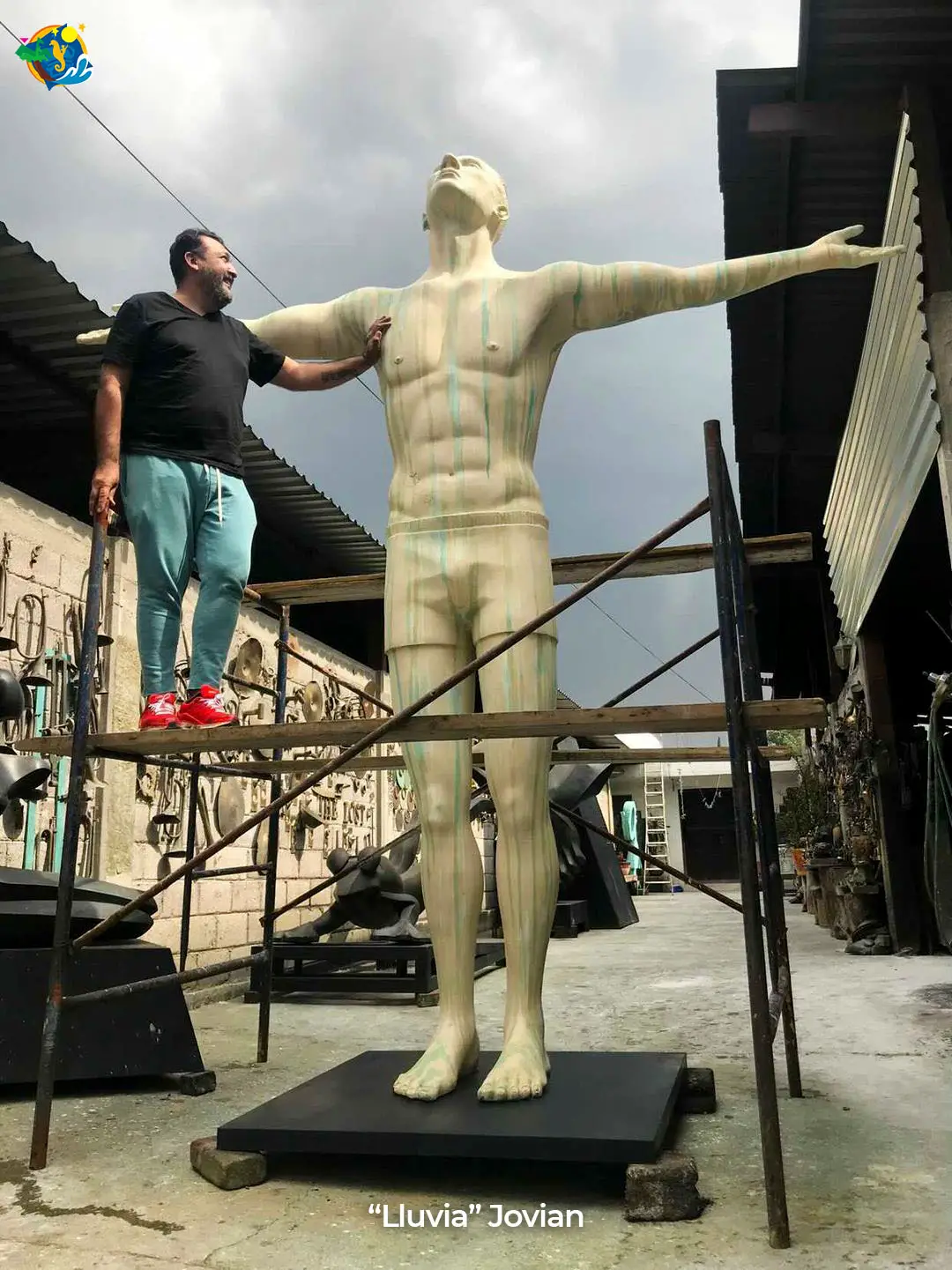
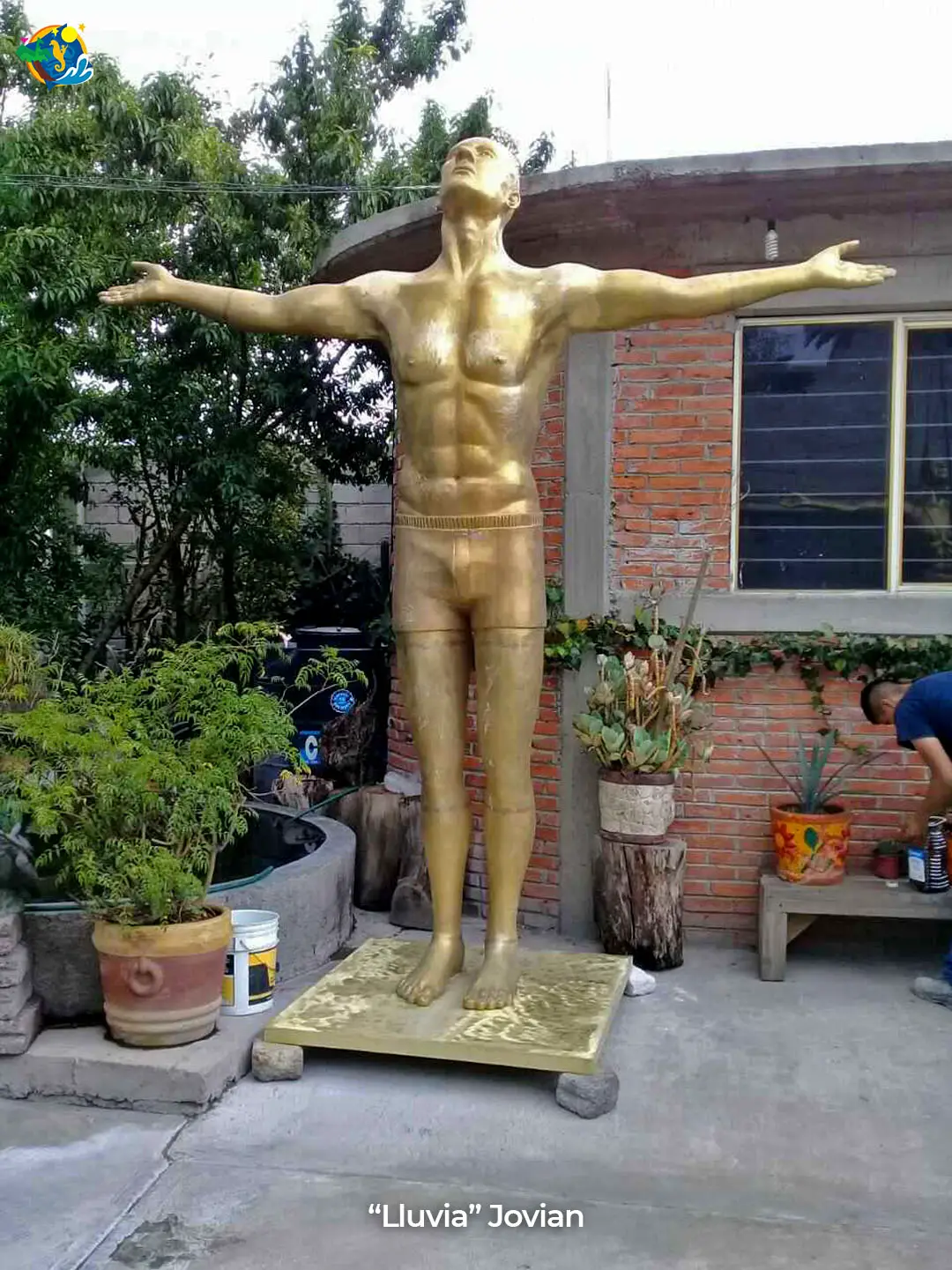
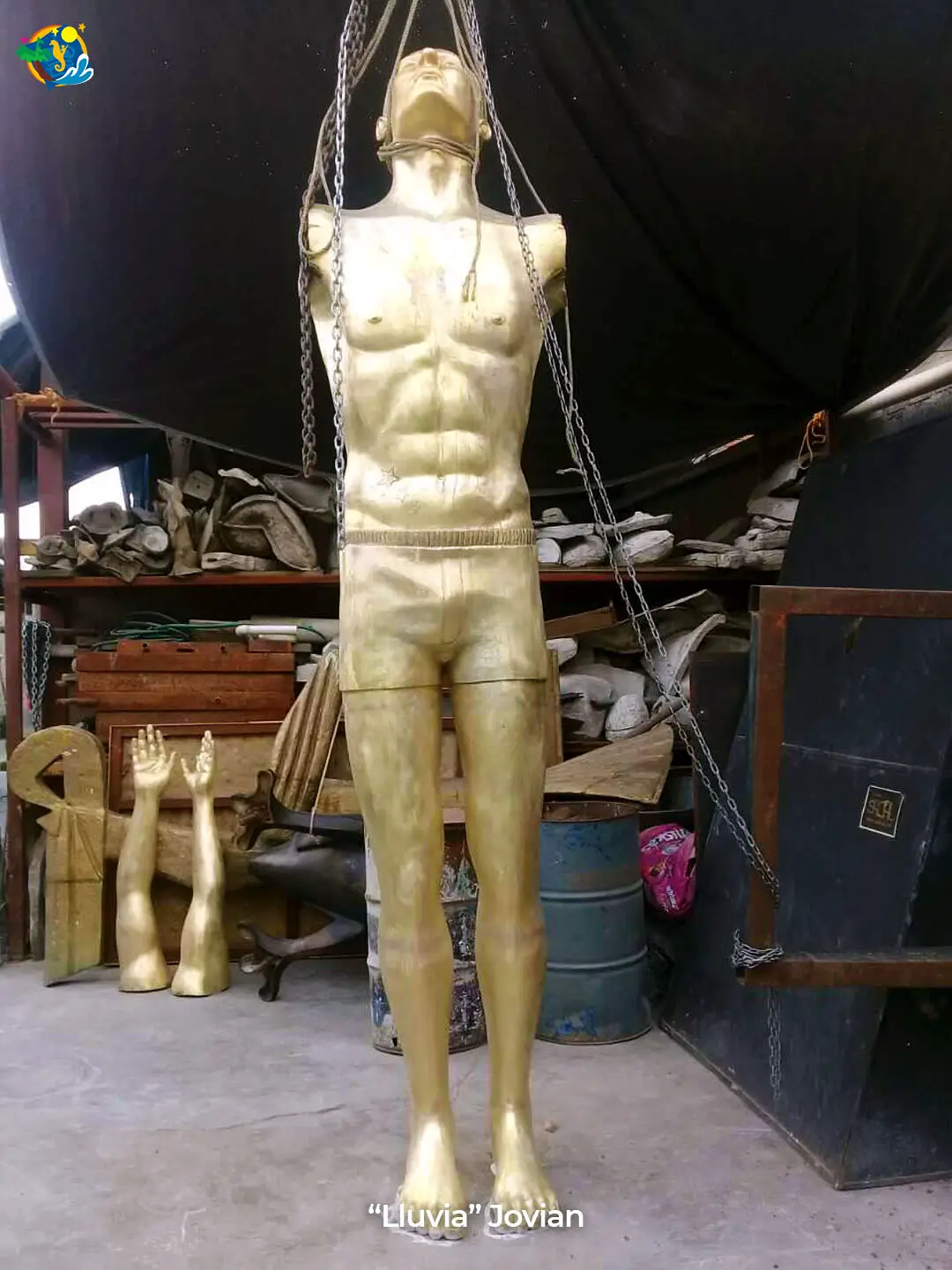
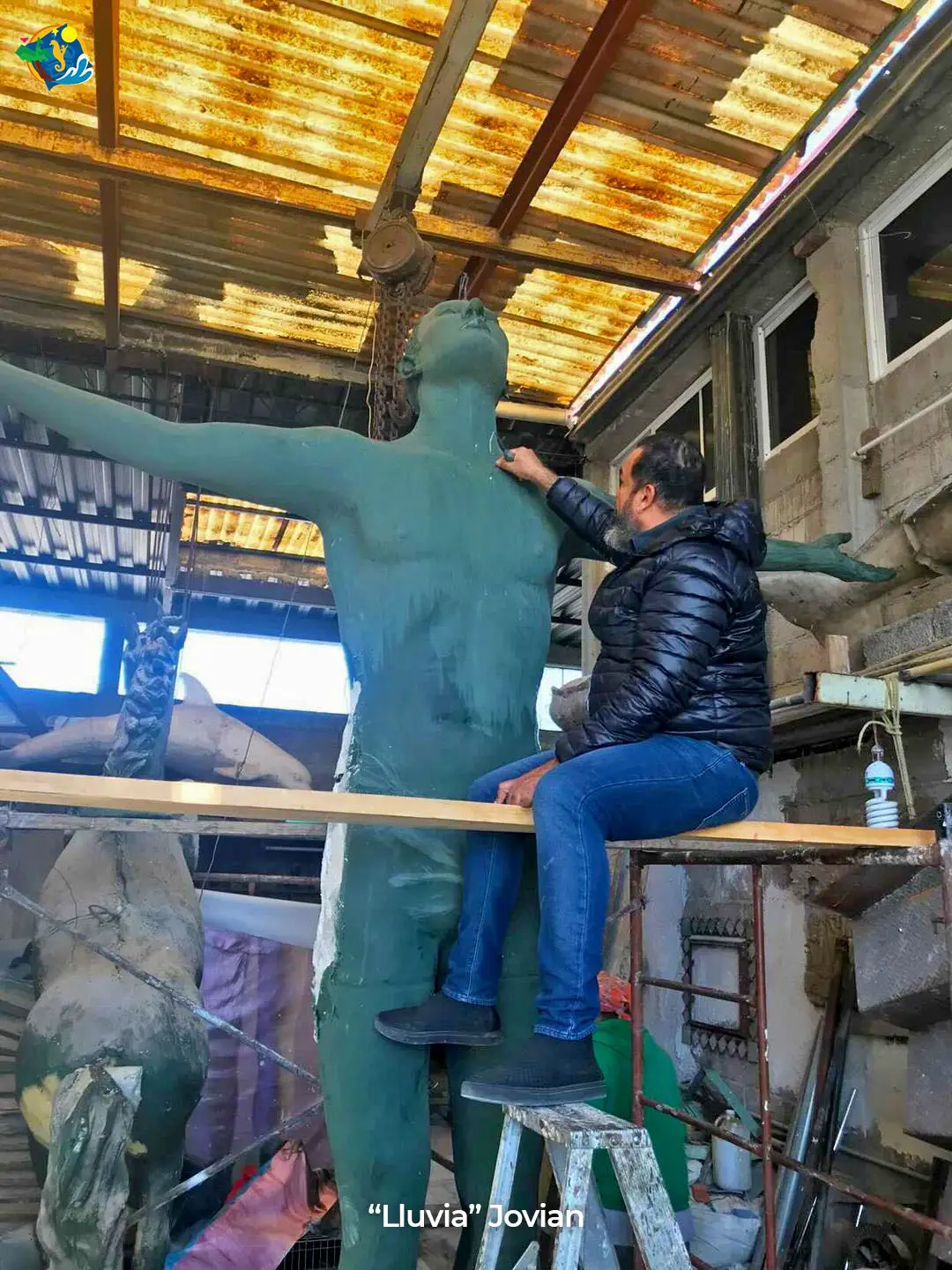
Mexican artist Jovian created “Lluvia”, a tall impressive sculpture that stands at 3.5 meters tall (11.5 ft) and weighs 650 kilograms (more than 1400 pounds) that now becomes another important component of this open-air Art Gallery by the edge of the sea.
This very valuable sculpture was donated by the artist through Galeria Corsica to the Instituto Vallartense de Cultura (IVC) and the city.
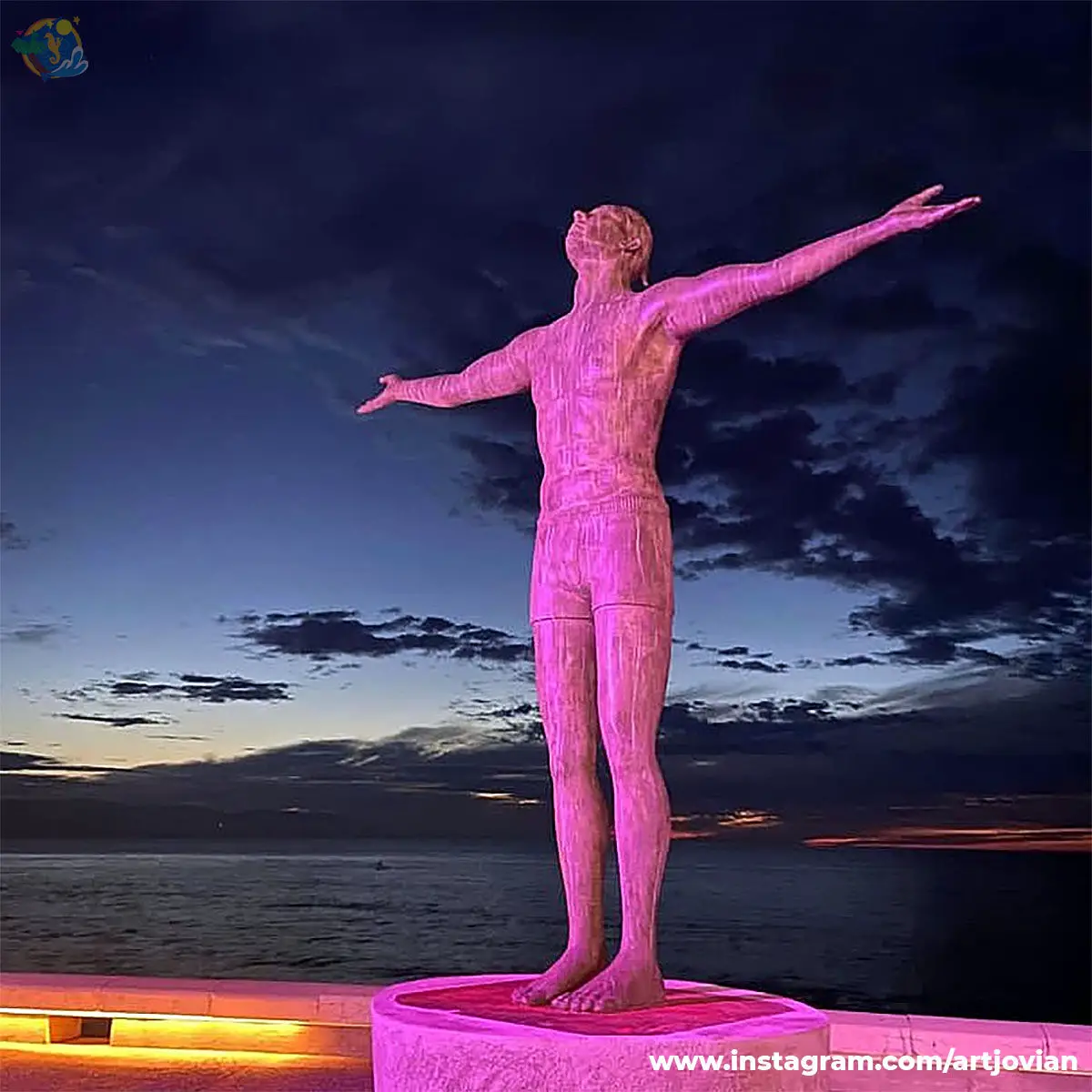
Lluvia (2020) Jovian, night view
The official unveiling ceremony was presided by Arturo Dávalos (Puerto Vallarta’s Mayor), Candelaria Tovar (Muncipal DIF president), Jean Pierre Renucci (Galeria Corsica owner) and Marina de los Santos (Vallarta Cultural Institute director).
Arturo Dávalos Peña, stated that “this beautiful sculpture will emblazon the Puerto Vallarta Malecon”. Jean Pierre Renucci, stated that together with Jovian, the joint donation is an expression of their gratitude “to a city that has given us a lot and it is only fair to give back what it deserves.”
Inspiration
Jovian comments on his inspiration for the sculpture:
“I conceived the piece as a representation of Puerto Vallarta and I decided to call it ‘Rain’ as rainy afternoons in Puerto Vallarta are spectacular.
I tried to present a man with open arms as a symbol of openness, positively receiving what the world offers him with a gesture of happiness and fulfillment eyes looking up into the rain without that affecting his peace but rather enjoying the water that falls on his body and making him feel free and alive.
That is what Vallarta is for me, a city with great openness, which welcomes locals and strangers with open arms. I have never known another city where people who come from other places feel so “at home”. It is a lively city, with great freedom and diversity and it is always there, despite inclement weather, good and bad seasons, climatic phenomena, etc., undaunted waiting for new inspiration, new people, more water brought by the rains, in peace, enjoying what life gives it and transmitting that happiness to those who come to visit it.”


Where is the sculpture?
As most sculptures in the downtown area, it is located where one of the sidestreets ends on the Malecon (Paseo Díaz Ordaz).
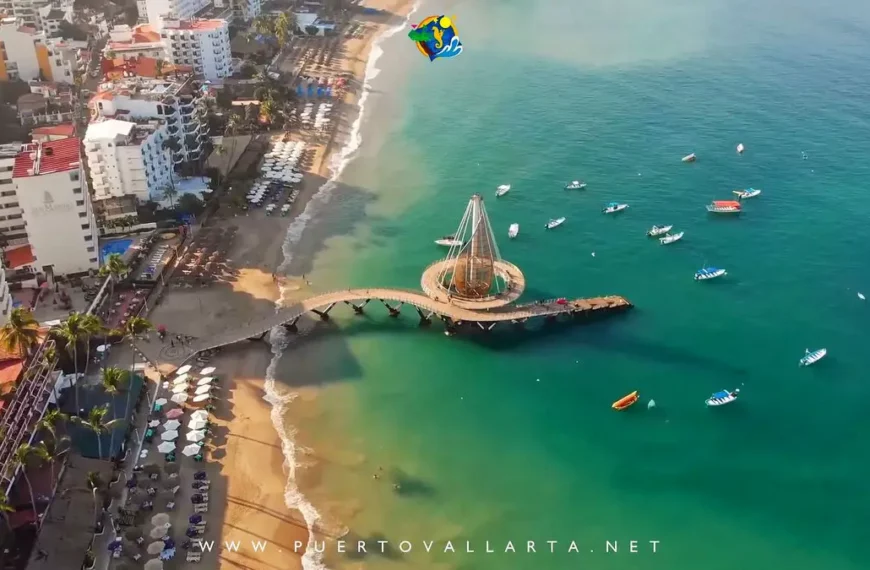
In this case, Lluvia is placed where Galeana street intersects with the seaside boardwalk, some steps from the Malecon Lighthouse.
Jovian
Biography
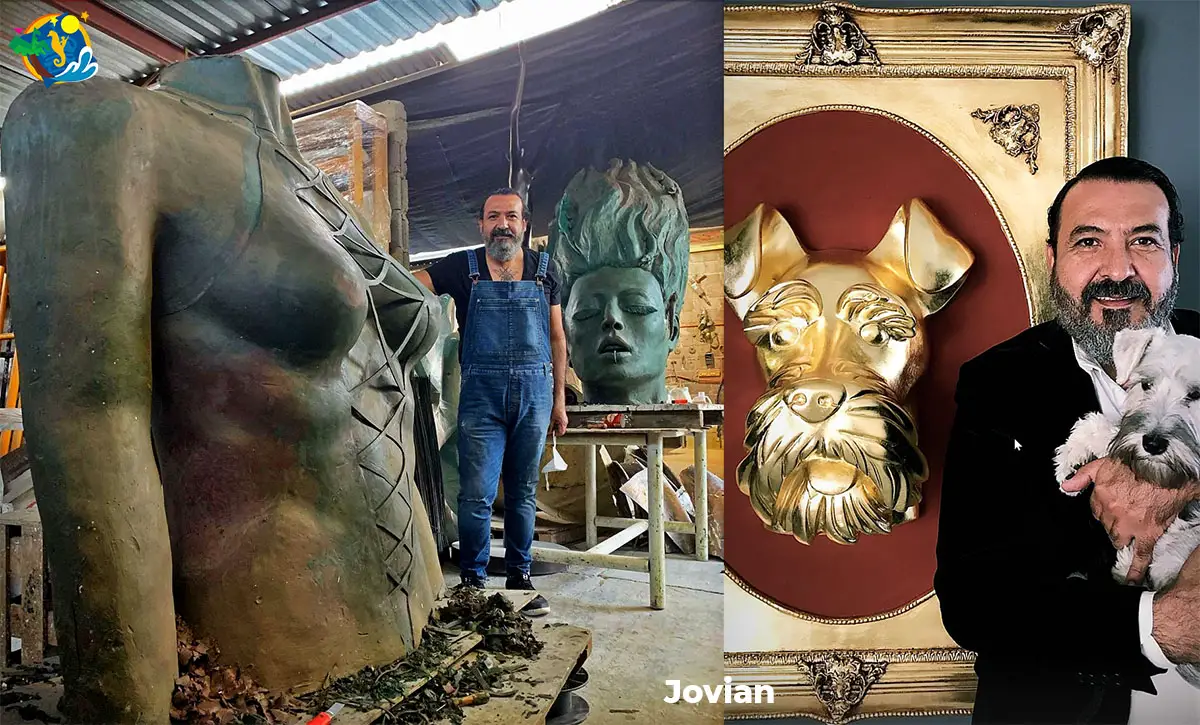
José Villavicencio Anaya, known by his artistic name Jovian, was born in Mexico City in 1965, where he studied International Relations at the Universidad Iberoamericana. His artistic interests led him to join the field of art, first as a manager and gallerist.
In the middle of the last decade, he started off on a new facet as an artist, venturing into painting, sculpting and object creation. Although he is self-taught, he has sought to set the foundations for his vocation by being part of various workshops:
- “Des-Construcción” painting workshop, Agustín Castro López, Los Mangos Library, Puerto Vallarta, Jalisco, Mexico (2010)
- Painting workshop “Of the Figurative, the Abstract”, Agustín Castro López, Los Mangos Library, Puerto Vallarta, Jalisco, Mexico (2011)
- Anatomy for Sculptors workshop, Rodrigo Vargas, in Mexico City, Mexico (2012)
- Sculpture Techniques and Materials workshop, Jonathan Gómez, in Mexico City, Mexico (2012)
- Figurative Modeling with Plasticine workshop, Jonathan Gómez, Mexico City, Mexico (2014)
- Drawing and painting course “Reinterpreting the Human Figure”, Ulises Licea, in Tepoztlan, Morelos, Mexico (2015)
- “Arte Povera” workshop, Ulises Licea in the garbage dumps of Ciudad Nezahualcoyotl, of the State of Mexico, Mexico (2016).
His artistic work is known for his mixing multiple techniques and materials within a sculpture. His themes reflect the capacity for transformation and abstraction, through which he addresses current issues and social interests, with powerful and lively creations that put him in the vanguard of Mexican artistic postmodernity.
Onírico. Jovian
La muestra encuentra Onírico, una palabra que deviene del vocablo griego que puede entenderse como “ensueño”, y que se emplea para nombrar a aquello que sale del mundo de las alucinaciones, lo irreal o de la fantasía que transcurre dentro del imaginario personal. pic.twitter.com/cixdHYcEGR— Museo de Arte Contemporáneo Ateneo de Yucatán (@museo_macay) April 20, 2020
Currently, his work is part of private and public art collections such as the Patrimonial Acquis of the Ministry of Finance and Public Credit, Museum of the City of Mérida, San Luis Potosí Autonomous University, Metropolitan Museum of Monterrey and the Fernando García Ponce Museum, MACAY. He has been part of the Payment in Kind Program since 2017.
Individual Exhibits
- “Pop Icons”, Corsica Gallery, Puerto Vallarta, Jalisco, Mexico and San Jose del Cabo, Baja California Sur, Mexico (2012)
- “Divas”, Corsica Gallery, Puerto Vallarta, Jalisco, Mexico and San Jose del Cabo, Baja California Sur, Mexico (2013)
- “Objects”, Corsica Gallery, Puerto Vallarta, Jalisco, Mexico and San Jose del Cabo, Baja California Sur, Mexico (2014)
- “Fashion Victims”, Asia Contemporary Art Show, Hong Kong, People’s Republic of China (2016)
- “Sueños de Papel”, Corsica Gallery, Puerto Vallarta, Jalisco, Mexico and San Jose del Cabo, Baja California Sur, Mexico (2016)
- “Bronze”, Corsica Gallery, Puerto Vallarta, Jalisco, Mexico (2017)
- “Fashion Victims”, South Side Gallery, Puerto Vallarta, Jalisco, Mexico (2017)
- “Jovian”, Hotel ME Los Cabos; Cabo San Lucas, Baja California Sur, Mexico (2018)
- “All About Dogs”, Corsica Gallery, Puerto Vallarta, Jalisco, Mexico (2018)
- “Tattooed”, South Side Gallery, Puerto Vallarta, Jalisco, Mexico (2018)
- “Fashion Victims”, Museum of the City of Mérida, Yucatán, Mexico (2018)
- “Métissage”, Caja Real Museum, UASLP, San Luis Potosí, SLP, Mexico (2018)
- “Traspolaciones”, Museum of Clay, Metepec, Estado de México, Mexico (2018)
- “Fashion Victims”, Metropolitan Museum of Monterrey, Monterrey, Nuevo León, Mexico (2019)
- “Oneiric”, Fernando García Ponce Museum MACAY, Mérida, Yucatán, Mexico (2020-2021)
- “Construction-Deconstruction”, Fernando García Ponce Museum MACAY, Mérida, Yucatán, Mexico (2020-2021)
- “Oneiric”, Corsica Gallery, Puerto Vallarta, Jalisco, Mexico (2021)
FAQ
- What is the safest part of Puerto Vallarta to stay in?
The Marina and the Romantic Zone are considered some of the safest areas to stay in Puerto Vallarta. Both areas are popular among tourists and offer a variety of accommodations, restaurants, and attractions. The Marina is known for its upscale atmosphere, luxury resorts, and high-end shops and restaurants. It has a very secure, controlled environment with 24/7 security personnel. The Romantic Zone offers a more authentic Mexican experience with cobblestone streets, colorful colonial buildings, and a vibrant mix of galleries, cafes, and bars. As a central tourist area, it also has a strong police presence and is considered very safe.
- Where do locals go in Puerto Vallarta?
Locals in Puerto Vallarta enjoy spending time at the city’s beautiful beaches, scenic parks, and lively local markets. Popular beach spots include Playa de Oro, Playa Las Animas, and Playa Camarones for their soft sand and calm waters. Many locals visit the Vallarta Botanical Gardens to enjoy the lush vegetation and hiking trails. They also frequent authentic local food venues like Birrieria las 3 Regiones taco stand, cafes like Cafecito Vallarta, and neighborhood bars like La Cerveceria Union. The downtown Lazaro Cardenas market is a favorite for produce, spices, crafts.
- Is Downtown Puerto Vallarta nice?
Yes, downtown Puerto Vallarta is an exceptionally nice and popular area, celebrated for its vibrant mix of historic Mexican charm and a lively beach town atmosphere. It features a picturesque historic center with cobblestone streets, colorful buildings, and the iconic Parish of Our Lady of Guadalupe church. The downtown seamlessly blends into the scenic Malecón, a beautiful oceanfront boardwalk lined with fascinating sculptures, shops, and restaurants, making it perfect for strolling and enjoying the stunning ocean views.
The area offers an excellent variety of dining, from upscale restaurants to authentic street food, along with fantastic shopping in boutiques and art galleries. Adjacent to the main center is the popular Zona Romántica (Romantic Zone), known for its trendy vibe and energetic nightlife. The entire downtown is considered safe and is very walkable, allowing visitors to easily explore its captivating blend of culture, cuisine, and coastal beauty on foot.
Tip: For an unforgettable experience, head down to the Malecón or any beachfront spot about 30 minutes before the scheduled sundown to watch the spectacular sunset over the bay.
- What is considered old town in Puerto Vallarta?
Old Town, also known as the Romantic Zone or Zona Romántica, is considered the historic heart of Puerto Vallarta. It is characterized by its picturesque cobblestone streets, classic whitewashed buildings, red-tiled roofs, and a lively mix of shops, galleries, restaurants and bars. Nestled between the Sierra Madre mountains and Banderas Bay, Old Town has a traditional Mexican village charm with its colonial architecture and slower pace compared to the rest of Puerto Vallarta. Its romantic ambience comes from the area’s natural beauty, outdoor cafes, and charming boutique hotels. Old Town offers visitors a taste of an authentic Mexican neighborhood.

Book tours & support us
- Best prices
- 100% Local Support
- 2 decades+ of experience in Puerto Vallarta

Puerto Vallarta news, tips & content
- New info every two weeks
- Free content, news, videos
- Unsubscribe at any time

Contact us via WhatsApp
- Talk with our reservations expert
- Real local and human support
- Book tours, hotels, transfers, and more.
Share this article, choose your favorite option!


