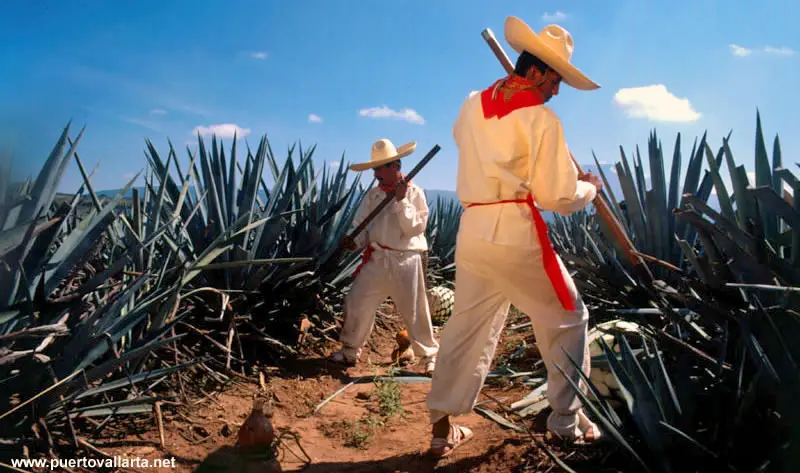
Jimadores harvesting the blue agaves for Tequila production
Summary
- Tequila is a famous alcoholic drink from Mexico.
- It is made from blue agave plants.
- When the Spanish arrived in Mexico distillation techniques were introduced, allowing for the creation of what we now know as tequila.
- There are several types of tequila available, including blanco, reposado, añejo and extra añejo.
- Some popular brands of tequila in Mexico are 7 Leguas, Cazadores Reposado and Don Julio.


Introduction
Tequila is part of the Mexican heritage and is held in high esteem by any Mexican, which is why it never is missing in any toast, celebration, party or national holiday.
Tequila as an alcoholic beverage was born in the State of Jalisco, the state that also gave us the Charros and the Mariachi music. Together, they are national symbols that represent Mexico throughout the world.
Tequila’s history
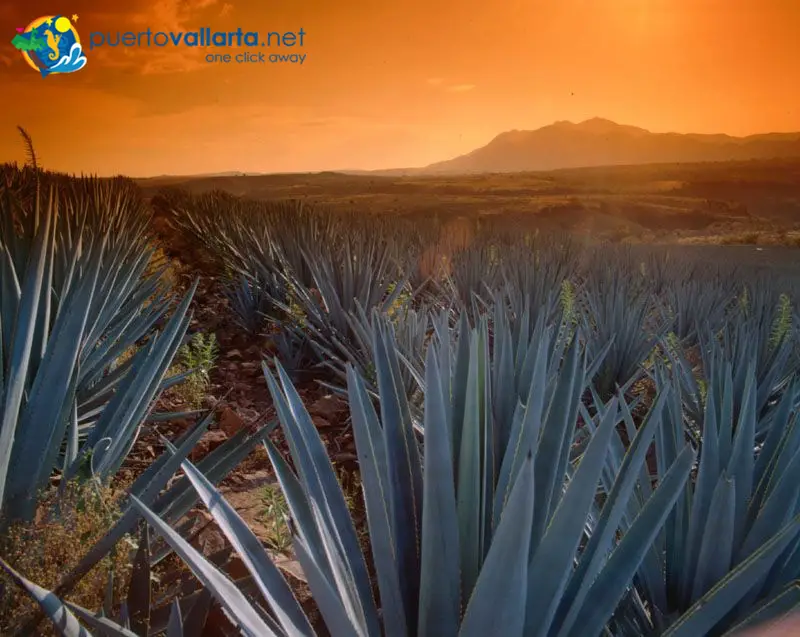
View of the Blue Agave fields in Tequila, Mexico
The history of Tequila goes back a long way. There is a legend that recounts lightning hitting some Maguey cacti, causing them to gush forth a most aromatic, sweet juice which, when fermented and ingested, results in an enjoyable relaxed state of well-being. They considered this to be a gift from the gods, so they continued cutting, cooking and fermenting the juice.
For the Nahuatl, the Maguey was a divine creation that represented Mayahuel, a goddess with four hundred breasts to feed her four hundred children. Mayahuel was the wife of Petacatl, who represented certain plants that help in fermenting pulque, giving it stronger magical powers.
With the arrival of the Spaniards, the process was improved, as natives did not know about distillation, this gave rise to Tequila. The first important distillery belonged to Don Pedro Sánchez de Tagle, a powerful landowner, near Guadalajara, where the cultivation, harvest, and distillation processes were carried out. The entire location was known as the Hacienda de Cuisillos.
Tequila fermentation and distillation factories were known as tavernas. Don Nicolás Rojas founded a taverna in San Martin, which was later called La Rojeña. In 1750, Don José Gómez Cuervo started planting agaves and owned a distillery in the Hacienda of San Martin, which was eventually purchased by Don Cenobio Sauza.
The name “Tequila” comes from the Nahuatl language and is identified as a pre-Hispanic culture that lived about 60 km. northwest of Guadalajara. There is also a valley and a nearby volcano that has the same name, the latter rises 9,000 feet above sea level.
There are very few places where the agave cactus can be grown as it requires very special soil and climate. The best soil is permeable clay, abundant in basalt derivatives, rich in iron. The ideal climate is semi-arid, without sudden temperature changes, about 4,500 ft. above sea level; with a cloud cover of 65 to 100 days per year.
Tequila production
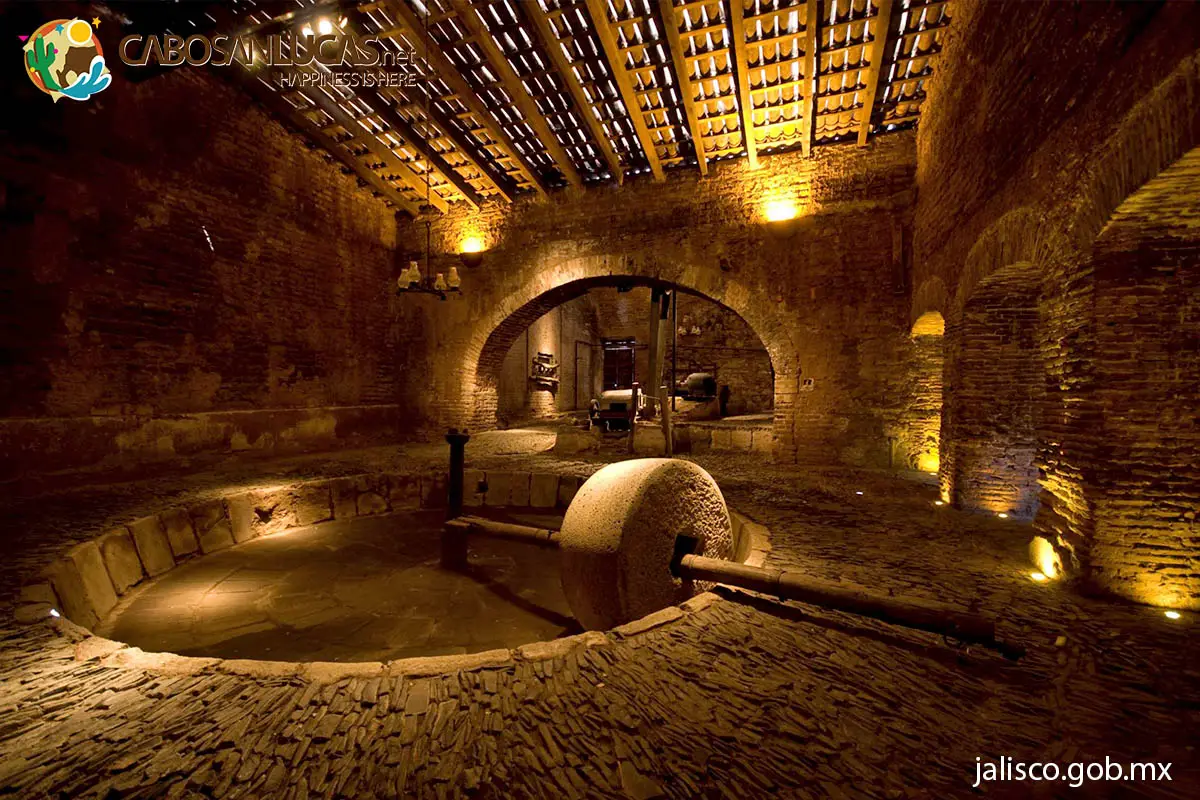
Traditional Tequila mill
The agave cactus (or “plant of the century”) from which Tequila is distilled, belongs to the Amardistilled family and is known as blue agave Tequilana weber, a plant native to Jalisco and some nearby regions. The production of Tequila includes a series of processes that include the planting of agaves, harvesting, cooking, fermentation, and distillation. Each step must be carefully supervised and the sequence and details establish the differences between one Tequila brand and another.
Tequila comes from the blue agave plant. It takes from 8 to 12 years before it is mature enough to be harvested. When the plant is about to flower, all its leaves are cut off so that the plant sugars concentrate in the pineapple-like heart that is left. These “pineapples” are then baked in ovens for 36 to 48 hours until they take a golden color. Afterwards, they are ground in a mill or on a millstone, powered by a mule or a tractor (nowadays the process is industrial). The powder is put into large tanks where it is mixed with water and yeast, and left for 7 to 10 days, after which it stops bubbling and is then cooled.
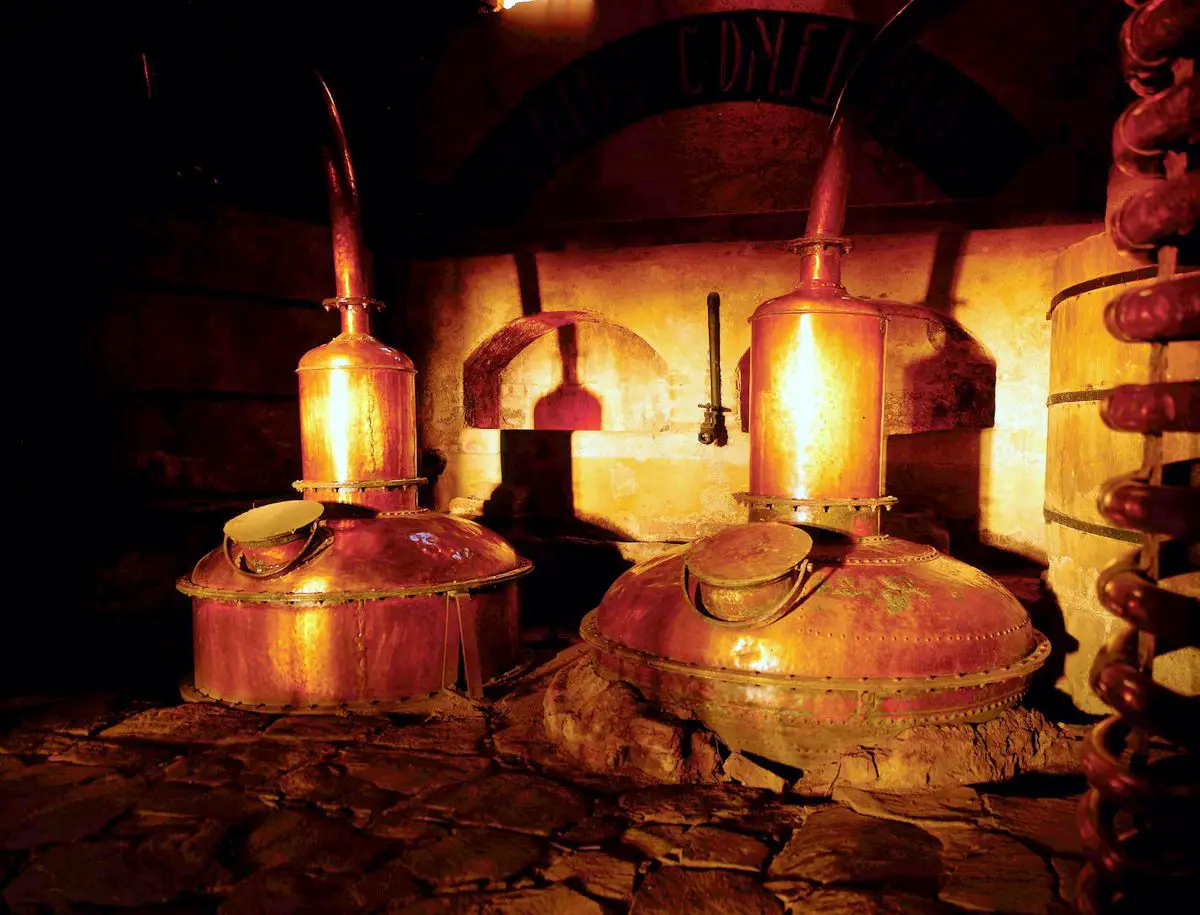
Traditional Tequila distillation stills


Types of Tequila
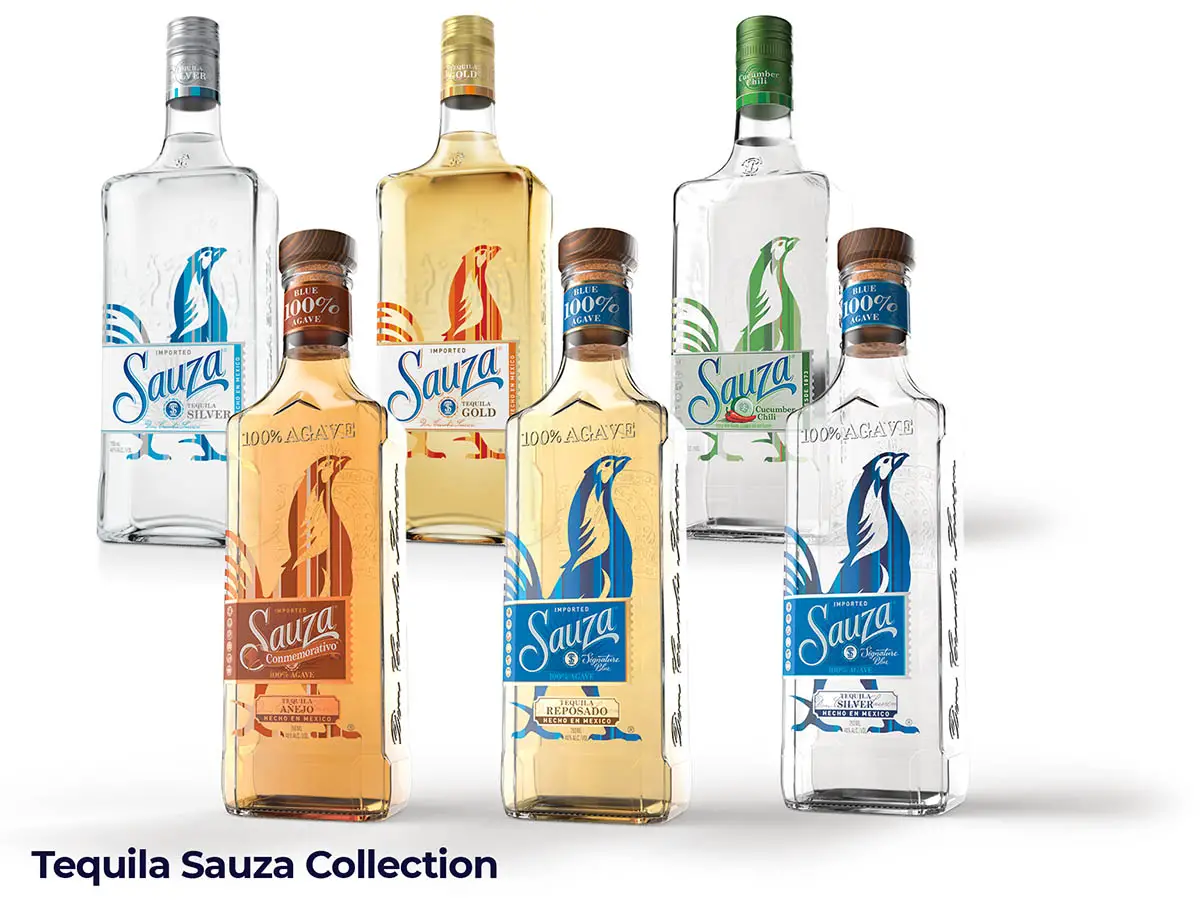
Tequila Sauza
There are five officially sanctioned types of Tequila, each with its own color and flavor, these are Silver (Blanco), Young (Joven or Gold), Aged (Reposado), Extra-aged (Añejo) and Ultra-aged (Extra añejo):
- Tequila Blanco or Joven “White” is clear, bottled following distillation without ageing. It is pure and strong.
- Tequila Joven u Oro: Mostly outside Mexico, you can find a variety called Oro or Gold, it’s unaged Tequila, not as strong as Blanco and many times with added flavoring and colorants.
- Tequila Reposado (Aged)has a color that may vary from a light to a darker golden, as it is allowed to age at least for two months up to a year in white oak barrels. It is one of the most popular and is taken in one shot.
- Tequila Añejo (Extra Aged) has a dark amber color with a flavor of agave and oak because it is allowed to age for one to five years in 600-liter barrels or smaller.
- Tequila Extra Añejo, a relatively new high-end Tequila variety is now being sold called Extra Añejo (Ultra-Aged) sometimes called “de reserva” is an Añejo that has been left to mature more than 3 years. These varieties tend to taste more like wood and lose their characteristic agave taste and are more like a Cognac, but because of the price people fall for them and enjoy them (at that price, you better!). Those in the know recommend a high-quality blanco so you get to taste the agave.
- There is the “joven abocado”, a mixed white Tequila, treated with cane sugar and coloring to emulate the characteristics of the añejo. It was invented in the United States and is greatly inferior to Tequila made 100% of agave. lt is sold in Mexico as well, so be careful when you read the sticker. If it does not specify that it is 100% agave, it is a mixed Tequila.
Connoisseurs of Tequila claim that the best way to appreciate it is in a shot glass, no mixes, though it may be enjoyed with lime and a pinch of salt if you wish.
Tequila “Appellation d’origine contrôlée” (AOC)

Tequila Don Julio
Today, Tequila is proud to have been granted an “Appellation d’origine contrôlée” (AOC) just like Cognac and Champagne. This means that only Tequila producers located within authorized zones in Mexico, using blue agave Tequilana weber can use the exclusive name of Tequila.
Puerto Vallarta Tequila
Here in Puerto Vallarta, there are a number of Tequila-tasting places where you can taste, enjoy and purchase the best brands of Tequila: Casa del Tequila (Morelos 589, Downtown Puerto Vallarta) is a great place to start, other options are tours like Rancho Verano or Mama Lucía in Mismaloya.
Some of the best Tequilas
Some of the best Tequilas from Mexico:
More Tequila information
FAQ
- What is the safest part of Puerto Vallarta to stay in?
The Marina and the Romantic Zone are considered some of the safest areas to stay in Puerto Vallarta. Both areas are popular among tourists and offer a variety of accommodations, restaurants, and attractions. The Marina is known for its upscale atmosphere, luxury resorts, and high-end shops and restaurants. It has a very secure, controlled environment with 24/7 security personnel. The Romantic Zone offers a more authentic Mexican experience with cobblestone streets, colorful colonial buildings, and a vibrant mix of galleries, cafes, and bars. As a central tourist area, it also has a strong police presence and is considered very safe.
- Where do locals go in Puerto Vallarta?
Locals in Puerto Vallarta enjoy spending time at the city’s beautiful beaches, scenic parks, and lively local markets. Popular beach spots include Playa de Oro, Playa Las Animas, and Playa Camarones for their soft sand and calm waters. Many locals visit the Vallarta Botanical Gardens to enjoy the lush vegetation and hiking trails. They also frequent authentic local food venues like Birrieria las 3 Regiones taco stand, cafes like Cafecito Vallarta, and neighborhood bars like La Cerveceria Union. The downtown Lazaro Cardenas market is a favorite for produce, spices, crafts.
- Is Downtown Puerto Vallarta nice?
Yes, downtown Puerto Vallarta is an exceptionally nice and popular area, celebrated for its vibrant mix of historic Mexican charm and a lively beach town atmosphere. It features a picturesque historic center with cobblestone streets, colorful buildings, and the iconic Parish of Our Lady of Guadalupe church. The downtown seamlessly blends into the scenic Malecón, a beautiful oceanfront boardwalk lined with fascinating sculptures, shops, and restaurants, making it perfect for strolling and enjoying the stunning ocean views.
The area offers an excellent variety of dining, from upscale restaurants to authentic street food, along with fantastic shopping in boutiques and art galleries. Adjacent to the main center is the popular Zona Romántica (Romantic Zone), known for its trendy vibe and energetic nightlife. The entire downtown is considered safe and is very walkable, allowing visitors to easily explore its captivating blend of culture, cuisine, and coastal beauty on foot.
Tip: For an unforgettable experience, head down to the Malecón or any beachfront spot about 30 minutes before the scheduled sundown to watch the spectacular sunset over the bay.
- What is considered old town in Puerto Vallarta?
Old Town, also known as the Romantic Zone or Zona Romántica, is considered the historic heart of Puerto Vallarta. It is characterized by its picturesque cobblestone streets, classic whitewashed buildings, red-tiled roofs, and a lively mix of shops, galleries, restaurants and bars. Nestled between the Sierra Madre mountains and Banderas Bay, Old Town has a traditional Mexican village charm with its colonial architecture and slower pace compared to the rest of Puerto Vallarta. Its romantic ambience comes from the area’s natural beauty, outdoor cafes, and charming boutique hotels. Old Town offers visitors a taste of an authentic Mexican neighborhood.

Book tours & support us
- Best prices
- 100% Local Support
- 2 decades+ of experience in Puerto Vallarta

Puerto Vallarta news, tips & content
- New info every two weeks
- Free content, news, videos
- Unsubscribe at any time

Contact us via WhatsApp
- Talk with our reservations expert
- Real local and human support
- Book tours, hotels, transfers, and more.
Share this article, choose your favorite option!