Purchasing Vanilla in Puerto Vallarta
Summary
- Vanilla is a flavoring derived from orchids in the genus Vanilla native to Mexico.
- Mexican vanilla, made from the native Vanilla planifolia, is produced in much less quantity and marketed as the vanilla from the land of its origin.
- The Totonacs of Veracruz, Mexico are credited as the first cultivators of vanilla.
- There are over fifty different varieties of vanilla.
- The name “vanilla” came from the Spanish word “vainilla”, meaning “little pod”.
- Vanilla is used in a wide variety of foods and beverages, including ice cream, baked goods, and coffee.


Introduction
Vanilla is an extract obtained from the seed pods of a plant from the orchid family (Vanilla planifolia), a Mexican species. It is actually the only edible fruit from an orchid. The name comes from “vainilla” which in Spanish means small pod.
Vanilla History
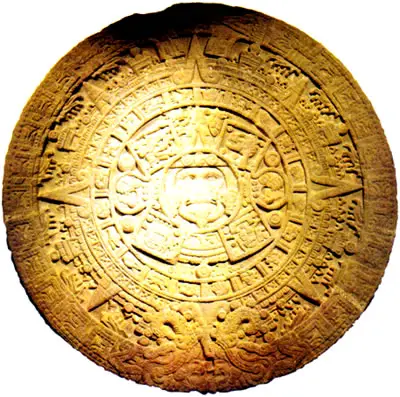
In Pre-Columbian times the plant was cultivated and enjoyed too by the Totonacs from Veracruz on the Caribbean side of Mexico. It was considered sacred and was used in ritual offerings, as medicine and as a perfume, not so much for food.
In the early XV, Century Aztecs started to combine vanilla (called Tlilxochitl) with chocolate which was what Hernán Cortés got offered by Emperor Moctezuma during a religious ceremony. Cortés was so impressed that he took a supply of the pods to Spain and offered it to his king too, where it, later on, became an exclusive beverage of aristocrats and royalty.
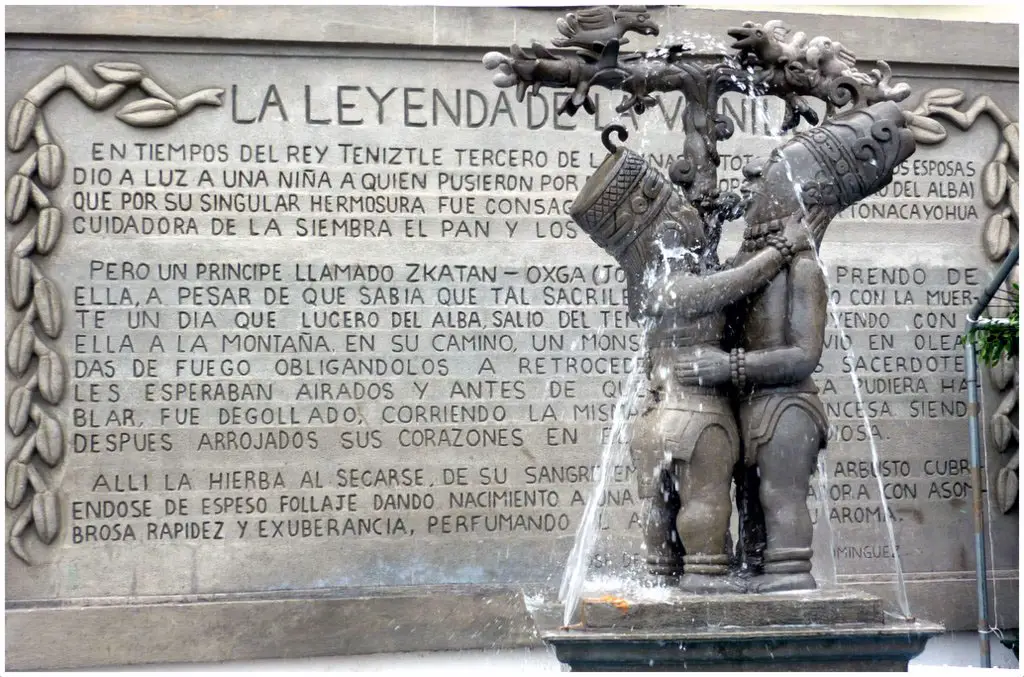
Vanilla Prehispanic Legend
Vanilla Legend
In the time of King Teniztle the Third of the Totonac dynasty, one of his six wives gave birth to a girl named Tzacopontziza (Morning Star) who, due to her singular beauty, was consecrated to the cult of the goddess Tonacayohua, caretaker of the sowing of bread and food.
But a prince named Zkatan-oxga (Young Deer) fell in love with her, even though he knew that such sacrilege was punishable by death. One day when Morning Star left the temple, he kidnapped her, fleeing with her to the mountain. On their way, a monster engulfed them in waves of fire, forcing them to retreat where the priests waited angrily for them and, before Zkatan-oxga could speak, he was slaughtered as was the princess too. Their hearts were later thrown at the altar of the Goddess.
There in the grasswhen the blood dried, a bush appeared, covered with thick foliage, giving birth to an orchid, which climbed with astonishing speed and exuberance, perfuming the environment with its aroma.
Author: José de Jesús Núñez y Domínguez
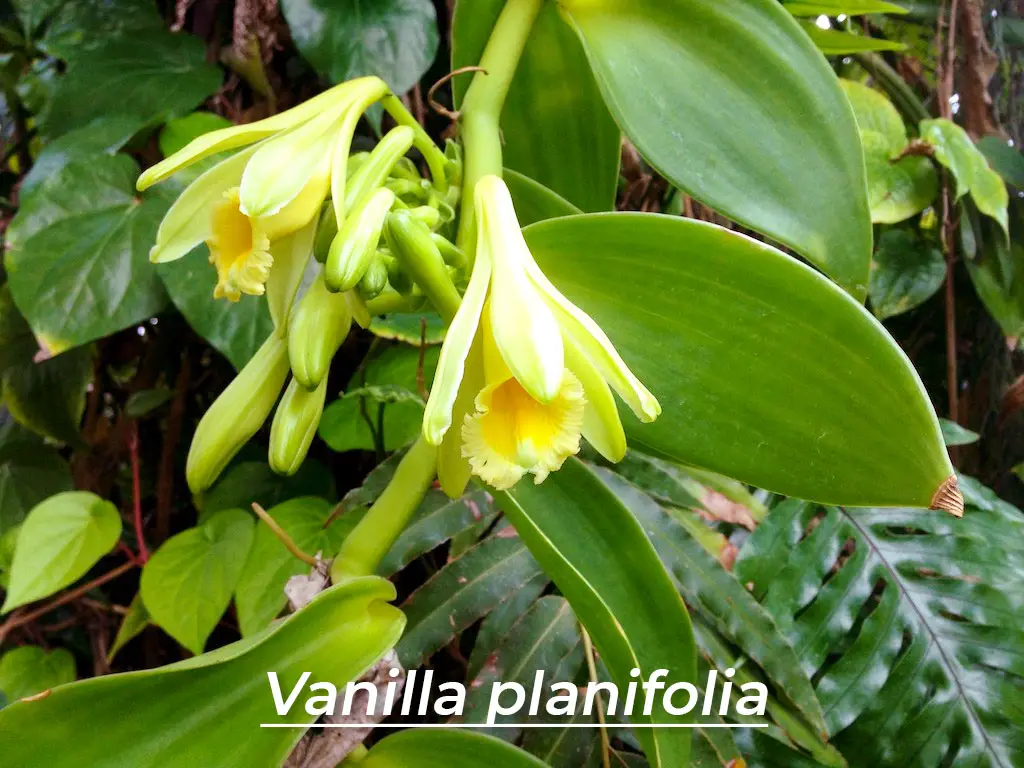
Vanilla flower (Orchid)
For more than 300 years, Mexican Vanilla was transplanted to various locations around the world but failed because the pollinating bee was not taken into consideration, in 1841 a manual method was invented and other countries started producing it too.
Vanilla is the second most expensive spice after saffron due to its labour-intensive cultivation process.
About Vanilla & its production
Even though vanilla originated in Mexico, Central America, and the Caribbean and for at some point in time Mexico held the monopoly and produced the finest extract in the world, this no longer is a guarantee that what you buy now will immediately be the best or even natural, as most of the cheap vanilla in these countries are now synthetic.
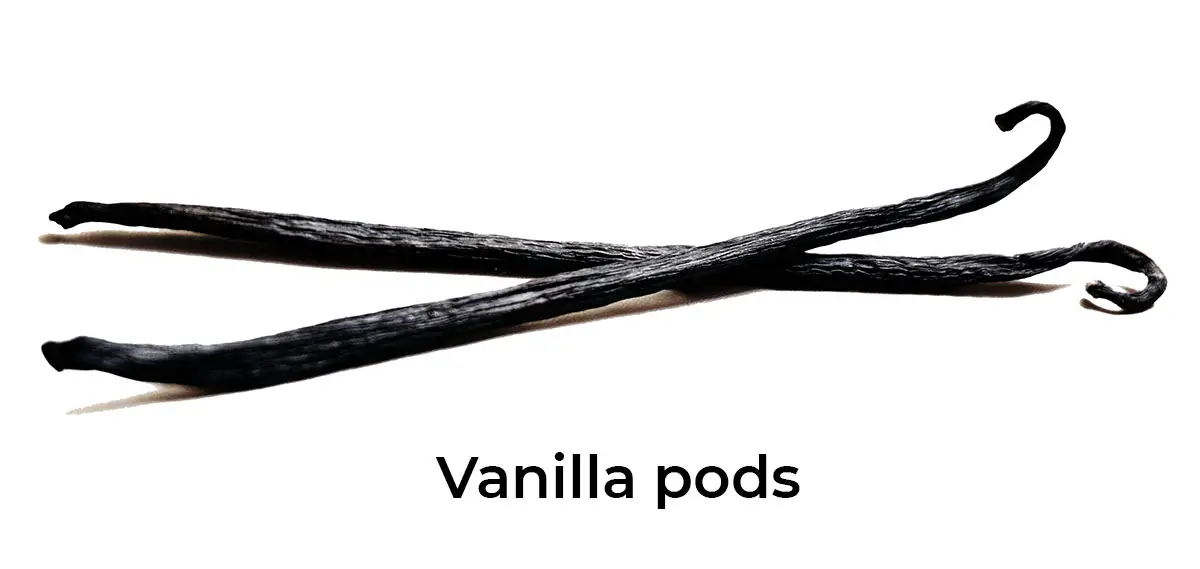
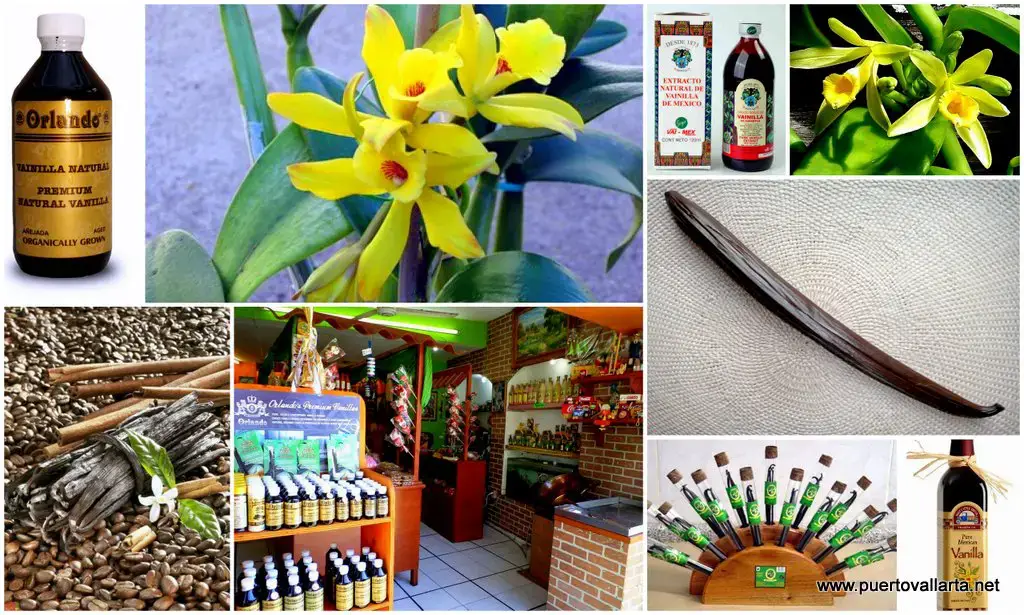
Vanilla Pods
You need to be careful when buying vanilla, that you are purchasing the real thing, an extract from the vanilla pods and not “vanilla” flavoring with an extract from tonka beans. These extracts contain coumarin that can have potential adverse side effects.
You must review the ingredient list, if it includes “tonka bean” or the ingredient list is vague or doesn’t exist, the FDA recommends that you don’t purchase it.
Vanilla information and how the flower is pollinated
FDA’s established standard for pure vanilla extract is 65% water, 35% alcohol and 13.35 ounces of vanilla pods in one gallon, glycerin can also be added as well as sugar. What makes the difference between different products is the quality of the vanilla pods, where they are from, how they were grown and the ageing process they go through before the extracting process.
The top 10 vanilla producers
- Indonesia
- Madagascar
- China
- Mexico
- Turkey
- Tonga
- French Polynesia
- Comoros
- Uganda
- Malawi


Purchase Tips
Some tips so you can figure out if you are buying pure vanilla.
- It should be amber-coloured, dark and murky is synthetic, so if it’s amber-coloured and clear it’s a good sign that it can be pure.
- If the price is low, that’s a telltale sign that it’s not pure. If it’s a big bottle and priced at less than 20 dollars there is no way it is vanilla extract.
- Clear coloured products are pure synthetic vanillin.
Recommended Brands
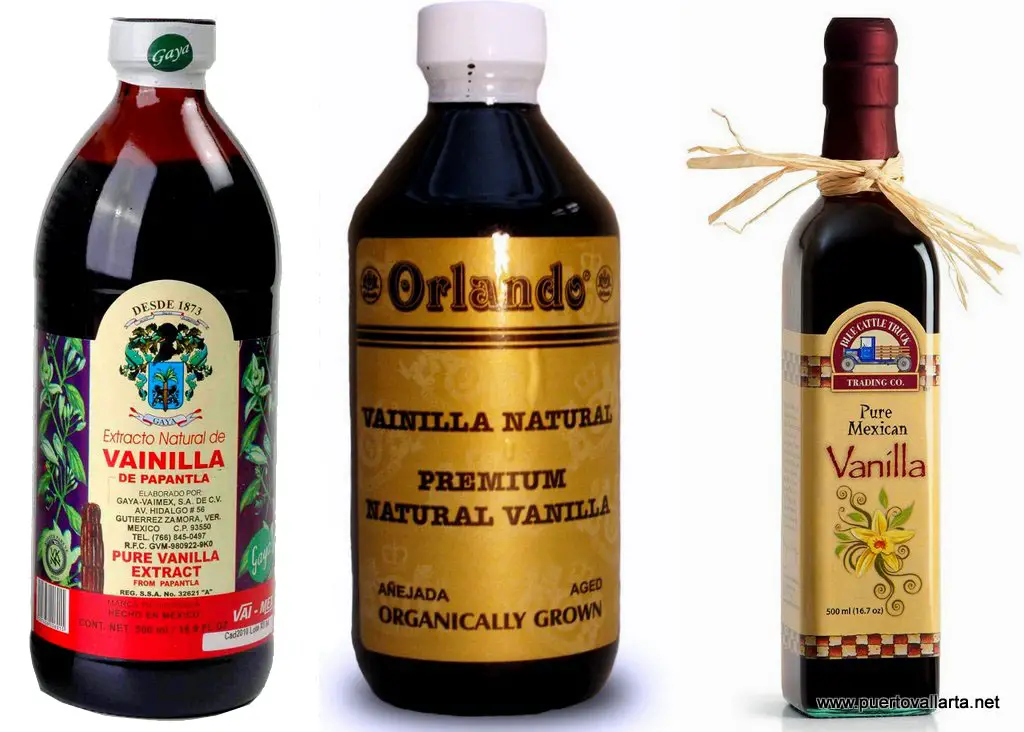
Mexican Vanilla Brands
- Blue Cattle Truck Trading Co. Pure Mexican Vanilla
- Gaya Vai-Mex
- La Vencedora
- Los Cinco Soles
- Molino Real
- Orlando (they do not use coumarin as stated some places online)
Where to buy in Puerto Vallarta
If you are considering buying a real Vanilla plant or maybe want to see one face to face, then you should visit the Vallarta Botanical Gardens, a great day trip too.
La Casa de la Vainilla
Calle Morelos 128, Centro, Plaza Juarez Local 15
Tel: (322) 222-9758
Dulcería Leal
Av. Juárez #262, Downtown, Puerto Vallarta, Jalisco
(322) 222-8042
FAQ
- What is the safest part of Puerto Vallarta to stay in?
The Marina and the Romantic Zone are considered some of the safest areas to stay in Puerto Vallarta. Both areas are popular among tourists and offer a variety of accommodations, restaurants, and attractions. The Marina is known for its upscale atmosphere, luxury resorts, and high-end shops and restaurants. It has a very secure, controlled environment with 24/7 security personnel. The Romantic Zone offers a more authentic Mexican experience with cobblestone streets, colorful colonial buildings, and a vibrant mix of galleries, cafes, and bars. As a central tourist area, it also has a strong police presence and is considered very safe.
- Where do locals go in Puerto Vallarta?
Locals in Puerto Vallarta enjoy spending time at the city’s beautiful beaches, scenic parks, and lively local markets. Popular beach spots include Playa de Oro, Playa Las Animas, and Playa Camarones for their soft sand and calm waters. Many locals visit the Vallarta Botanical Gardens to enjoy the lush vegetation and hiking trails. They also frequent authentic local food venues like Birrieria las 3 Regiones taco stand, cafes like Cafecito Vallarta, and neighborhood bars like La Cerveceria Union. The downtown Lazaro Cardenas market is a favorite for produce, spices, crafts.
- Is Downtown Puerto Vallarta nice?
Yes, downtown Puerto Vallarta is an exceptionally nice and popular area, celebrated for its vibrant mix of historic Mexican charm and a lively beach town atmosphere. It features a picturesque historic center with cobblestone streets, colorful buildings, and the iconic Parish of Our Lady of Guadalupe church. The downtown seamlessly blends into the scenic Malecón, a beautiful oceanfront boardwalk lined with fascinating sculptures, shops, and restaurants, making it perfect for strolling and enjoying the stunning ocean views.
The area offers an excellent variety of dining, from upscale restaurants to authentic street food, along with fantastic shopping in boutiques and art galleries. Adjacent to the main center is the popular Zona Romántica (Romantic Zone), known for its trendy vibe and energetic nightlife. The entire downtown is considered safe and is very walkable, allowing visitors to easily explore its captivating blend of culture, cuisine, and coastal beauty on foot.
Tip: For an unforgettable experience, head down to the Malecón or any beachfront spot about 30 minutes before the scheduled sundown to watch the spectacular sunset over the bay.
- What is considered old town in Puerto Vallarta?
Old Town, also known as the Romantic Zone or Zona Romántica, is considered the historic heart of Puerto Vallarta. It is characterized by its picturesque cobblestone streets, classic whitewashed buildings, red-tiled roofs, and a lively mix of shops, galleries, restaurants and bars. Nestled between the Sierra Madre mountains and Banderas Bay, Old Town has a traditional Mexican village charm with its colonial architecture and slower pace compared to the rest of Puerto Vallarta. Its romantic ambience comes from the area’s natural beauty, outdoor cafes, and charming boutique hotels. Old Town offers visitors a taste of an authentic Mexican neighborhood.

Book tours & support us
- Best prices
- 100% Local Support
- 2 decades+ of experience in Puerto Vallarta

Puerto Vallarta news, tips & content
- New info every two weeks
- Free content, news, videos
- Unsubscribe at any time

Contact us via WhatsApp
- Talk with our reservations expert
- Real local and human support
- Book tours, hotels, transfers, and more.
Last updated on:
Share this article, choose your favorite option!