Summary
- Tacos date back to the pre-Hispanic times when the indigenous peoples used corn tortillas to wrap different fillings. The tacos were later influenced by the Spanish, African, and Asian cuisines.
- The basic elements of the tacos are the tortilla, the filling, the salsa, and the garnish.
- Various fillings, salsa, and different versions of tacos exist. There are meat, fish, vegetarian, seafood, and beans.
- Tacos are the top-rated and most well-known street Mexican food, made up of meat or other fillings wrapped in a tortilla often served with cheese added.


Hot tacos!
By Deborah Arriaga W.
This call draws all Mexicans regardless of their social standing and on any occasion.
Tacos are the reference food in Mexico, they are the greatest and tastiest proof that our ancestral corn-based culture cuts through all strata of society. And of how this tortilla-based meal has become a staple in all homes, kitchens, markets and streets of Mexico.
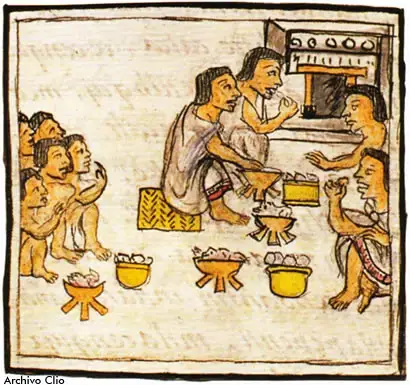
Tacos, Prehispanic Mexican Food
It is a constantly evolving base, flexible, versatile and varied as a roll of dough can be. A tortilla and a filling are enough to give it life. Even then, the filling is optional: air tacos and salt tacos are well-known parts of the culinary panorama.
Taco: a tortilla rolled up with a filling.
Tortilla: the flat cooked dough with which you make a taco.
And what about tortilla’s multifaceted nature: always nourishing, it can also be a plate, a fork and a spoon all rolled into one. Although best eaten freshly made and warm, yesterday’s batch is also very edible but if it sits around more than that starts to go sour.
Tortillas can be made of white, red, blue or yellow corn; they can be mixed with herbs to give it color and flavor, and are also made from wheat flour. Whether soft or crispy, it can be served in many sizes, in pieces, halves, quarters, as long as a whole one remains to make a taco.
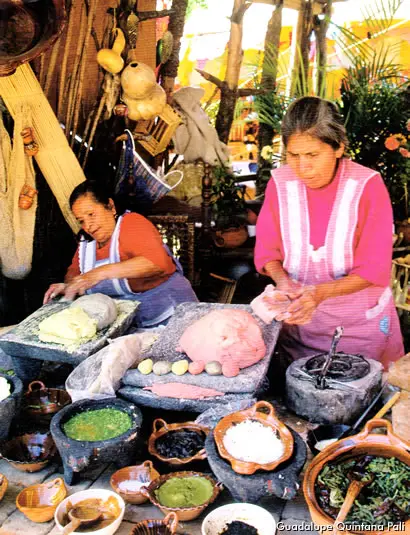
No matter the weather or the occasion, tacos are on everyone’s mind all the time when thinking of food; for a sudden craving or as a midnight snack, an appetizer, an entrée. Any moment is the right moment, day or night. If you are not hungry or you want to indulge, maybe both, any excuse is good to scarf down a taco.
Because scarfing down a taco means eating: just eating or eating a taco as such. There is infinite ways, postures and places to eat tacos: squatting, sitting or strolling. They can be eaten next to a sizzling grill or a burning flame, at a table, at home or in a restaurant (be it classy or classless, for, after all, tacos require little protocol).
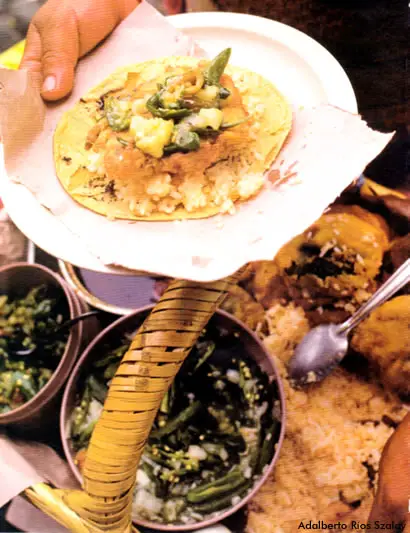
They can be consumed standing at the proverbial taco stand or at a reception, openly or surreptitiously, quickly or calmly, anywhere in villages, cities, countryside, jungle, high sierra or by the beach in Puerto Vallarta or any other Mexican destination.
Eating them requires only one condition; tacos must be eaten with your hands. It doesn’t matter if you use two fingers, three or all of them: by hand, it must be. Anyplace where there is a rolled up tortilla, whether filled or empty, you have a taco! Using a knife and fork is out of the question and gauche.
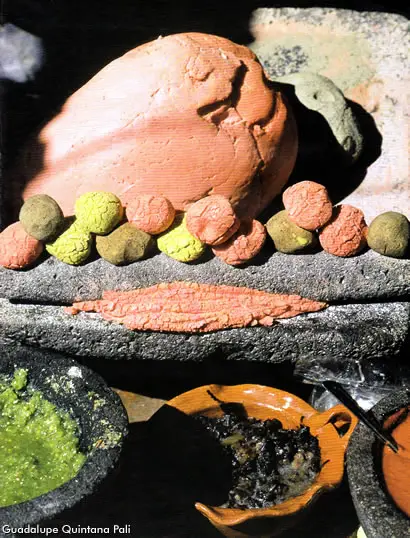
Tacos are fortunate, but more so are those who eat them. Their universe is infinite with no restrictions on content or context. They can be accompanied or presented to anyone and with anything. All edible matter is fair game for the taco, it just has to be placed properly so that it does not squirt or dribble out.
Taco names vary according to their origin, filling, and preparation. Here is a partial list of some of the most famous tacos:
- Pork, beef, chicken, goat, including their tripe and sweetbread; in chops, steaks, pork rind, fajitas, made with lean meat or headcheese, spicy sausage, venison sausage, pickled rind, feet, stomach, cheek, snout, tongue, brain, mountain oysters, intestines and heart, or whatever you fancy.
- They can be made from fish and seafood such as shrimp, octopus, crab, chopped up raw sea bass, sea minnows and sea slugs, and also ground lobster and manta ray.
- Insects, dead and alive: holm oak beetles, grasshoppers, ants and escamoles (their roe), maguey worms and ahuauhtle (mosquito caviar).
- Vegetables, grains, flowers, mushrooms, nopal (cactus leaves), quelites (leafy greens), corn, pumpkin flower, colorín (hibiscus flower), and the tortilla taco, an authentic and tasty redundance.
- Stews cooked as taco filling, such as shredded meat salad, mole (spicy chocolate sauce), pipian (ground pumpkin seed sauce), chilorio (spicy meat), moronga (blood sausage), cochinita pibil (pork in annato seed sauce), Mexican style rice, potatoes and spicy sausage, pork rind in green or red chile sauce, ranch style or refried beans. And just about anything that may strike your fancy… even leftovers.
- Rolled up and filled with nothing but air, such as the Yucatan codzito.
- Or you can try tacos de muerte lenta (slow death), filled with scraps of dubious origin.
- Or the traditional tacos, charcoal broiled or grilled.
- Tacos al pastor, Arab or Mediterranean influenced, good at any time, especially at night, after the movies or a concert, flavored with coriander, onion, and pineapple.
- Hard-shell tacos, fried in oil, and the flautas (flutes), their long version.
- The suadero tacos, great to top off a wild night out in town.
Tacos sudados, sweaty tacos… just imagine how they’re made!
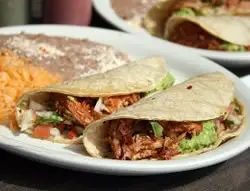
But tacos are almost never served alone. They most often come with chile, that other Mexican icon. Whether it is served alone – in any of its multiple varieties – or in a red, green, Mexican, or borracha sauce – the chili pepper is an ideal mate for the taco. However, luckily one can taquear (eat tacos) without it, for although chile is a common companion, it is not indispensable for eating tacos.
Tacos can also be dressed up with avocado slices, guacamole, red, white and green onions, shredded cabbage or lettuce, cheese and, yes, even cream, a very important ingredient for many tacos.
But the taco is not only our food, it is also our language: to heap cream on your taco is to preen oneself, brag, be overwhelmingly self-congratulatory. It surpasses the essence of simply eating a taco.
But it’s alright to give yourself a taco, to puff yourself up if the moment’s right and it’s done within an acceptable range of modesty. And how nice it can be to give yourself an eye taco, an eyeful of a strolling beauty, handsomeness; to watch the bulls from the front row.
As for myself, I’m about to finish my tongue taco, And what about you, how would you like your taco?
WHEREVER YOU ARE IN PUERTO VALLARTA OR SOMEWHERE ELSE IN MEXICO, EAT TACOS AND YOU WILL SEE HOW GOOD THEY TASTE AND HOW QUICKLY YOU LEARN ABOUT THEM.
Tacos 101 for Puerto Vallarta Visitors
By Joseph Kandoll
The humble taco was one of the first foods of Mexican origin to gain widespread popularity north of the border. Today, crispy taco shells filled with spiced ground beef, grated cheddar cheese, and chopped lettuce and tomato have become common fare in fast-food restaurants and school cafeterias. Yet, visitors to Mexico will find something quite different when ordering a taco here. Probably the biggest surprise will be that the shell is soft, rather than crispy, but the differences don’t stop there. Everything from the meat to the garnishes, to the sauces, will be novel to the uninitiated.
And even within Mexico, styles of tacos vary from region to region. In the northern part of the country, the large flour tortillas, de harina, are more common, while in Puerto Vallarta and the southern part of the country in general, smaller corn tortillas, de maiz, are the rule. And even the corn tortillas vary, with sizes ranging from 3” to 6”. When using the smaller size, a couple is usually needed per taco.
The meat fillings also vary by region. Common in Puerto Vallarta are tacos of carne asada, slices of beef grilled over mesquite coals; arrachera, a spicier version from the north; carnitas, pork cooked in a style native to our state of Jalisco; and al pastor, sliced marinated pork stacked on a spit. Carnitas, a pig that has been cut up and cooked in lard with orange rind, is one way to be sure every part of the animal is used. For the squeamish, asking for maciza will ensure that your filling is just a nice piece of pork. The more adventurous may want to try buche, or cheeks, orejas, or ears, and corazon, or heart. Tacos al pastor, or shepherd’s tacos, are made from slices of pork stacked on a vertical spit called a trompo, or top, which turns slowly in front of a gas flame. Originally brought to Mexico by Lebanese immigrants, this style of meat is then expertly shaved off by the taquero, or taco vendor, with a slice or two of pineapple for the special flavor it imparts.
Once the choice of meat has been made, it’s time for garnishes and sauces. The taquero may automatically add the garnishes or you may choose from among sliced radishes, cucumbers, cabbage, cilantro, chopped onions, grilled green onions and the ubiquitous lime wedges. Then come the salsas, or sauces. There will be several choices, depending on which meat you choose. If you’re unsure, try just a little at first. The flavors and spiciness vary and “liquid fire” could be the result. The dark red salsa is made from small, dried red chilies, and can be quite hot. The textured green salsa is made from green tomatillos, and may be less spicy. The light green salsa is made of avocados and has a flavor similar to guacamole. The milder red, green and white salsa, called pico de gallo, or rooster’s beak, in some areas, is called salsa Mexicana in Jalisco because of the colors of the tomato, cilantro and onion also are the colors of the Mexican flag.
Tacos can be found practically everywhere, from established restaurants to taquerías, or permanent taco stands, to puestos, or the ambulatory carts that set up in the same place each morning. Should you be nervous about standards of cleanliness at the puestos? Maybe not nervous, but definitely aware. In making your choices, consider advice from locals, who will recommend the places they frequent, happy to send more business to their favorite stand. If there’s no one to ask, check around for a stand that has a lot of customers. Once again, the local people know where to go. Check whether there is water available for washing hands and utensils. Also, check how the money is handled. If there isn’t a person specifically designated to handle the money, a plastic bag or glove should be doned to give back the change, and then removed before touching the food. However, one advantage of eating at a taco stand rather than a traditional restaurant is that everything is prepared right in front of you so you can observe what goes into it and be sure that it is fresh.
Remember, as you travel in a country where things may be new to you, that part of the adventure is trying new things or variations on familiar things. When it comes to food, you can still be adventurous, just keep your senses about yourself.
FAQ
- What is the safest part of Puerto Vallarta to stay in?
The Marina and the Romantic Zone are considered some of the safest areas to stay in Puerto Vallarta. Both areas are popular among tourists and offer a variety of accommodations, restaurants, and attractions. The Marina is known for its upscale atmosphere, luxury resorts, and high-end shops and restaurants. It has a very secure, controlled environment with 24/7 security personnel. The Romantic Zone offers a more authentic Mexican experience with cobblestone streets, colorful colonial buildings, and a vibrant mix of galleries, cafes, and bars. As a central tourist area, it also has a strong police presence and is considered very safe.
- Where do locals go in Puerto Vallarta?
Locals in Puerto Vallarta enjoy spending time at the city’s beautiful beaches, scenic parks, and lively local markets. Popular beach spots include Playa de Oro, Playa Las Animas, and Playa Camarones for their soft sand and calm waters. Many locals visit the Vallarta Botanical Gardens to enjoy the lush vegetation and hiking trails. They also frequent authentic local food venues like Birrieria las 3 Regiones taco stand, cafes like Cafecito Vallarta, and neighborhood bars like La Cerveceria Union. The downtown Lazaro Cardenas market is a favorite for produce, spices, crafts.
- Is Downtown Puerto Vallarta nice?
Yes, downtown Puerto Vallarta is an exceptionally nice and popular area, celebrated for its vibrant mix of historic Mexican charm and a lively beach town atmosphere. It features a picturesque historic center with cobblestone streets, colorful buildings, and the iconic Parish of Our Lady of Guadalupe church. The downtown seamlessly blends into the scenic Malecón, a beautiful oceanfront boardwalk lined with fascinating sculptures, shops, and restaurants, making it perfect for strolling and enjoying the stunning ocean views.
The area offers an excellent variety of dining, from upscale restaurants to authentic street food, along with fantastic shopping in boutiques and art galleries. Adjacent to the main center is the popular Zona Romántica (Romantic Zone), known for its trendy vibe and energetic nightlife. The entire downtown is considered safe and is very walkable, allowing visitors to easily explore its captivating blend of culture, cuisine, and coastal beauty on foot.
Tip: For an unforgettable experience, head down to the Malecón or any beachfront spot about 30 minutes before the scheduled sundown to watch the spectacular sunset over the bay.
- What is considered old town in Puerto Vallarta?
Old Town, also known as the Romantic Zone or Zona Romántica, is considered the historic heart of Puerto Vallarta. It is characterized by its picturesque cobblestone streets, classic whitewashed buildings, red-tiled roofs, and a lively mix of shops, galleries, restaurants and bars. Nestled between the Sierra Madre mountains and Banderas Bay, Old Town has a traditional Mexican village charm with its colonial architecture and slower pace compared to the rest of Puerto Vallarta. Its romantic ambience comes from the area’s natural beauty, outdoor cafes, and charming boutique hotels. Old Town offers visitors a taste of an authentic Mexican neighborhood.

Book tours & support us
- Best prices
- 100% Local Support
- 2 decades+ of experience in Puerto Vallarta

Puerto Vallarta news, tips & content
- New info every two weeks
- Free content, news, videos
- Unsubscribe at any time

Contact us via WhatsApp
- Talk with our reservations expert
- Real local and human support
- Book tours, hotels, transfers, and more.
Share this article, choose your favorite option!